


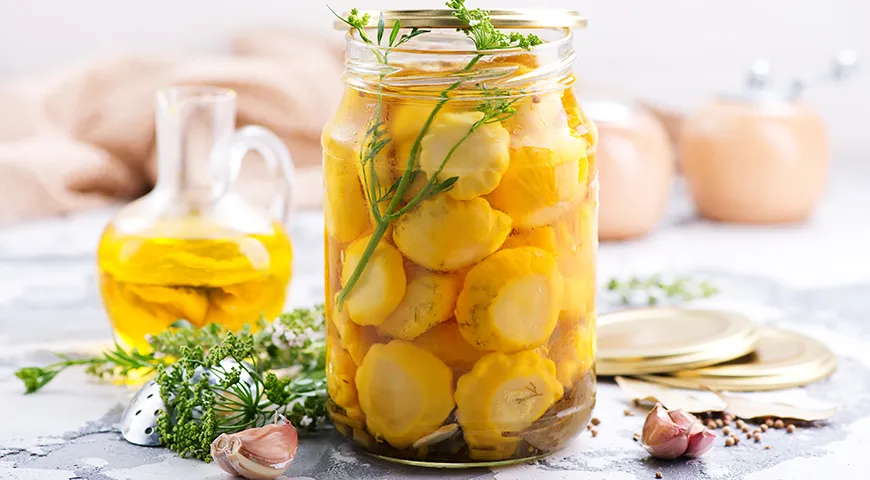
There is a quiet poetry in capturing the fleeting perfection of summer’s smallest squash. Pattypan squash—those delicate, scalloped discs, no larger than a silver dollar—are nature’s invitation to preserve. In Russian kitchens, these tiny patissons have long been revered for their tender flesh and whimsical shape, making them the ideal canvas for a briny, herb-infused pickle. This method, which roasts the jars gently in a low oven, yields a pickle that is as crisp as it is nuanced: a whisper of horseradish heat, the bright tang of apple cider vinegar, and the quiet perfume of cherry leaf. Here, we transform a humble harvest into a jewel-like winter treasure.
About the Tradition
Whole pickled pattypan squash, or marinovannye patissony tselikom, is a beloved Russian winter preservation. The recipe calls for pickling in glass jars of impeccable clarity, ideally in half‑liter containers—just enough to open and share at a single meal. The beauty of this technique lies in its simplicity: unpeeled, uncut squash absorb a gentle marinade while retaining their firm bite. It is a practice that rewards patience; the squash are ready only after two weeks of quiet waiting, but the result is a condiment that elevates any winter table—from roasted meats to hearty stews.

Ingredients
The ingredient list is minimalist, allowing the quality of each element to shine. For this batch, you will need:
- 600 g pattypan squash (diameter 3–4 cm, uniform and unblemished)
- 2 tsp salt (non‑iodized preferred)
- 100 ml apple cider vinegar (4–5% acidity)
- Fresh dill umbels, a horseradish leaf, a currant leaf, and a cherry leaf
- 2 cloves garlic, peeled and lightly crushed
- Optional: 1 small fresh chili pepper (for heat, split lengthwise)
Choosing fresh, non‑toxic ingredients is paramount. The leaves and dill should be vibrant and unbruised; the squash must yield only slightly to gentle pressure.
Step‑by‑Step Preparation
Step 1: Prepare the Oven and Jars
Preheat your oven to 120°C (250°F). Meanwhile, sterilize your jars and lids using a steam canner or boiling water bath. Set them aside to dry on a clean towel.
Step 2: Clean and Trim the Squash
Wash the pattypan squash thoroughly under cool running water. Pat them dry with a lint‑free cloth. Using a sharp paring knife, trim away the stem and blossom end, taking care not to cut into the flesh. Repeat with the aromatics—rinse the leaves and dill, and peel the garlic.
Step 3: Layer the Aromatics
Place a dill umbel, a piece of horseradish leaf, one currant leaf, one cherry leaf, and a clove of garlic into the bottom of each sterilized jar. If using chili pepper, add half a pepper per jar.
Step 4: Add Salt and Squash
Sprinkle 1 teaspoon of salt into each jar. Then carefully pack the pattypan squash into the jars, arranging them in a single layer if possible, or nesting them gently to maximize space without crushing.
Step 5: Pour the Brine
Bring a kettle of fresh water to a rolling boil. Carefully pour the boiling water over the squash, filling each jar to within 1 cm of the rim. Immediately add 50 ml of apple cider vinegar to each jar.
Step 6: Oven Processing
Place the lids loosely on the jars (do not tighten). Transfer the jars to a countertop convection oven or conventional oven preheated to 120°C. Process for exactly 20 minutes. The gentle heat ensures even cooking without agitation.
Step 7: Seal and Rest
After 20 minutes, remove the jars from the oven using oven mitts. Immediately tighten the lids securely. Allow the jars to cool completely at room temperature, then store in a cool, dark place. The pickles will be ready in 2 weeks and will keep for up to 1 year.
Tips for Perfect Pickles
- Size matters: Only use squash no larger than 4 cm in diameter. Larger ones become mealy and lose their charm.
- Vinegar choice: Organic apple cider vinegar (4–5% acidity) preserves a delicate fruitiness. Do not substitute distilled white vinegar; the flavor profile will be too harsh.
- Herb alternatives: If you lack fresh leaves, blend dried herbs into a powder and use sparingly—but fresh is always superior.
- Even heat: Use an oven thermometer to ensure accuracy. Too high a temperature can cause the vinegar to evaporate.
- Storage: Store the sealed jars in a refrigerator or a cool pantry after opening.
Variations to Explore
This baseline recipe invites creative twists. Substitute finely processed fennel seeds or mustard seeds for the horseradish leaf. For a spicier profile, increase the chili pepper or add a dash of chilled, filtered water to the brine. Some cooks prefer a sweeter pickle: dissolve 1 tablespoon of honey in the boiling water before pouring. If you have surplus squash, pressure‑can them for longer shelf life.
FAQ
Can I reuse the brine?
No. After pickling, the brine loses acidity and may harbor bacteria. Discard after use. For a fresh batch, always prepare a new brine.
Why must the squash be very small?
Pattypan squash larger than 4 cm have thick seeds and fibrous skins. Tiny ones remain tender and absorb the marinade evenly. Check planetary mixer guides for seed removal—though here we avoid cutting.
Do I need to peel the squash?
No. The skin is thin and edible. Peeling would destroy the shape and texture. Simply wash well.
How long do the pickles keep?
Sealed and stored in a cool, dark place, they remain at peak flavor for 12 months. Once opened, spraying a thin layer of oil on top can help preserve the brine surface.
Can I use this method for other vegetables?
Yes—whole cherry tomatoes, small cucumbers, or even baby carrots work beautifully. Adjust processing time slightly: for cucumbers, reduce oven time to 15 minutes to maintain crunch. For root vegetables, extend to 25 minutes.
What do I serve with these pickles?
They pair wonderfully with chocolate‑covered raisins as a sweet‑savory appetizer, or alongside a rich espresso to contrast bitterness.
Is the vinegar content safe for canning?
Yes. This recipe uses 100 ml apple cider vinegar per 600 g squash, yielding an acidity that prevents botulism. Always use vinegar labeled 4–5% acidity. For added safety, you can monitor jar seals with a leak detector if stored.
Conclusion
Whole pickled pattypan squash is more than a recipe—it is a declaration of respect for the harvest. Each jar captures the essence of a summer afternoon, sealed until the first snow. Whether you are an experienced preserver or a curious beginner, the gentle oven method ensures success. Enjoy the reward of your labour two weeks hence, when you open a jar and taste the season preserved.







