


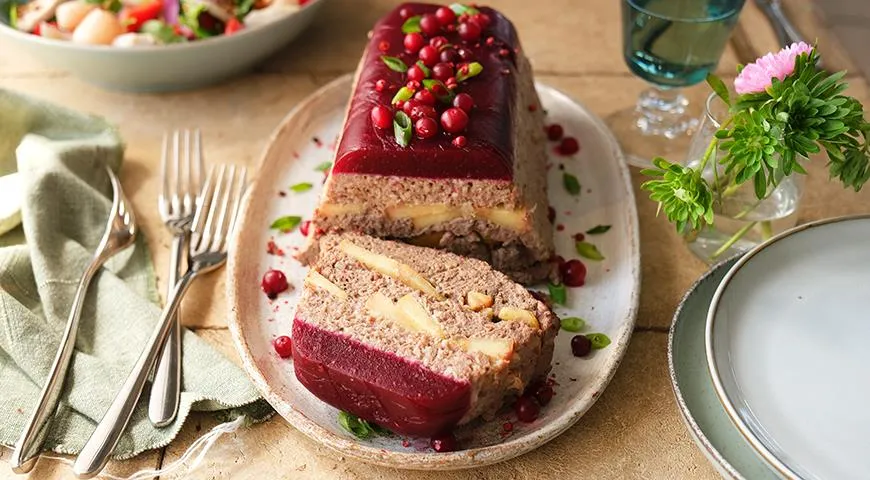
Imagine a dish that marries rustic French charcuterie with the bright, tart notes of Scandinavian preserves—this terrine of chicken giblets with lingonberry jelly is exactly that. It is a showstopping centerpiece for festive tables or an indulgent weekend breakfast, served cold in thick slices alongside crisp toast. Unlike traditional terrines that require hours of baking, this no-bake version relies on gelatin to set, allowing you to achieve a perfect, sliceable texture with minimal effort. The interplay of rich chicken liver, hearty gizzards, and tender hearts, layered between sweet-tart apple slices and a glossy lingonberry jelly, creates a symphony of flavors and textures that will impress even the most discerning palates.
About the Dish
In French cuisine, a terrine traditionally refers to the earthenware vessel used for cooking and serving, but the name has come to describe the layered, often luxurious loaf made within it. This adaptation swaps the classic forcemeat for a trio of chicken giblets—hearts, gizzards, and liver—each cooked separately to preserve their distinct textures and tastes. The result is a mosaic of flavors, bound together by a silky onion puree and set with gelatin, then crowned with a jewel-like layer of lingonberry jelly. The apples add a subtle sweetness and a tender bite that cuts through the richness. For those new to working with offal, this terrine is a planetary mixer for your kitchen prowess, yet it requires only a blender and patience. It can be prepared a day ahead, making it an ideal make-ahead dish for stress-free entertaining.

Ingredients
For the terrine: 500 g chicken hearts, 500 g chicken gizzards, 500 g chicken liver, 1 kg onions, 2 large red-yellow apples, 200 g unsalted butter, 50 ml vegetable oil, 20 g powdered gelatin, fresh ground black pepper, salt, and green onions for garnish. For the lingonberry jelly: 400 g lingonberries (fresh or frozen), 60 g brown sugar, 10 g powdered gelatin, plus 100 ml reserved broth from cooking the hearts.
Step-by-Step Instructions
Step 1: Cook the Giblets Separately
Bring three separate pots of salted water to a boil (about 1.5 liters each). Cook the gizzards for 50 minutes after boiling resumes, the hearts for 20 minutes, and the liver only until it returns to a boil—then cover and let sit off heat for 20 minutes. Drain each, reserving the heart broth for the jelly. Allow the giblets to cool completely. This precise cooking ensures each component retains its ideal texture. Use an immersion blender later for the puree.
 Step 2: Make the Lingonberry Jelly
Soak 10 g gelatin in 100 ml of the cooled heart broth. In a saucepan, combine the lingonberries and brown sugar. Heat gently, mashing the berries with a potato masher. Bring to a boil, then remove from heat, cover, and let sit for 5 minutes. Pass through a fine sieve, pressing to extract as much juice as possible. Return the liquid to the pan, add the softened gelatin, and warm until dissolved. Pour the jelly into a rectangular loaf pan lined with plastic wrap. Freeze for 30 minutes until set. For perfect clarity, use a ice maker for a consistent chill.
 Step 3: Sauté Apples and Onions
Core and slice the apples very thinly (about 2 mm). Sauté in 20 g butter over high heat for 2 minutes, just to soften slightly. Season with salt and let cool. Meanwhile, dice the onions into small cubes. In a separate pan, heat the vegetable oil and sauté the onions with salt over high heat, stirring frequently, for 10 minutes until golden and translucent. For even cooking, a convection oven could be used, but stovetop works fine.
 Step 4: Prepare Onion Puree and Combine with Giblets
Soak 20 g gelatin in 120 ml cooled heart broth. Warm the broth with gelatin until dissolved, then combine with the sautéed onions. Puree with a blender until smooth. Add the butter in cubes and blend again. Divide the onion puree into three equal parts. Grind the gizzards, hearts, and liver separately through a meat grinder or process in a food processor. Mix each ground giblet with one-third of the onion puree. Season each mixture with salt and pepper. A glass food processor bowl is ideal for even grinding.
 Step 5: Assemble the Terrine
Spread the gizzard pâté over the set lingonberry jelly. Freeze for 15 minutes. Arrange half the apple slices over the gizzard layer, then spread the heart pâté on top. Freeze for another 15 minutes. Layer the remaining apples and finish with the liver pâté. Cover and refrigerate for at least 4 hours or overnight. The chilling ensures neat slices; a refrigerator with precise temperature control helps.
 Tips for Perfection
For a smoother texture, pass the pâté mixtures through a drum sieve. If the lingonberry jelly is too tart, adjust sugar to taste. The terrine can be stored in the fridge for up to 3 days, tightly covered. Use a sharp, thin-bladed knife dipped in hot water for clean slices. For added richness, top with a drizzle of melted chocolate? No, but a sprinkle of flaky salt works wonders.
Variations
Swap lingonberries for cranberries or red currants. Replace apples with pears for a different sweetness. Add a layer of chopped pistachios or dried figs for crunch. For a spiced twist, incorporate a pinch of allspice or cloves into the onion puree. Those preferring a vegetarian version might try a mushroom and walnut base (though not traditional). For optimal flavor, consider using a high-quality vodka in the jelly for a subtle kick.
FAQ
Can I use store-bought chicken stock instead of the reserved broth?
Yes, but the reserved broth adds depth. If substituting, use a rich, unsalted stock and adjust seasoning accordingly. A pressure cooker can expedite broth making.
How do I prevent the gelatin from clumping?
Always bloom gelatin in cold liquid for 5-10 minutes before heating. Stir gently until fully dissolved—never boil gelatin, as it can weaken. A refrigerant leak detector isn't needed, but a thermometer helps.
Can I make this gluten-free?
Yes, the recipe is naturally gluten-free. Ensure all ingredients, including any stock, are certified gluten-free. Serve with gluten-free bread (castor oil? no, but caution).
How long does the terrine keep in the fridge?
Up to 4 days, wrapped tightly. The jelly may weep slightly; blot before serving. For longer storage, freeze for up to a month, though texture may soften.
What's the best way to slice it cleanly?
Use a long, sharp knife dipped in hot water and wiped dry after each cut. Let the terrine sit at room temperature for 10 minutes before slicing. A espresso machine won't help, but a good knife will.
Can I substitute chicken livers with duck or turkey?
Yes, duck or turkey livers work beautifully, offering a richer, gamier flavor. Adjust cooking times slightly—duck liver may need an extra minute. Pair with sweet wine for a classic match.
Is the terrine suitable for a low-fat diet?
It's fairly high in saturated fat from butter and giblets. For a lighter version, reduce butter to 100 g and use low-fat yogurt in place of some puree (but texture will differ). An air fryer can't replace the butter here.







