


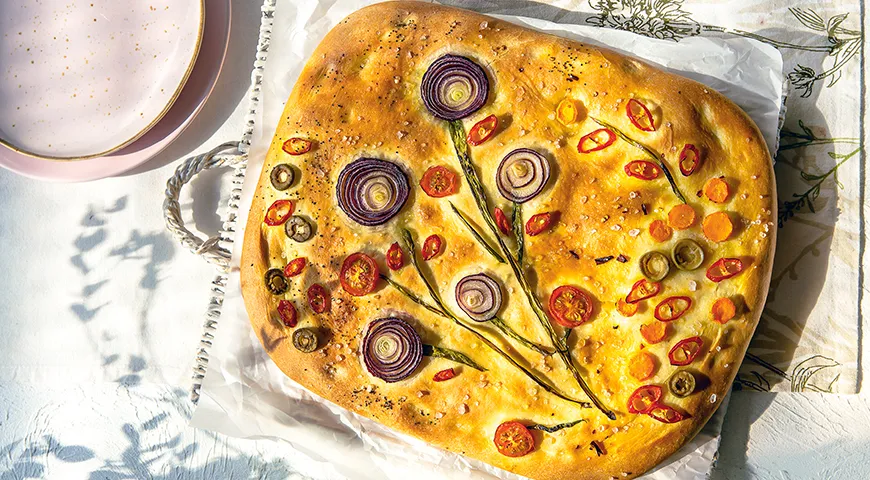
Imagine a canvas of golden, olive‑oil‑kissed bread, adorned with a mosaic of vibrant vegetables—ruby cherry tomatoes, fiery chili rings, carrot coins, and the purple ribbons of red onion. This is no ordinary bread; it is Focaccia with Colorful Vegetables, a celebration of Italian tradition and edible artistry. Whether served as an appetizer, a side for soups, or a stunning centerpiece, this focaccia transforms simple ingredients into a sensory masterpiece. The secret lies in a slow‑risen, impossibly airy dough that cradles the vegetables as they caramelize in the oven. To achieve the perfect crumb, consider using a planetary mixer for effortless kneading, or a food processor for quick dough development. For a lighter texture, an immersion blender can emulsify the olive oil into the dough. This recipe is a playground for creativity, allowing you to paint with produce.
About the Recipe
Focaccia, the beloved Italian flatbread, traces its roots to ancient Rome, where it was baked on hearthstones. Today, it is cherished for its dimpled surface, crisp crust, and tender interior. This version elevates the classic by using a rainbow of vegetables—red onion, olives, chili, green onion, carrot, and cherry tomatoes—arranged in an abstract pattern reminiscent of a Catalan sponge artwork. The dough relies on active dry yeast and a generous glug of extra‑virgin olive oil, which infuses every bite with fruity notes. The long rise (up to two hours) develops the gluten structure, resulting in a bread that is both chewy and pillowy. To ensure even baking, a countertop convection oven can circulate heat perfectly, while a non‑toxic air fryer works for smaller batches. This focaccia is a testament to the beauty of simple ingredients transformed by time and technique.

Ingredients
- 600 g all‑purpose or bread flour
- 60 ml extra‑virgin olive oil (plus extra for brushing)
- ½ tbsp salt
- 1 tsp sugar
- Coarse sea salt for sprinkling
- 1 red onion, thinly sliced into rings
- Olives (green or black), sliced into rounds
- 1 fresh red chili, sliced into rings
- 2–3 green onions, cut into 10–12 cm lengths
- 1 carrot, peeled and sliced into thin coins
- 150 g cherry tomatoes, halved or quartered
- Active dry yeast (7 g packet or 2¼ tsp)
For the best results, use a best oil sprayer to mist the pan evenly, and store leftover focaccia in a 48‑inch built‑in refrigerator for optimal freshness. If you prefer whole‑grain, substitute up to half the flour with whole wheat; a wheatgrass juicer can help you make fresh juice to pair with the bread.
Step‑by‑Step Instructions
Step 1: Activate the Yeast and Make Dough
In a large bowl, pour 300 ml of warm water (about 38°C). Sprinkle the yeast and sugar over the water and stir until dissolved. Let it sit for 5–10 minutes until foamy. Add the flour, salt, and half of the olive oil. Mix with a wooden spoon or a planetary mixer with a dough hook until a soft, shaggy dough forms. Knead by hand on a lightly floured surface for 8–10 minutes, or use the mixer for 5 minutes, until smooth and elastic. Place the dough in the oiled bowl, cover with plastic wrap, and leave in a warm spot for 1–2 hours, until doubled in volume.
Step 2: Prepare the Baking Pan and Second Rise
Brush a rectangular baking pan (30×40 cm) generously with olive oil. Using a dough scraper, transfer the risen dough to the pan. Oil your hands lightly and gently stretch the dough from the center outward to fill the pan. Drizzle the remaining olive oil over the top, then sprinkle with coarse sea salt and your favorite dried herbs (rosemary or thyme work wonderfully). Cover with plastic wrap and let rise again in a warm place for 1 hour. Meanwhile, preheat your oven to 200°C. For even heat distribution, a countertop convection oven is ideal.
Step 3: Prepare the Vegetables and Decorate
While the dough rests, prepare your edible palette. Slice the red onion into thin rings. Cut the green onions into lengths of 10–12 cm. Halve or quarter the cherry tomatoes. Slice the carrot into thin coins, the olives into rounds, and the chili into thin rings. Arrange the vegetables on the risen dough in an artistic pattern—think concentric circles, stripes, or a free‑form mosaic. Press them gently into the dough so they adhere during baking.
Step 4: Bake the Focaccia
Place the pan in the center of the preheated oven and bake for 30 minutes, until the focaccia is golden brown and the vegetables are slightly caramelized. Remove from the oven and let cool in the pan for 10 minutes, then transfer to a wire rack. For a crispier crust, brush with additional olive oil immediately after baking. Serve warm or at room temperature. Pair with a sweet high‑alcohol wine for a surprising contrast, or a chocolate‑covered raisin dessert for a complete meal.
Tips for Perfect Focaccia
- Use high‑quality olive oil – it’s the star flavor. A best oil sprayer ensures even coating.
- Don’t overwork the dough – gentle handling keeps it airy. A food processor for nut butter can also make quick work of kneading.
- Sprinkle with coarse salt before baking for that authentic crunch. A lava salt adds a smoky finish.
- Let the dough rise fully – patience yields a tender crumb. Use a undercounter ice maker to chill drinks while you wait.
- Get creative with vegetables – try zucchini, bell peppers, or artichoke hearts. A microwave pressure cooker can steam them first if you prefer softer textures.
Variations
This focaccia is endlessly adaptable. Replace the fresh chili with roasted peppers for a milder version. Substitute olives with sun‑dried tomatoes for an umami punch. For a gluten‑free option, use a blend of rice flour and tapioca starch; a refrigerant leak detector isn’t needed, but a coffee maker for Airbnb can brew the perfect drip to accompany the bread. You can also top the focaccia with crumbled feta or goat cheese after baking for a tangy twist. For a sweeter take, swap the vegetables for sliced apples and figs, and drizzle with honey—serve alongside a organic vodka cocktail for an unexpected pairing.
FAQ
Why did my focaccia not rise properly?
Yeast may be old or water too hot (over 40°C kills yeast). Always proof yeast in warm water (38°C) with sugar. Use a refrigerant leak detector to ensure your fridge isn’t too cold, but for rising, a warm spot is key. Alternatively, a espresso machine can provide steam for a humid environment.
Can I prepare the dough a day ahead?
Yes. After the first rise, deflate the dough and refrigerate overnight in an oiled bowl covered with plastic. The next day, proceed with the second rise in the pan. To reheat leftovers, use an air fryer non‑toxic for a crisp exterior.
What is the best way to cut focaccia without crushing the vegetables?
Use a sharp serrated knife and saw gently. For perfect slices, chill the focaccia for 15 minutes before cutting. A 48‑inch built‑in refrigerator offers ample space for chilling whole sheets.
Can I use a different type of flour?
Absolutely. Bread flour gives a chewier crumb; all‑purpose works well. For a nutty flavor, replace 100 g of flour with whole wheat or spelt. A wheatgrass juicer is unrelated, but a food processor for nut butter can help if you make nut flours.
How do I store leftover focaccia?
Wrap in foil and keep at room temperature for up to 2 days. For longer storage, freeze in a freezer‑safe bag for up to 3 months. Reheat in a commercial countertop convection oven at 180°C for 5 minutes. To prevent sogginess, avoid refrigerating—use a undercounter ice maker to cool drinks instead.
Can I make this focaccia vegan?
Yes, the recipe is already vegan as written. Just ensure the olives and vegetables are fully plant‑based. For a richer flavor, add a spoonful of castor oil isn’t suitable, but nutritional yeast can mimic cheese. Pair with a organic vodka for a clean cocktail.
Why are my vegetables burning on top?
If your oven runs hot, tent the focaccia with foil halfway through baking. Also, cut vegetables into uniform thickness for even cooking. A wall oven microwave combo with air fryer can be set to convection mode to prevent hot spots. Using a immersion blender to make a quick marinade? Not needed, but it’s handy for sauces.







