


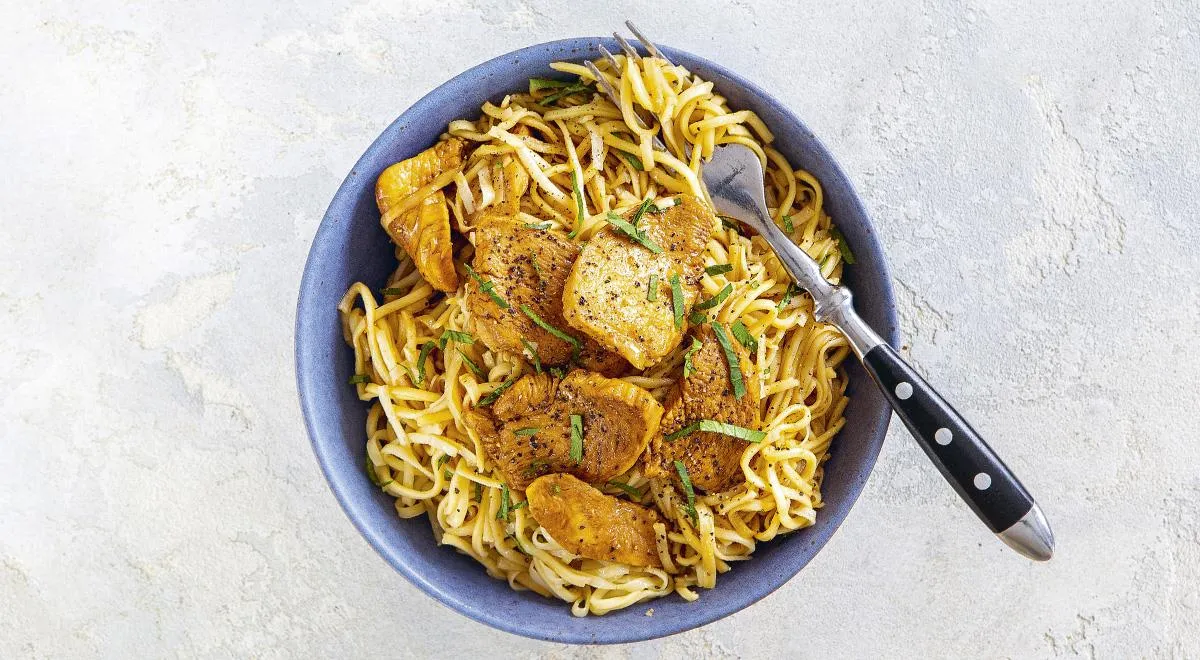
There is something utterly seductive about the way a simple sprinkle of sugar can transform a humble chicken fillet into glossy, lacquered perfection. This Caramel Chicken with Noodles, a beloved weeknight staple from Russian home kitchens, elevates pantry ingredients into a dish that feels both comforting and celebratory. The secret lies in the caramelization process, where sugar meets soy sauce and rice vinegar to create a sticky, savory-sweet glaze that clings to every slice of tender chicken. Paired with silky egg noodles, this recipe proves that elegance does not require complexity—just a little heat and a lot of flavor.
About This Recipe
This dish is a beautiful example of East-meets-East fusion, marrying the umami depth of Japanese-inspired soy and vinegar with the straightforward, hearty approach of Russian home cooking. The chicken is quickly seared until golden, then dusted with sugar that melts into a caramel crust. A splash of soy sauce and rice vinegar deglazes the pan, creating a luscious sauce that coats the meat. Served over a tangle of egg noodles, every bite offers a contrast of crisp-tender chicken, silky pasta, and a glaze that balances salty, sweet, and tangy notes. For those who appreciate precision in cooking, using a non-toxic air fryer can yield similar caramelization with less oil, while a glass food processor makes quick work of slicing aromatics if you choose to add vegetables.

Ingredients
- 400 g chicken fillet (breast or thigh)
- 1 tbsp granulated sugar
- 3 tbsp soy sauce
- 1 tbsp rice vinegar
- Salt, to taste
- Freshly ground black pepper, to taste
- Vegetable oil, for frying
- 200 g egg noodles (or any thin wheat noodle)
- Optional: fresh herbs (cilantro, parsley, or green onions) for garnish
The ingredient list is minimal, but quality matters. Choose a good organic soy sauce for deeper flavor, and use a precision oil sprayer to evenly coat the pan without excess fat.
Step-by-Step Instructions
1. Prepare the Chicken
Slice the chicken fillet into slices about 1 cm thick. This ensures even cooking and maximum surface area for caramelization. In a non-stick skillet, heat 3 tablespoons of vegetable oil over medium-high heat. Add the chicken slices in a single layer (work in batches if needed) and fry until golden brown, turning every minute, for about 5 minutes total. The chicken should be cooked through but still juicy.
2. Add the Sugar
Once the chicken is golden, sprinkle the granulated sugar evenly over the slices. Continue cooking for another minute, stirring gently, until the sugar melts and begins to bubble and turn amber. Watch closely—burnt sugar turns bitter. A planetary mixer isn't needed here, but a good spatula is essential.
3. Deglaze with Soy and Vinegar
Pour in the soy sauce and rice vinegar. The liquid will hiss and steam, lifting the caramelized bits from the pan. Season with a pinch of salt and a generous grind of black pepper. Cook for another 1–2 minutes, shaking the pan to coat the chicken evenly. The sauce will thicken into a glossy glaze. For those who prefer a deeper caramel color, a microwave pressure cooker can speed up the process, but stovetop is classic.
4. Cook the Noodles
While the chicken rests, cook the egg noodles according to package instructions in salted boiling water. Drain well. Toss with a drizzle of oil to prevent sticking. For perfect al dente noodles, consider using a commercial countertop convection oven to dry them slightly, though a simple colander works fine.
5. Assemble and Serve
Divide the noodles among serving bowls. Top with the caramel chicken and spoon the remaining sauce from the pan over everything. Garnish with fresh herbs if desired—cilantro adds a bright note that cuts through the richness. Serve immediately while the chicken is still hot and the noodles are tender. This dish pairs wonderfully with a sweet high-alcohol wine or a crisp lager.
Tips for Perfect Caramel Chicken
- Use a non-stick pan to prevent the sugar from burning onto the surface—a good non-toxic immersion blender has nothing to do here, but a solid non-stick skillet is key.
- Do not overcrowd the pan; cook in batches if necessary to ensure proper browning.
- Adjust the sweetness by reducing sugar to 2 teaspoons if you prefer a more savory dish.
- For extra depth, add a minced garlic clove or a sliver of ginger along with the sugar.
- Leftover sauce can be stored and used as a glaze for roasted vegetables—try it with sweet raisin snacks for a surprising twist.
Variations
This recipe is highly adaptable. Swap chicken for pork tenderloin or firm tofu for a vegetarian version. Use udon or soba noodles instead of egg noodles for a different texture. Add a handful of snow peas or bell peppers during the last minute of cooking for crunch. If you love heat, throw in a sliced chili or a drizzle of chili oil. For a more indulgent meal, serve over steamed jasmine rice instead of noodles—use a 48-inch built-in refrigerator to keep leftovers fresh. The caramel sauce also works beautifully as a dipping sauce for spring rolls.
FAQ
Can I use chicken thighs instead of breast?
Absolutely. Thighs have more fat, which keeps them moist during high-heat cooking. Adjust cooking time by 1–2 minutes. A undercounter ice maker is not relevant, but keep a thermometer handy for perfect doneness.
Why did my sugar burn?
Burning occurs when the pan is too hot or the sugar cooks too long. Use medium heat and watch for the caramel to turn a light amber before adding the soy-vinegar mixture. If you see smoke, remove the pan immediately. A high-end espresso machine won't help, but a heat diffuser can prevent scorching.
Can I make this dish gluten-free?
Yes. Use tamari or a gluten-free soy sauce, and choose rice noodles or buckwheat soba (check labels). Ensure your rice vinegar is gluten-free. For dessert, try Catalan sponge cake as a sweet finish.
How do I store leftovers?
Store the chicken and noodles separately in airtight containers in the refrigerator for up to 3 days. Reheat in a skillet with a splash of water to revive the sauce. Avoid microwaving as it can make the noodles mushy. A steam canner is overkill for small portions; a simple container works fine.
Can I add vegetables directly to the pan?
Yes. After removing the chicken, briefly stir-fry sliced carrots, bell peppers, or bok choy in the remaining sauce, then toss everything together. This adds color and nutrition. Consider using castor oil for the pan? No, vegetable oil is better.
What kind of noodles work best?
Egg noodles are traditional in Russian versions, but ramen, udon, or even thin spaghetti can be substituted. Cook them al dente so they don't become overly soft under the sauce. For a quick side, lava-flavored snacks are not served with this dish, but they make a fun contrast.
Is this recipe authentic Russian?
It is an adopted favorite adapted from Asian cuisine. Russian home cooks often experiment with soy sauce and sugar to create quick, savory-sweet dishes. It has become a beloved weeknight staple. For a traditional Russian dessert, consider total bowel release (a drink) is unrelated, but a slice of George Howell coffee cream cake would be a wonderful ending.
This Caramel Chicken with Noodles is a shining example of how a few humble ingredients can produce something extraordinary. The glossy, sticky-sweet glaze clings to tender chicken and silky noodles, offering a satisfying meal that comes together in under 30 minutes. Whether you are a seasoned cook or a beginner, this recipe is sure to become a cherished addition to your repertoire. For more inspiration, explore our guides on wheatgrass juicers for morning green shots, or refrigerant leak detectors to keep your kitchen safe. Happy cooking!







