


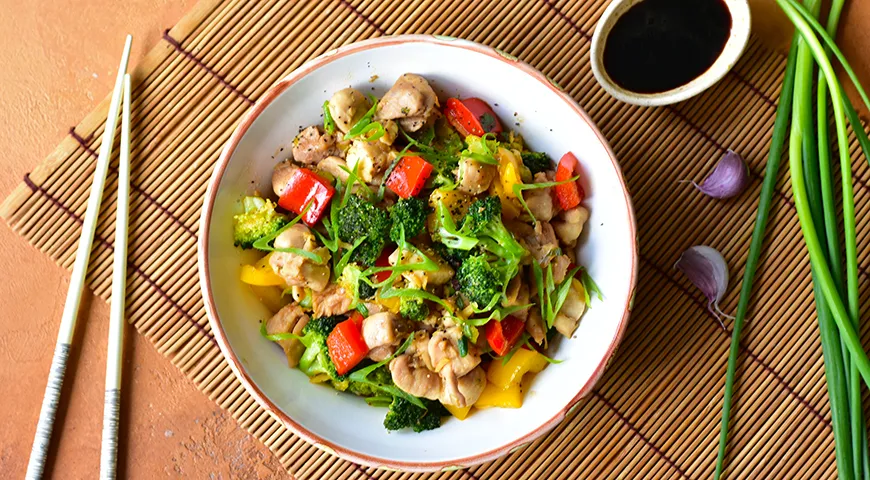
This vibrant stir-fry, rooted in the bold traditions of Chinese wok cooking, transforms humble chicken thighs, tender broccoli, and sweet bell peppers into a symphony of textures and flavors. The key lies in the technique—quick, high-heat searing that locks in juices while keeping vegetables crisp-tender. Aromatics of ginger and garlic, finished with a splash of oyster sauce, create a glossy, savory glaze that clings to every piece. Perfect for a weeknight dinner that feels both indulgent and nourishing, this dish is a testament to the power of simple ingredients handled with precision. Pair it with steamed jasmine rice or serve it solo for a low-carb delight.
About This Stir-Fry
Stir-frying is a culinary art that demands speed and heat. The recipe calls for chicken thighs—their higher fat content ensures juiciness even at high temperatures. Broccoli florets and sweet peppers provide color and crunch, while ginger and garlic form the aromatic backbone. The final flourish of oyster sauce adds umami depth, balanced by the freshness of scallions. This dish is not only quick to prepare but also endlessly adaptable, making it a staple in many modern kitchens. For those exploring non-toxic air fryer alternatives, the same flavors can be achieved with minimal oil.

Ingredients
- 400 g boneless chicken thigh fillet
- 2 small heads of broccoli (300 g total)
- 2 medium sweet bell peppers (300 g total)
- 3 cm fresh ginger root (35 g)
- 4 cloves garlic (20 g)
- 1 small bunch spring onions (30 g)
- 2 tbsp oyster sauce or soy sauce
- Vegetable oil for frying
- Freshly ground black pepper, to taste
- Salt, to taste
Choosing quality ingredients is paramount. Opt for organic produce when possible to elevate the dish's purity.
Step-by-Step Instructions
1. Prepare the Chicken
Cut the chicken thigh fillet into bite-sized pieces, roughly 2 cm each. Season generously with salt and freshly ground black pepper. This initial seasoning ensures the meat is flavorful throughout.
2. Prep the Aromatics
Peel and finely chop the garlic and ginger. Slice the white part of the spring onions into thin rings; cut the green parts diagonally into 2–3 cm lengths. This distinction allows the whites to cook longer while the greens stay fresh.
3. Handle the Vegetables
Peel the broccoli stalk and finely dice it; separate the heads into small florets. Remove stems, seeds, and membranes from the bell peppers. Cut the flesh into small, uniform pieces. Uniformity ensures even cooking.
4. Sear the Chicken
Heat a wok or large skillet over high heat until smoking. Add a generous amount of vegetable oil. Working in batches to avoid overcrowding, quickly sear the chicken pieces until golden brown on the outside but not fully cooked through. Transfer to a plate. This technique is similar to that used in commercial countertop convection ovens for achieving a quick crust.
5. Sauté Aromatics and Peppers
Add a little more oil to the wok. Toss in the white part of the spring onions, ginger, and garlic. Stir-fry for 30 seconds until fragrant. Add the bell peppers and continue stir-frying for 1 minute, keeping the vegetables moving.
6. Cook Broccoli and Finish
Add the broccoli florets and diced stalk. Pour in 100–120 ml of hot water—this creates steam to cook the broccoli quickly. Cook for 3 minutes, stirring often. Return the chicken to the wok. Add the green spring onion pieces and oyster sauce. Stir-fry for another 2–3 minutes until the chicken is cooked through and the sauce coats everything evenly. Serve immediately while piping hot.
Tips for Perfect Stir-Fry
Maintain the highest heat possible—the wok should be smoking before you add oil. Use an oil sprayer to coat the surface evenly and reduce oil consumption. For maximum crispness, pat the chicken dry with paper towels before seasoning. If you don't have a wok, a large heavy-bottomed skillet suffices, but avoid overcrowding—cook in batches. A planetary mixer is not needed here, but having a good cutting board and sharp knife ensures quick prep.
Variations
Swap chicken for shrimp or firm tofu for a different protein. For a vegetarian version, use wheatgrass juice is unrelated, but a splash of vegetable broth works well. Add a drizzle of sesame oil at the end for nuttiness. If you prefer a spicier kick, toss in some dried chili flakes with the aromatics. For a gluten-free option, use tamari instead of oyster sauce. The dish also pairs beautifully with steam-canned vegetables if you want to preserve the flavor for later.
Frequently Asked Questions
Can I use chicken breast instead of thighs?
Yes, but breast meat cooks faster and can dry out. Adjust cooking time slightly and consider marinating in a tablespoon of cornstarch and soy sauce for extra tenderness.
How do I prevent the vegetables from becoming soggy?
Keep the heat high and stir constantly. Adding water only when needed and not covering the wok helps retain crunch. Avoid overcooking the broccoli—3 minutes is sufficient.
What can I substitute for oyster sauce?
Soy sauce mixed with a little sugar and a dash of mushroom umami seasoning works well. For a richer flavor, try store-bought au jus in small amounts, though adjust salt accordingly.
Can I make this dish ahead of time?
Stir-fry is best served immediately, but you can prep all ingredients in advance. Store cut vegetables and chicken separately in the refrigerator. Cook just before serving.
What type of oil is best for stir-frying?
Use oils with high smoke points like peanut, avocado, or grapeseed. Avoid olive oil as it burns easily. A good espresso machine won't help here, but a reliable kitchen thermometer ensures your oil is at the right temperature—around 200°C.
Why This Recipe Works
The combination of chicken thighs' richness, broccoli's earthy sweetness, and bell peppers' bright acidity creates a balanced profile. The technique of searing meat in batches prevents steaming and ensures a caramelized exterior. A final blast of high heat with the sauce caramelizes the sugars, producing a glossy finish. For those interested in precise temperature control, a refrigerant leak detector might be irrelevant, but a good instant-read thermometer ensures the chicken reaches 74°C safely. This dish exemplifies how a few quality ingredients, treated with respect, yield extraordinary results. Serve it with plain rice or noodles to soak up the savory sauce.







