


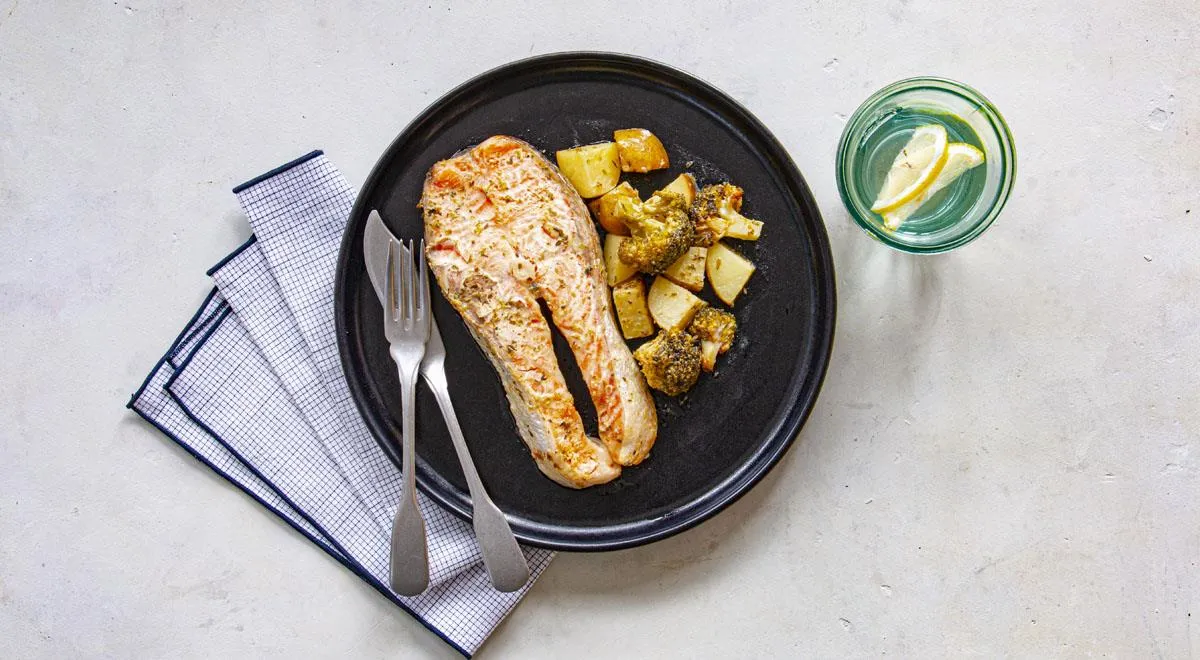
There is something profoundly satisfying about a meal that emerges from the oven as a complete symphony: tender fish, meltingly soft potatoes, and vibrant broccoli, all infused with the same herbaceous mustard dressing. This recipe for trout steaks in a roasting bag with potatoes exemplifies the art of effortless elegance. The roasting bag—a humble kitchen tool—works wonders, locking in moisture and flavor while reducing cleanup to almost nothing. It is a technique that every home cook should master, and once you try it, you will understand why this dish becomes an instant favorite for both festive gatherings and quiet weeknight dinners.
About This Recipe
Trout, a prized member of the salmon family, offers a delicate flavor and a moderately firm texture that responds beautifully to gentle, enclosed heat. Unlike its oilier cousin, trout can dry out if not handled carefully. The roasting bag creates a micro-steam environment that keeps every bite succulent. Paired with Dijon mustard and oregano, the fish takes on a subtle piquancy that complements its natural sweetness. The potatoes and broccoli, meanwhile, absorb the same aromatic dressing, becoming a harmonious side dish that needs no additional adornment. This is cooking at its most intelligent—efficient, flavorful, and visually stunning.

For those who value non-toxic kitchen tools, note that the recipe uses minimal oil and relies on the bag for even heat distribution, making it an excellent choice for health-conscious cooks. The entire process, from prep to plate, takes about 40 minutes, with active work under 10. It is a true time-saving triumph that proves luxury need not be labor-intensive.
Ingredients
- 2 trout steaks (about 250 g each, skin-on or skinless as preferred)
- 2–4 medium potatoes (waxy or all-purpose, about 300–400 g)
- 200 g broccoli florets (fresh, cut into small sprigs)
- 2 tsp Dijon mustard
- 1 tsp dried oregano
- 6 tbsp extra-virgin olive oil
- Salt and freshly ground black pepper to taste
- 1 roasting bag (oven-safe, large enough to hold all ingredients)
Selecting the right oil sprayer or brush can help you evenly coat the ingredients without excess drips. For the potatoes, waxy varieties like Yukon Gold hold their shape beautifully; avoid overly starchy potatoes that might turn mushy.
Step-by-Step Instructions
- Preheat and Prep: Preheat your oven to 190°C (375°F). Wash the potatoes and cut them into large wedges (about 2–3 cm thick). Separate the broccoli into small florets, ensuring they are roughly uniform for even cooking.
- Make the Mustard-Oregano Dressing: In a small bowl, whisk together 6 tablespoons of olive oil, the Dijon mustard, and dried oregano until emulsified. This dressing will serve two purposes: a marinade for the fish and a coating for the vegetables. Use a best immersion blender (or simple whisk) to achieve a smooth consistency.
- Prepare the Trout: Pat the trout steaks dry with paper towels. Using a silicone brush, generously coat each steak on both sides with the dressing. Season with salt and black pepper. Place the steaks inside the roasting bag.
- Toss the Vegetables: In a separate bowl, combine the potato wedges and broccoli florets. Drizzle the remaining dressing over them, add a pinch of salt, and toss well until all surfaces are coated. Transfer the vegetables into the bag, arranging them around the fish.
- Seal and First Bake: Seal the roasting bag according to the manufacturer’s instructions (usually with the included tie or clip). Place the bag on a baking sheet and position it in the center of the oven. Bake for 15 minutes. This initial steam phase allows the fish to cook gently without drying.
- Slash and Finish: Carefully remove the baking sheet from the oven. Using kitchen shears, make a 5 cm slit in the top of the bag to release steam and allow browning. Return to the oven and bake for an additional 15 minutes. The bag will puff up and the fish will become opaque and flaky. The potatoes should be tender when pierced with a fork.
For best results, use a reliable oven thermometer to ensure your temperature stays consistent. The slashing step is crucial: it prevents the bag from bursting while promoting a light golden crust on the fish and vegetables.
Let the dish rest for 2–3 minutes before opening the bag carefully (steam will escape). Serve directly from the bag on a platter or transfer to plates. The juices can be spooned over the fish for extra moisture.
Tips for Perfect Results
- Don’t overfill the bag: Leave room for steam circulation. If your bag is too small, use two bags or a larger one. Overcrowding leads to uneven cooking.
- Customize the vegetables: Substitute broccoli with asparagus, green beans, or cherry tomatoes. For a heartier version, add wedges of carrots or bell peppers. Adjust cooking time if using denser vegetables like carrots.
- Boost the flavor: Add a splash of white wine or a few sprigs of fresh thyme to the bag before sealing. A squeeze of lemon at the end brightens the dish.
- Check for doneness: The internal temperature of the fish should reach 63°C for perfectly cooked trout. Use an instant-read thermometer for accuracy.
- Make it ahead: Assemble the bag up to 4 hours in advance and refrigerate. Add 5 minutes to the initial bake time if chilled.
These techniques are inspired by professional kitchen practices that prioritize both flavor and efficiency.
Variations to Explore
- Herb and Garlic Twist: Replace oregano with a mixture of rosemary and thyme, and add 2 minced garlic cloves to the dressing. The garlic softens and sweetens during baking.
- Spicy Cajun Version: Swap Dijon for whole-grain mustard and add 1 teaspoon of smoked paprika and ½ teaspoon of cayenne. This pairs beautifully with a sweet off-dry Riesling.
- Mediterranean Medley: Include sliced red onion, Kalamata olives, and sun-dried tomatoes along with the potatoes. Top with crumbled feta cheese after baking.
- Citrus Infusion: Add thin slices of lemon or orange inside the bag. The acidity cuts through the richness and complements the trout’s delicate flavor.
Experimenting with regional spice blends can transform this simple formula into a global culinary journey.
FAQ
Can I use frozen trout steaks?
Yes, but thaw them completely in the refrigerator overnight. Pat dry thoroughly to remove excess moisture. You may need to add 5–10 minutes to the total bake time. For best results, use a refrigerant leak detector to ensure your fridge maintains proper temperature during thawing.
What if I don’t have a roasting bag?
You can use a large piece of heavy-duty aluminum foil. Crimp the edges tightly to form a sealed packet. Reduce the initial bake time to 12 minutes and open the foil for the final 10 minutes to allow browning. Alternatively, use a countertop convection oven with a covered dish to mimic the steam environment.
Can I substitute the trout with another fish?
Absolutely. Salmon, sea bass, or halibut work well. Adjust cooking time based on thickness: salmon of similar size (250 g) will take about the same 30 minutes total, while thinner fillets need less time. Always check internal temperature.
How do I prevent the potatoes from being undercooked?
Cut them into uniform wedges no larger than 3 cm thick. You can also parboil the potatoes for 5 minutes before assembling. For extra crispiness, toss them in a non-toxic air fryer basket after the bag is slashed (transfer to air fryer tray and cook 5 minutes).
Can I make this recipe dairy-free or gluten-free?
It is naturally dairy-free and gluten-free as written. Ensure your Dijon mustard is certified gluten-free (most are). The bag is typically made from heat-resistant nylon, which is gluten-free. Check packaging if you have severe allergies.
What wine pairs best with this dish?
I recommend a crisp, unoaked Chardonnay or a dry Pinot Gris. The mustard and herb notes also complement a light-bodied red like Beaujolais. For non-alcoholic options, try a sparkling elderflower soda.
How do I store leftovers?
Remove fish and vegetables from the bag and refrigerate in an airtight container for up to 2 days. Reheat gently in a covered skillet with a splash of water or in a microwave pressure cooker set to low power to avoid drying out. Do not freeze, as the texture of potatoes and broccoli may suffer.
This recipe is more than a meal; it is a testament to the power of simple, smart cooking. By harnessing the roasting bag, you unlock a world of flavor without a sink full of dishes. Whether you are feeding a family or impressing guests, trout steaks in a roasting bag with potatoes will earn a permanent place in your repertoire. Enjoy the journey from oven to table—and the delicious silence as every plate is cleaned.







