


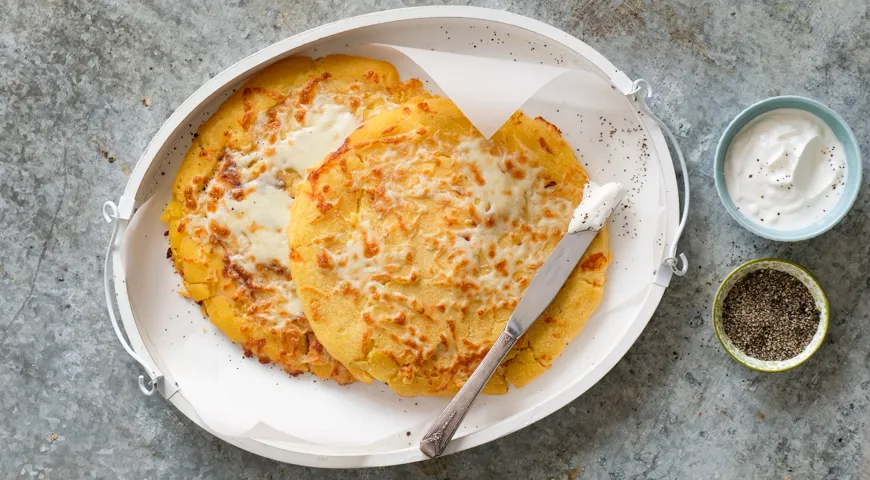
There is something deeply comforting about pulling a golden, cheese-laced flatbread from the oven—the aroma of melted butter and toasty dough filling the kitchen. These Sour Cream and Cheese Flatbreads (lepeshki so smetanoj i syrom) are a beloved Russian classic, combining a soft, yeasted base with a rich, tangy-savory filling. They are perfect for a hearty breakfast, an afternoon snack, or as an accompaniment to soups and stews. This recipe yields four generous flatbreads, each one crisp on the outside and irresistibly creamy within.
About This Recipe
Rooted in the Russian tradition of using simple, available ingredients to create something extraordinary, these flatbreads celebrate the contrast between a light, airy dough and a luscious sour cream and cheese filling. The dough relies on yeast for its pillowy texture, while the filling—a combination of full‑fat sour cream and hard cheese—melts into a decadent layer during baking. The technique of folding the filling inside the dough and then rolling it out again ensures every bite is evenly distributed. For the best results, use high‑quality ingredients and take time to let the dough rise properly. If you enjoy experimenting with different doughs, consider using a planetary mixer to simplify the kneading process.

Ingredients
- 300 g all‑purpose flour, plus extra for dusting
- 150 ml whole milk (3.2% fat)
- 40 g salted butter
- 5 g granulated sugar
- 3 g fine sea salt
- 7 g active dry yeast (or 20 g fresh yeast)
- 400 g hard cheese (e.g., Gouda, Edam, or Russian-style)
- 200 g sour cream (30% fat)
- Vegetable oil, for greasing
Note: The original recipe did not list yeast in the ingredients, but the steps call for it. The above quantity ensures a well‑risen dough. For a non‑yeast version, see the Variations section.
Step‑by‑Step Instructions
Step 1: Melt the butter. Cut the butter into small pieces and place in a bowl. Melt it over a water bath or in the microwave in 10‑second bursts until fully liquid. Set aside to cool slightly.
Step 2: Make the dough. Sift the flour into a large mixing bowl. In a separate deep bowl, combine the milk, melted butter, flour, sugar, salt, and yeast. Knead by hand or with a food processor until the dough is smooth and elastic—about 8‑10 minutes.
Step 3: Let the dough rise. Shape the dough into a ball, return it to the bowl, cover with a clean kitchen towel, and place in a warm, draft‑free spot. Allow it to rise for 1.5‑2 hours, or until it has doubled or tripled in volume.
Step 4: Prepare the filling. While the dough rises, grate the cheese on the large holes of a box grater. Transfer to a bowl, add the sour cream, and mix until you have a thick, cohesive paste. Taste and adjust with a pinch of salt if needed.
Step 5: Shape the flatbreads. Dust your work surface with flour. Divide the risen dough into four equal pieces. Roll each piece into a circle about 20 cm in diameter. Spoon one‑quarter of the cheese mixture onto the center, then gather the edges of the dough toward the middle and pinch to seal. Flip the bundle seam‑side down and gently roll it out again into a flatbread about 1 cm thick. Repeat with the remaining pieces.
Step 6: Bake. Line a baking sheet with parchment paper and brush lightly with vegetable oil. Place the flatbreads on the oiled paper, leaving space between them. Bake in a preheated oven at 200°C (400°F) for 20‑25 minutes, until golden brown and puffed. For an extra‑crisp bottom, you can also finish them on a hot cast‑iron skillet for a minute or two. Using a commercial countertop convection oven can help achieve even browning.
Tips for Perfect Flatbreads
- Use full‑fat sour cream (30%) for the best creamy texture; lower fat versions may leak during baking.
- If the dough feels too sticky when rolling, dust lightly with flour but avoid over‑kneading.
- Let the rolled flatbreads rest for 5 minutes before baking—this relaxes the gluten and prevents shrinking.
- For an even richer flavor, substitute half the butter with a high‑quality cooking oil (though castor oil is not recommended; choose a neutral‑flavored oil like avocado or grapeseed).
- Check the flatbreads midway through baking; if they are browning too quickly, tent with foil.
Variations to Explore
Herb and garlic twist: Add 2 cloves of minced garlic and 2 tablespoons of chopped fresh dill or parsley to the cheese filling. Spiced version: Sprinkle the dough with cumin seeds or smoked paprika before rolling. Gluten‑free adaptation: Replace the wheat flour with a 1:1 gluten‑free flour blend; add an extra tablespoon of milk if the dough seems dry. No‑yeast option: Use 2 teaspoons of baking powder instead of yeast and let the dough rest for only 15 minutes before shaping. For a quick breakfast, these flatbreads can even be cooked in a non‑toxic air fryer at 190°C for 12‑14 minutes—flip halfway through.
Frequently Asked Questions
Can I make the dough ahead of time?
Yes. Prepare the dough, let it rise once, then punch it down and refrigerate for up to 24 hours. Bring it to room temperature before shaping and filling.
What cheese works best for the filling?
Hard, meltable cheeses like Gouda, Edam, Cheddar, or Russian-style Rossiyskiy are ideal. Avoid very soft cheeses as they can make the filling too runny.
How do I store leftover flatbreads?
Keep them in an airtight container at room temperature for up to 2 days. Reheat in a dry skillet or in the oven at 180°C for 5 minutes to restore crispness.
Can I freeze these flatbreads?
Absolutely. Freeze the baked flatbreads in a single layer, then transfer to a freezer bag. Reheat directly from frozen in a 180°C oven for 10‑12 minutes.
Why is yeast not listed in the original ingredients?
The original recipe appears to have omitted the yeast quantity, but the step instructions clearly require it. We have added 7 g of active dry yeast to ensure proper rising. If you prefer a denser flatbread, you can omit the yeast and use a leavening agent like baking powder—see the Variations section.
Explore more: For perfect texture, consider pairing these flatbreads with a high‑end espresso machine for your coffee break. If you’re looking to upgrade your kitchen tools, check out our guide to the best non‑toxic immersion blender for silky soups, or the best chocolate‑covered raisins for a sweet finish. For a complete meal, serve alongside a store‑bought au jus for dipping, or try our Catalan sponge cake for dessert.







