


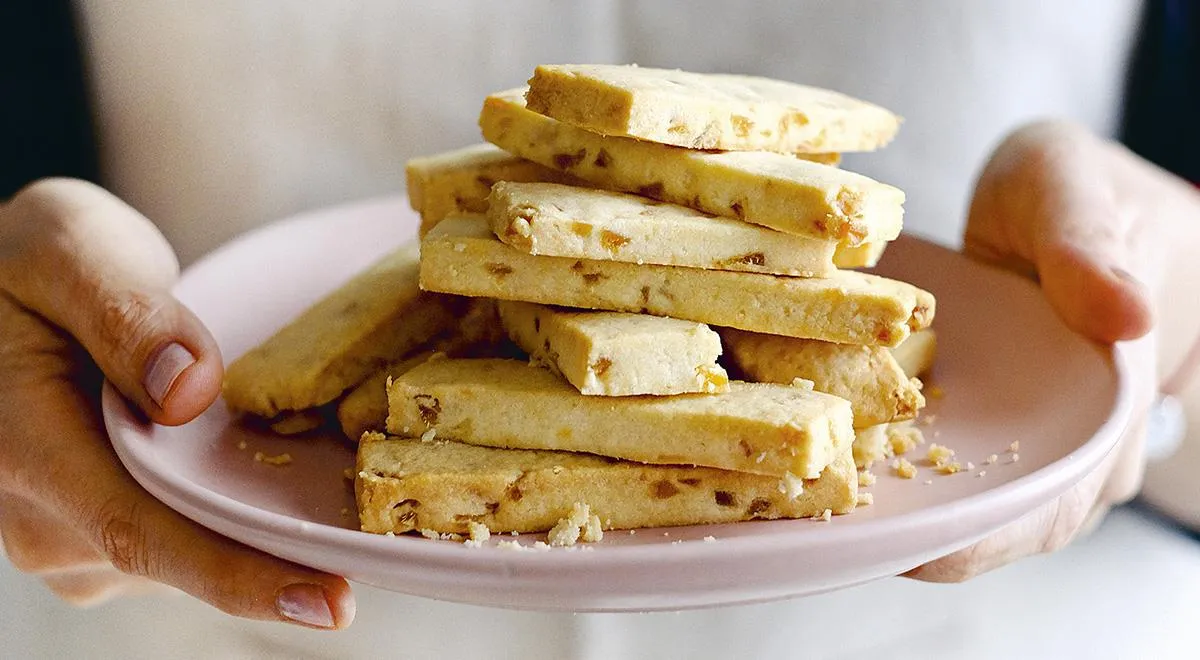
There are cookies, and then there are cookies—the kind that disappear before they’ve even cooled, leaving only a lingering whisper of fragrant spice and buttery crumb. These Ginger Candied Cookies, born from the heart of Russian home baking, are precisely that. A humble blend of butter, sugar, and two flours, they are elevated by the jewel-like burst of candied ginger. The result is a crisp-edged, tender-centered biscuit that pairs as effortlessly with afternoon tea as it does with a quiet moment of self-indulgence. In this article, we explore not just the recipe, but the techniques, tools, and variations that make these cookies a staple worth mastering. Whether you are a seasoned baker or a curious novice, this guide will walk you through every step—from selecting the finest ingredients to achieving that perfect bake.
About This Recipe
This recipe for Ginger Candied Cookies (Печенье с имбирными цукатами) is a classic Russian shortbread variation that highlights the aromatic warmth of crystallized ginger. Unlike many Western shortbreads that rely solely on vanilla, this version employs a dual-flour approach—combining all-purpose flour with rice flour—to create an exceptionally delicate, melt-in-the-mouth texture. The candied ginger provides both sweetness and a gentle peppery kick, making these cookies sophisticated yet approachable. The dough is chilled before slicing and baking, a technique that ensures clean edges and even baking. This is a recipe that rewards patience and precision, and the results are nothing short of sublime. For more insights into the art of shortbread, explore our guide on Catalan sponge cake techniques, which share a similar reverence for texture.

Ingredients
- 125 g unsalted butter, softened
- 50 g granulated sugar
- 150 g all-purpose flour
- 50 g rice flour
- 100 g candied ginger, finely chopped
The quality of your butter is paramount. Choose a high-fat European-style butter for the richest flavor. For the candied ginger, look for pieces that are plump and moist, not dried out. If you are using a food processor to chop the ginger, we recommend the best glass food processor for even, non-stick results. Rice flour is available in most supermarkets or Asian grocery stores; it adds a subtle crunch that all-purpose flour alone cannot achieve.
Step-by-Step Instructions
Step 1: Prepare the Dough
Remove the butter from the refrigerator well in advance—allow it to come to room temperature until it is soft but not melted. Finely chop the candied ginger into small pieces, about the size of a grain of rice. In a large bowl, combine the all-purpose flour, rice flour, softened butter, and sugar. Beat the mixture with a hand mixer or a stand mixer fitted with the paddle attachment until the mixture resembles coarse crumbs and begins to come together. This should take about 2 minutes on medium speed. Fold in the chopped candied ginger by hand, ensuring it is evenly distributed.
Step 2: Chill the Dough
Turn the dough out onto a sheet of parchment paper. Using your hands, shape it into a rectangle about 1 cm thick. Wrap the dough in the parchment and slide it onto a baking sheet or cutting board. Refrigerate for at least 1 hour, or until firm. Chilling solidifies the butter, preventing the cookies from spreading too much during baking. For best results, use a reliable planetary mixer for the initial blending—it ensures the butter is evenly incorporated without overworking the dough.
Step 3: Slice and Bake
Preheat your oven to 150°C (300°F). Remove the chilled dough from the refrigerator and, still on the parchment, transfer it directly to a baking sheet. Using a sharp knife, cut the dough into rectangular or square cookies—each about 2 cm wide. Leave a small gap between them as they will expand slightly. Bake on the middle rack of the oven for 15 minutes. The cookies should be set but not browned; they will continue to firm up as they cool. Turn off the oven and leave the cookies inside for an additional 5 minutes to gently dry out and develop a crisp texture. Then remove the baking sheet and transfer the cookies to a wire rack to cool completely.
No step images were provided for this recipe. The steps are straightforward; however, if you wish to see a visual guide, many baking blogs include photographs of the dough chilling and slicing process. For equipment that ensures even heat distribution, consider a commercial countertop convection oven for consistent results.
Tips for Perfect Ginger Cookies
- Use a digital scale for precise measurements. Baking is a science, and even 5 grams can alter the texture.
- If your dough is too crumbly, add 1–2 teaspoons of cold water and mix gently.
- For a more intense ginger flavor, add 1/4 teaspoon of ground ginger along with the flours.
- Store cookies in an airtight container at room temperature for up to 1 week. They also freeze beautifully.
- To achieve uniform slices, use a ruler as a guide. Or invest in a best oil sprayer to lightly grease your knife—this prevents sticking and ensures clean cuts.
Delicious Variations
This versatile dough welcomes creativity. Try these twists:
- Spiced Ginger Cookies: Add 1/2 teaspoon cinnamon and 1/4 teaspoon cardamom to the flour mixture for a warming chai-inspired profile.
- Chocolate-Dipped: Once cooled, dip half of each cookie in melted dark chocolate and let set on parchment. Sprinkle with flaky sea salt.
- Citrus-Ginger: Replace 20 g of the candied ginger with finely chopped candied orange peel. The combination of citrus and ginger is sublime.
- Nutty Crunch: Fold in 50 g of toasted pistachios or almonds along with the ginger.
- For a festive version, use red and green candied cherries alongside the ginger—ideal for holiday cookie platters. Pair with a sweet high-alcohol wine for a grown-up dessert.
Frequently Asked Questions (FAQ)
Can I use only all-purpose flour instead of a mix?
Yes, but the texture will be denser and less tender. Rice flour is the secret to the delicate crumb. If you don’t have rice flour, substitute with an equal amount of cornstarch for a similar effect.
Why is my dough too sticky or too dry?
Stickiness usually means the butter was too warm. Chill the dough longer before slicing. Dryness suggests overmixing or inaccurate flour measurement. Always spoon and level your flour. Using a non-toxic immersion blender to cream the butter and sugar can also help achieve the right consistency.
Can I make these cookies gluten-free?
Yes! Replace the all-purpose flour with a gluten-free all-purpose blend. The rice flour already contributes to a lighter texture, so the swap works well. Ensure your candied ginger is certified gluten-free if needed.
How do I store these cookies to keep them crisp?
Store in an airtight container with a piece of bread or a silica gel packet to absorb excess moisture. They stay fresh for up to a week. For longer storage, freeze the unbaked dough logs and slice and bake when desired.
Can I use fresh ginger instead of candied?
Fresh ginger has a different moisture content and will make the cookies soggy. Candied ginger is essential for the correct texture and sweetness. However, you can add a pinch of ground ginger for extra spice without altering the dough.
My cookies spread too much. What went wrong?
This usually happens if the dough was not chilled enough. Make sure to chill for the full hour, or even longer. Also, check your oven temperature with an oven thermometer; an overly hot oven can cause spreading. A built-in refrigerator with accurate temperature control is ideal for chilling dough.
Can I double the recipe?
Absolutely. Simply multiply all ingredients by two. You may need to chill the dough in two batches if your mixer bowl is not large enough. Consider using a best food processor for nut butter to efficiently chop larger quantities of candied ginger without heating the blade.
These Ginger Candied Cookies are more than a recipe—they are a celebration of texture, spice, and the simple joy of homemade baking. Whether enjoyed with a cup of strong black tea, crumbled over vanilla ice cream, or gifted in a tin lined with wax paper, they bring warmth to every occasion. For more inspiration, browse our collection of best chocolate-covered raisins for another sweet treat, or explore espresso machines under $2000 to brew the perfect accompaniment. Happy baking!







