


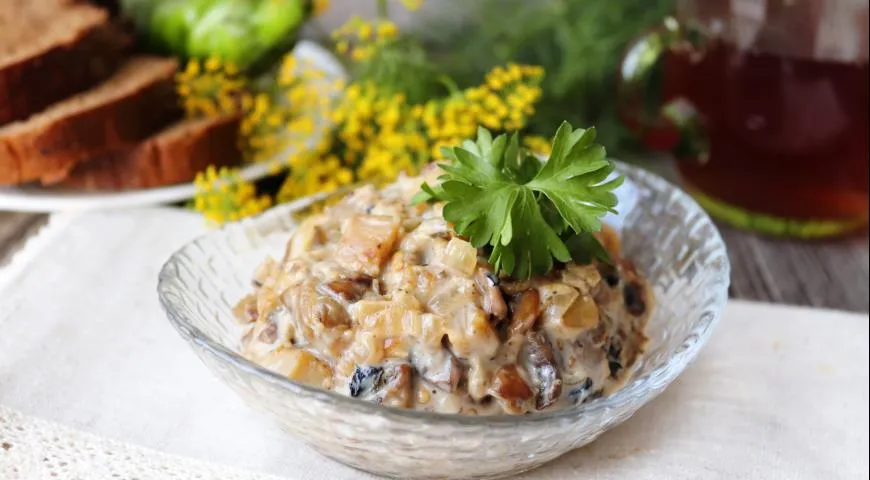
There are few comfort foods as quietly elegant as a perfectly crafted eggplant caviar. This Russian-inspired recipe elevates the humble aubergine with earthy mushrooms, creamy melted cheese, and a whisper of Mediterranean herbs. The result is a silky, savory spread that works equally well as a canapé topping, a sandwich filler, or a spoon‑worthy snack. Best of all, it comes together in under 30 minutes with minimal fuss.
About This Recipe
Traditional ikra iz baklazhanov – eggplant caviar – is a staple of Russian summer kitchens, often served as a vegetable appetizer. This version introduces two luxurious twists: sautéed champignons for umami depth and a luscious processed cheese that melts into the vegetables, creating an almost mousse‑like texture. The oven‑roasting technique, done in just 15 minutes at 200°C, caramelizes the eggplant and mushrooms without saturating them in oil. It’s a lighter, faster take on a classic that still delivers rich, complex flavor. For those who love experimenting with food processors, this recipe can easily be blitzed into a smoother dip, though we prefer the rustic charm of hand‑cut cubes.

Ingredients
- 1 medium eggplant (about 250–300 g) – peeled and diced into 1‑cm cubes
- 200 g fresh champignons (or any white mushrooms) – wiped clean and diced to roughly the same size as the eggplant
- 1 medium onion – finely chopped
- Dried oregano – a generous pinch
- Dried rosemary – a generous pinch
- 2 tablespoons olive oil – plus extra for drizzling
- 100 ml heavy cream (35% fat)
- 100 g processed cheese (such as Hochland or President) – cut into small cubes for faster melting
- Salt and freshly ground black pepper to taste
- Fresh parsley or chives for garnish (optional)
Using a reliable oil sprayer can help you control the olive oil drizzle evenly over the vegetables.
Step‑by‑Step Instructions
Step 1: Prep and Roast the Vegetables
Peel the eggplant and cut into small, uniform cubes – aim for 1 cm on each side. Pat dry with paper towels to remove excess moisture. Wipe the mushrooms clean with a damp cloth (never rinse them, as they absorb water) and dice them to a similar size. The goal is to have roughly equal volumes of eggplant and mushrooms. Place the diced vegetables in a mixing bowl, sprinkle with oregano, rosemary, and a generous pinch of salt. Drizzle with olive oil and toss gently to coat. Spread the mixture in a single layer on a foil‑lined baking sheet. Roast in a preheated oven at 200°C (400°F) for 15 minutes, or until tender and lightly browned. The foil makes cleanup effortless.
Step 2: Sauté the Onion
While the vegetables roast, heat a tablespoon of olive oil in a large skillet over medium heat. Add the finely chopped onion and cook, stirring occasionally, until golden and translucent – about 5–7 minutes. The caramelized onion will add a subtle sweetness to balance the earthy notes of the mushrooms.
Step 3: Combine and Simmer
Once the eggplant and mushrooms are out of the oven, transfer them directly into the skillet with the onion. Increase the heat to medium‑high and stir‑fry everything together for about 5 minutes, allowing the flavors to meld and any excess moisture to evaporate. The vegetables should start to soften and break down slightly.
Step 4: Add Cream and Cheese
Reduce the heat to low and pour in the heavy cream. Stir well and let the mixture simmer gently for 3–5 minutes. The cream will be absorbed by the vegetables, making them lusciously creamy. Add the cubed processed cheese and continue stirring until the cheese has fully melted into the sauce. The mixture will thicken into a rich, spoonable caviar – not too runny, not too stiff. Taste and adjust salt and pepper as needed.
Step 5: Serve
Transfer the eggplant caviar to a serving bowl, garnish with fresh herbs if desired, and enjoy while still warm. It’s divine on crusty bread, piled into mini tartlets, or simply eaten by the spoonful. For a polished presentation, consider using a small espresso spoon to serve alongside crostini.
Tips for Perfect Eggplant Caviar
- Dice uniformly – cubes of the same size ensure even roasting. A glass food processor bowl can help you see the texture as you pulse.
- Don’t skip the cream step – the cream soaks into the vegetables and prevents the dish from drying out during the final simmer. For a lighter version, substitute with half‑and‑half.
- Choose the right processed cheese – look for a buttery, meltable variety (not the individually wrapped slices). The cheese adds body and a subtle tang. If unavailable, cream cheese can be used, though the flavor will be milder.
- Use a non‑toxic immersion blender – if you prefer a smoother dip, blend the finished caviar with an immersion blender directly in the pan for a pourable texture.
- Make ahead – this spread keeps well in the fridge for up to 4 days. Reheat gently on the stovetop or in a microwave pressure cooker.
Variations to Try
This eggplant caviar is wonderfully adaptable. For a smoky twist, roast the eggplant whole on a gas grill until the skin is charred, then scoop out the flesh and chop it instead of peeling and dicing. You can also swap the champignons for shiitake or oyster mushrooms for a more exotic flavor profile. If you’re dairy‑free, replace the cream with full‑fat coconut milk and use a vegan processed cheese alternative – just note that the texture will be slightly different. Want a bit of heat? Stir in a finely chopped red chili or a teaspoon of smoked paprika along with the herbs. Pair it with a crisp white wine like an alcohol‑rich Sauvignon Blanc for a delightful contrast.
Frequently Asked Questions
Can I use dried herbs instead of fresh?
Yes, and in fact dried oregano and rosemary work beautifully here because they can withstand the roasting heat without burning. Fresh herbs should be added at the end, not during roasting, to preserve their delicate flavor.
Can I freeze eggplant caviar?
While it is possible to freeze, the texture may become slightly watery upon thawing because of the cream and cheese. We recommend making it fresh or storing it in the refrigerator for up to 4 days. If you do freeze, reheat slowly over low heat and stir in a splash of cream to restore the richness.
What if I can’t find processed cheese?
Processed cheese melts more smoothly than most hard cheeses. As a substitute, use cream cheese (full‑fat) or a soft, fresh goat cheese. For a tangy kick, try a small amount of Brie (without the rind) – it will add a lovely creaminess.
Is this recipe gluten‑free?
Yes, all the ingredients are naturally gluten‑free. Just be sure to check the label on the processed cheese, as some brands may contain stabilizers. Serve it on gluten‑free crackers or vegetable crudités for a safe option.
Can I add other vegetables like zucchini or bell peppers?
Absolutely. Diced zucchini and bell peppers complement the eggplant and mushrooms wonderfully. If you add them, reduce the eggplant quantity slightly to keep the proportions balanced, and adjust the roasting time as needed so all vegetables are tender.
Why This Recipe Works
Eggplant caviar is a study in contrasts: the silky vegetable against the firm mushrooms, the earthy herbs against the bright tang of cheese. By roasting first, we concentrate flavors without deep‑frying. Then the cream and cheese act as a liaison, binding everything into a cohesive spread that feels both indulgent and wholesome. This recipe also fits neatly into a busy schedule – just 15 minutes of oven time and a quick sauté on the stovetop. Serve it at your next dinner party with a glass of George Howell coffee for an unexpected pairing, or keep it simple for a weekday lunch. Either way, it’s a dish that proves comfort food can be elegant.
For more inventive vegetable spreads, explore our guide to under‑counter ice makers to keep your beverages chilled while you cook, or check out our top picks for commercial countertop convection ovens that make roasting a breeze. If you love this recipe, you’ll also enjoy our Catalan sponge cake for a sweet finish.







