


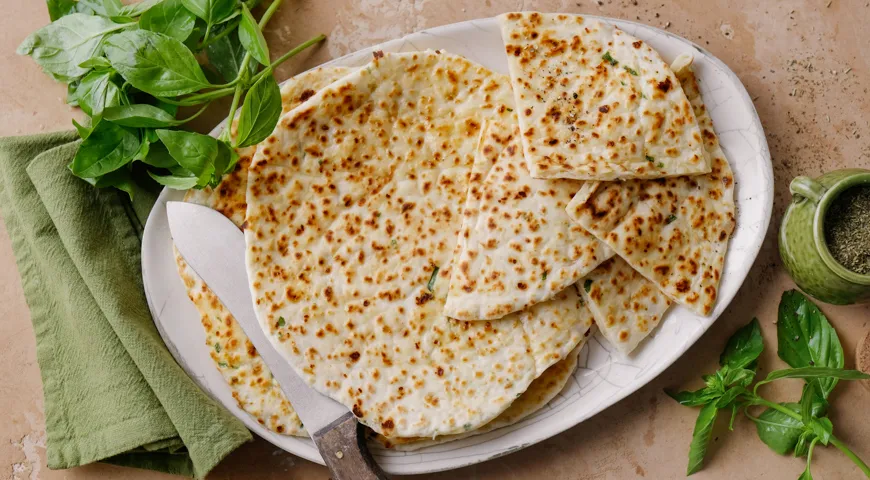
When pancakes and blini become routine, these cheese flatbreads made with milk offer a delightful twist. Hailing from Russian home kitchens, they boast a golden, crispy edge and a tender, cheesy interior. The dough comes together without yeast, relying on milk and a touch of baking powder for lift. Using a good-quality semi-hard cheese ensures a luscious, stretchy melt, while fresh basil adds an aromatic note. The result is a versatile flatbread perfect for breakfast, a snack, or alongside soups and stews.
About This Recipe
This no-yeast flatbread is a staple of quick baking. The milk-based dough is enriched with shredded cheese, creating a soft crumb with a satisfying crust. Unlike many fried breads, these stay moist and flavorful thanks to the dairy. The optional basil infuses a Mediterranean flair, but the recipe welcomes customization. For those new to flatbreads, this is an excellent starting point because it requires minimal equipment—just a planetary mixer or your hands. The technique is straightforward: mix, rest, shape, and fry. Each flatbread cooks in minutes, making it ideal for busy weeknights or impromptu gatherings.

Ingredients
- 400 g all-purpose flour
- 250 ml whole milk (3.2% fat)
- 150 g semi-hard cheese (e.g., Gouda, Edam, or Russian-style)
- 40 ml vegetable oil (plus more for frying)
- 3 g baking powder
- 5 g sugar
- 3 g salt
- Butter for brushing (optional)
- A handful of fresh basil leaves (optional)
Step-by-Step Instructions
Step 1: Prepare the cheese and basil
Grate the semi-hard cheese on the large holes of a box grater. Rinse the basil sprigs under cold water, pat dry with paper towels, then strip the leaves and chop them finely. The stems are discarded.
Step 2: Make the dough
Sift the flour into a large mixing bowl. Add the milk, grated cheese, chopped basil, baking powder, salt, and sugar. Stir with a wooden spoon until a shaggy dough forms, then turn out onto a floured surface and knead by hand for about 2 minutes until smooth. Alternatively, use a food processor with a dough blade for even mixing. Form the dough into a ball.
Step 3: Rest the dough
Place the dough ball back in the bowl, cover with plastic wrap or a clean kitchen towel, and let it rest in a warm, draft-free spot for 30 minutes. This relaxes the gluten and makes rolling easier.
Step 4: Divide and shape
Lightly dust your work surface with flour. Divide the dough into 8–10 equal pieces, each about 80–100 g. Roll each piece into a ball, then flatten with a rolling pin into a disk about 3–5 mm thick. The disk should be slightly smaller than the diameter of your frying pan.
Step 5: Fry the flatbreads
Heat a large non-stick skillet over medium-high heat and add a thin layer of vegetable oil (about 1–2 tablespoons). Working one at a time, fry each flatbread for 3–4 minutes per side, until golden brown and puffed. Adjust heat if needed to avoid burning. Transfer to a plate, brush with butter while hot (if desired), and stack. For best results, use a non-toxic air fryer to finish them if you prefer a crispier texture without extra oil.
Tips for Perfect Cheese Flatbreads
- Use full-fat milk for a richer crumb. Low-fat milk yields a drier texture.
- Don’t overmix the dough; it should come together without being tough.
- Let the dough rest fully; a 30-minute rest ensures easier rolling.
- Fry in a heavy-bottomed pan to maintain even heat.
- Brush with melted butter immediately after frying for a glossy, flavorful finish.
- For a more pronounced cheese flavor, add 50 g extra grated cheese to the dough.
- If you don’t have basil, try finely chopped dill or chives.
Variations to Try
These flatbreads are a blank canvas. Swap the basil for rosemary or thyme for an herby twist. Add a teaspoon of organic vodka to the dough for extra crispiness (a trick used in some Eastern European recipes). For a spicy kick, mix in red pepper flakes or chopped jalapeño. You can also stuff the flatbreads with a piece of mozzarella before rolling, creating a molten cheese center—just be sure to seal the edges well. Serve them with a dipping sauce like garlic yogurt or au jus for a hearty pairing.
Frequently Asked Questions
Can I make the dough ahead of time?
Yes, you can prepare the dough up to 24 hours in advance. Wrap it tightly in plastic wrap and refrigerate. Let it come to room temperature for about 15 minutes before rolling and frying.
Can I bake these instead of frying?
Absolutely. Place the rolled flatbreads on a parchment-lined baking sheet, brush with oil, and bake at 220°C (425°F) for 8–10 minutes, flipping halfway. For a crispier crust, use a convection oven or a commercial countertop convection oven.
What type of cheese works best?
Semi-hard cheeses like Gouda, Edam, or Russian-style cheese melt smoothly without becoming greasy. Avoid pre-shredded cheese, as it often contains anti-caking agents that affect melt. For a stronger flavor, try aged cheddar or Gruyère.
Can I freeze the cooked flatbreads?
Yes, they freeze beautifully. Cool completely, wrap individually in plastic wrap, then store in a freezer bag for up to 2 months. Reheat in a dry skillet or in an air fryer at 180°C (350°F) for 3–4 minutes.
Why did my flatbreads turn out dense?
Density can result from overworking the dough, not resting it long enough, or using too much flour during rolling. Also ensure your baking powder is fresh. Check your refrigerant leak detector isn’t needed—just store baking powder in a cool, dry place.
Can I use gluten-free flour?
A 1:1 gluten-free flour blend works, but the texture will be more cake-like. Add an extra teaspoon of baking powder and 1 tablespoon of olive oil to improve elasticity. For best results, try a wheatgrass juicer? No, that’s unrelated—stick to a quality GF flour mix.
What if I don’t have a rolling pin?
You can press the dough balls flat with your hands or use a flat-bottomed bowl. Alternatively, a best oil sprayer can help if you’re looking for even oil application for frying, but for shaping, a wine bottle works in a pinch.
How do I prevent the cheese from burning?
Since the cheese is inside the dough, it doesn’t burn directly. However, if the pan is too hot, the exterior can darken before the inside cooks. Use medium heat and watch for golden-brown spots. If your pan has hot spots, an undercounter ice maker won’t help, but a heavy-bottomed pan will distribute heat evenly.
Final Thoughts
These cheese flatbreads are a testament to the beauty of simple ingredients. The milk and cheese create a tender, savory bread that pairs with nearly any meal. Whether you enjoy them as a quick breakfast with a runny egg or as a side to a hearty stew, they never disappoint. Experiment with herbs and spices, and don’t forget to serve them warm. For more inspiration, explore our other Catalan sponge recipe or discover the best chocolate-covered raisins for a sweet contrast. Happy cooking!







