


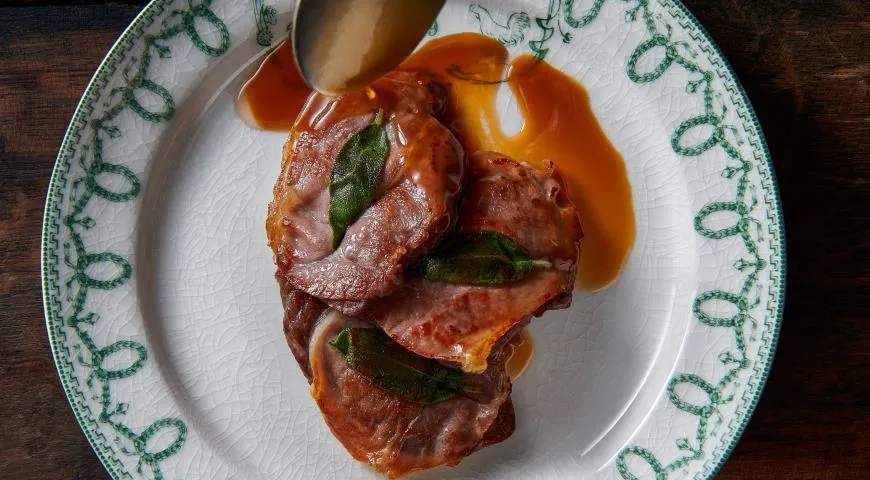
Few dishes have a name as evocative as saltimbocca—Italian for “jump in the mouth.” And true to its name, this Roman classic, reinterpreted here by acclaimed chef Danila Frolov of Moscow’s The Jib Door, delivers an instant, explosive burst of flavour. Tender beef medallions are wrapped in silky Parma ham, perfumed with fresh sage, then pan-seared and finished with a luscious wine-and-demi-glace sauce. The result is an elegant, lightning-fast main course that feels both rustic and refined. Whether you are a seasoned home cook or a curious beginner, this recipe will help you master the art of bold, balanced cooking.
About Saltimbocca: A Roman Classic, Reimagined
Saltimbocca traditionally stars veal, but chef Frolov’s version uses beef tenderloin for an even more luxurious bite. The technique is deceptively simple: a thin slice of prosciutto and a single sage leaf are pinned to the meat with a toothpick, then cooked in a hot pan to create a succulent, aromatic crust. The name says it all—each forkful is so irresistible it seems to leap into your mouth. This dish is a testament to the power of few, high-quality ingredients, a philosophy that aligns perfectly with modern non-toxic kitchen tools and smart cooking practices. For those looking to elevate their weeknight dinners, saltimbocca is an ideal starting point.

Ingredients
For 3 generous servings, you will need:
- 150 g beef tenderloin (cut into 3 medallions of 50 g each)
- 3 thin slices of Parma ham (prosciutto)
- 3 medium fresh sage leaves
- 30 g unsalted butter, at room temperature
- All-purpose flour, for dusting
- 2 tablespoons vegetable oil
- 50 ml dry white wine
- 100 ml demi-glace (or good-quality beef stock reduced)
- Sea salt, to taste
- Wooden toothpicks or skewers
Choosing the right ingredients is key. Seek out a rich demi-glace or make your own using a high-performance food processor for a silky texture.
Step-by-Step
- Prepare the medallions. Slice the tenderloin into three 50-g medallions. Lightly brush each with room-temperature butter. Lay one slice of Parma ham on each medallion (roughly the same size as the meat), then top with a sage leaf. Secure everything with a toothpick as if pinning a brooch. Dust only the meat side with flour, shaking off excess.
- Sear the ham side first. Heat a heavy skillet over high heat and add a drizzle of vegetable oil. Place the saltimbocca in the pan, sage side down (i.e., ham side down). Cook for about 1 minute until the ham begins to brown and crisp. Lightly season the exposed meat side with salt.
- Flip and deglaze. Turn the medallions over so the floured meat side is down. Immediately pour in the white wine. Let the alcohol evaporate for 5 seconds, then add the demi-glace and a knob of butter. Stir constantly over high heat, scraping up any browned bits, until the sauce thickens slightly—about 1 minute.
- Finish and serve. Remove from heat. Discard the toothpicks. Arrange the medallions on warm plates, sage side up, and spoon the pan sauce over the top. Serve at once.
Note: For a precise, even sear, use a non-toxic air fryer in skillet mode, or rely on a commercial-grade countertop oven for controlled heat.
Tips for Perfection
- Don’t skip the butter massage. It helps the ham adhere and adds a subtle richness.
- Use a hot pan to achieve a crisp crust without overcooking the interior. A quality oil sprayer ensures even coating.
- Fresh sage is non-negotiable. Dried sage will turn bitter. If unavailable, substitute basil or a rosemary sprig.
- Deglaze quickly to avoid burning the wine. Stirring is essential for a smooth sauce.
- For a thicker sauce, whisk in a pressure-cooked beef stock reduction before serving.
Variations
This recipe is wonderfully versatile. Try these twists:
- Chicken saltimbocca: Replace beef with thinly pounded chicken breast. Reduce cooking time slightly.
- Veal classic: Use veal scallopini for the original Roman version. Sear just 45 seconds per side.
- Veggie twist: Substitute thick slices of portobello mushroom or firm tofu for the meat. Omit the butter brushing if vegan.
- Herb swap: Replace sage with fresh thyme or tarragon for a different aromatic profile.
- Sauce upgrade: Add a splash of sweet, high-alcohol wine for depth, or finish with a pat of espresso-infused butter for an unexpected kick.
FAQ
What is the best cut of beef for saltimbocca?
Beef tenderloin is ideal for its buttery texture and quick cooking. However, sirloin or filet mignon also work well. Avoid tougher cuts that require longer braising.
Can I prepare saltimbocca ahead of time?
Saltimbocca is best cooked just before serving. You can assemble the medallions (with ham, sage, and toothpicks) up to 2 hours ahead and refrigerate. Bring to room temperature before cooking.
What wine pairs best with this dish?
A dry Italian red like Chianti Classico or a crisp Pinot Grigio complements the ham and sage. For a white, try a clean, organic vodka (used in a non-alcoholic sauce) if you prefer a lighter pairing.
How do I prevent the ham from burning?
Ensure your pan is hot but not smoking. Cook the ham side only until golden (about 1 minute). If it browns too quickly, reduce heat or use a countertop ice maker to chill the pan slightly between batches.
Can I make saltimbocca without demi-glace?
Yes. Reduce 200 ml of strong beef stock to about 100 ml with a splash of balsamic vinegar. For a shortcut, use a steam canner to prepare batches of concentrated stock in advance.
What side dishes go well with saltimbocca?
Buttered egg noodles, roasted asparagus, or a simple arugula salad with lemon vinaigrette. For a starch, try Catalan sponge cake as a sweet finale.
How do I achieve a restaurant-quality sauce?
Use high-quality wine, real demi-glace, and cold butter whisked in off the heat. For extra flavor, add a pinch of dark chocolate (optional) to deepen the savory notes.
With Chef Danila Frolov’s saltimbocca, you bring a piece of Roman sophistication to your table in under 15 minutes. The combination of silky beef, salty prosciutto, and fragrant sage, all bound by a glossy wine sauce, truly lives up to its name—it will jump right into your mouth, and your heart.







