


There is something profoundly satisfying about a dish that requires little more than patience and a sharp knife. Pan-braised vegetables, or ovoschi tushennye v skovorode, embody the philosophy of letting good ingredients speak for themselves. This is not a recipe that demands constant stirring or precise timing; rather, it invites you to slow down, arrange each slice with intention, and allow the gentle heat to coax out natural sweetness.
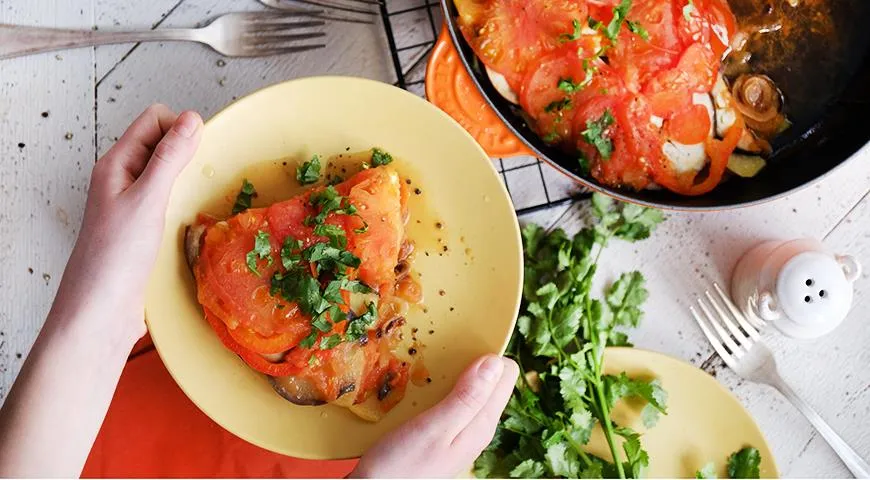
About This Dish
Born from the rustic kitchens of Eastern Europe, this classic preparation elevates humble vegetables into a main-course worthy of a dinner party or a quiet weeknight. The technique is deceptively simple: layer thinly sliced vegetables in a heavy pan, drizzle with olive oil, and braise until tender. The secret lies in selecting the ripest tomatoes – their juices eliminate the need for additional liquid. The carrot rounds must be cut gossamer-thin, or they will remain obstinately firm while the potatoes collapse. This dish rewards precision with a harmony of textures and flavors that no quick stir‑fry can match.

Ingredients
- 5–6 ripe tomatoes
- 3–4 potatoes (medium)
- 1 eggplant
- 1 sweet bell pepper
- 1 carrot
- 2 tbsp olive oil (plus extra for drizzling)
- Salt to taste
Optional: a splash of vegetable broth if tomatoes are not exceptionally juicy; fresh herbs like thyme or basil for garnish.
Step‑by‑Step Instructions
Prepare the vegetables
Slice all vegetables except the carrot into rounds about 0.5 cm thick – half‑moon shapes work beautifully if you prefer. For the carrot, use a sharp mandoline or a steady hand to create very thin rounds; thickness here is critical for even cooking. A quality food processor with a slicing disc can save time, but a knife and patience yield equally beautiful results.
Layer in the skillet
Choose a wide, heavy‑bottomed skillet (cast‑iron or stainless steel work wonderfully). Begin with a layer of onion slices, then add half the tomato slices. Follow with a thin layer of carrot, then the potato rounds. Next, arrange the eggplant slices, then the bell pepper strips, and finally top with the remaining tomato slices. Lightly salt each layer as you build – this draws out moisture and seasons from within.
If you own a non‑toxic air fryer, you could finish the dish under its broil setting for a slightly caramelized top, though traditional braising works perfectly.
Braise to perfection
Drizzle the olive oil evenly over the top layer – I recommend a precision oil sprayer for even coverage. Cover the skillet with a tight‑fitting lid. Place over medium heat until you hear the gentle simmer, then reduce the heat to low. Let the vegetables braise undisturbed for 20–30 minutes. Do not lift the lid unnecessarily – the trapped steam does the work.
Check for doneness
Test the potatoes with a skewer or the tip of a knife: if they yield easily, the dish is ready. The eggplant should be soft and translucent, the peppers tender. If you prefer a touch of char, uncover the pan for the last 5 minutes and increase the heat slightly, or transfer to a wall oven microwave combo with air fryer set to 200°C for a few minutes.
Tips for Success
- Tomato quality matters: Use the juiciest, most flavorful tomatoes you can find – ideally Roma or heirloom. If your tomatoes are dry, add up to 60 ml of water or vegetable broth after drizzling the oil.
- Uniform slicing: Invest in a good glass food processor with adjustable slicing thickness; it ensures every round cooks at the same rate.
- Don’t rush the carrot: Thin carrot rounds are non‑negotiable for even texture. A wheatgrass juicer won’t help here, but a sharp mandoline will.
- Lid discipline: Resist the urge to peek – each time you lift the lid, steam escapes and cooking time extends.
- Finishing salt: A sprinkle of flaky sea salt just before serving brightens every layer.
Variations to Explore
This technique welcomes substitutions. Swap eggplant for zucchini, add a handful of green beans between layers, or include thinly sliced fennel for anise notes. For a Mediterranean twist, scatter olives and capers over the top before braising. If you prefer a richer base, start with a layer of caramelized onions – you can achieve that effortlessly using a microwave pressure cooker for speed.
Vegetarians can serve this as a main with crusty bread; omnivores might add crumbled feta or a poached egg on top. For a completely different presentation, bake the assembled layers in a countertop convection oven at 180°C for 30–40 minutes – the dry heat concentrates flavors beautifully.
Frequently Asked Questions
Can I make this in advance?
Absolutely. The flavors deepen overnight. Reheat gently in a covered skillet or in a steam oven if you have one. Avoid microwaving, as it can turn the vegetables mushy.
Why are my carrots still hard?
Most likely they were cut too thick. Aim for 1–2 mm thickness. A mandoline or a planetary mixer with a slicing attachment can help achieve this consistently.
Can I use frozen vegetables?
Fresh is best for this layered presentation because frozen vegetables release too much water and break down during braising. If you must use frozen, thaw and pat dry thoroughly first.
What if I don’t have a lid that fits?
Cover the skillet tightly with foil, then place a flat baking sheet or another smaller pan on top to hold the steam in. Alternatively, transfer to a built‑in refrigerator for later – just kidding! Use foil as a makeshift lid.
Can I add protein to this dish?
Yes. Layered slices of firm tofu or chicken breast (pre‑cooked) work well. For a vegetarian option, add hard‑boiled eggs cut into rounds. Pair with a glass of sweet wine with high alcohol content for a surprising contrast.
How do I store leftovers?
Cool completely, then refrigerate in an airtight container for up to four days. The dish also freezes well for up to three months – thaw overnight in the fridge. Use a steam canner for longer preservation, though for this delicate texture, freezing is gentler.
Final Thoughts
This pan‑braised vegetable medley is proof that simplicity, when executed with care, can be extraordinary. The architecture of layers – soft tomato, yielding potato, tender eggplant, sweet pepper – creates a mosaic of summer in every spoonful. Serve with a rustic loaf, a light green salad, and perhaps a glass of the same George Howell coffee you might otherwise drink alongside dessert. Or pair with a crisp white wine. Either way, this dish invites you to slow down and savor the moment.
For those who love building flavors through heat, consider exploring our guide to the best espresso machine under $2000 – not for the vegetables, but for the perfect post‑meal espresso.
Recipe adapted from Gastronom.ru. Originally posted at OVOŠI TUŠENNYE V SKOVORODE.







