


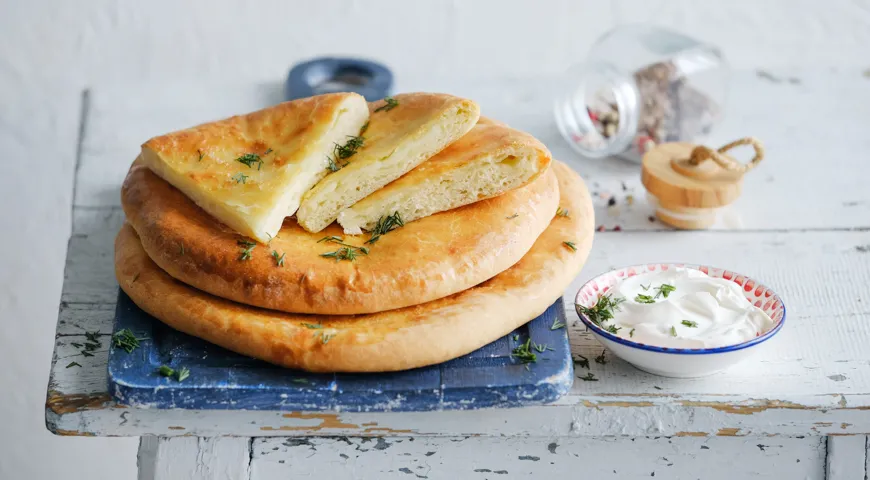
There are few pleasures as primal as tearing into a hot, cheese-laden flatbread fresh from the oven. This Georgian classic, known as khabizgina or simply cheese flatbread, captures the soul of the Caucasus: rugged, generous, and deeply satisfying. Made with springy suluguni—a brined, slightly salty cheese with a characteristic stretch—these flatbreads are a staple of Georgian home cooking. The dough is simple: flour, water, a touch of oil, and a whisper of cheese folded right in. The result is a crisp, golden crust that gives way to a molten, milky interior. Served with tangy matsoni (Georgian yogurt) or a simple kefir, this is comfort food elevated to an art form.
About Georgian Cheese Flatbreads
Georgian cuisine is a tapestry of bold flavors and ancient traditions, and its breads are legendary. From the boat-shaped khachapuri to the herb-stuffed kubdari, each region boasts its own interpretation. These flatbreads, however, are simpler and more rustic, often made in rural homes over an open fire or in wood-fired ovens. The star is suluguni, a cheese from the Samegrelo region, prized for its elasticity and mild tang. When baked, it transforms into a creamy, stringy filling that pairs beautifully with the chewy dough. For the best texture, use a stand mixer to knead the dough until smooth, or work it by hand for a more tactile experience. Grating the cheese in a glass food processor ensures even distribution and prevents clumping.

Ingredients
- 300 g all-purpose flour, plus extra for dusting
- 200 ml warm water
- 20 ml vegetable oil (sunflower or mild olive oil)
- 300 g suluguni cheese, coarsely grated
- Matsoni (or plain kefir/buttermilk), for serving
- Salt, to taste (optional, as suluguni is already salty)
Step-by-Step Method
1. Prepare the filling and preheat the oven. Preheat your oven to 200°C (390°F). Grate the suluguni on the large holes of a box grater or use a food processor with a grating disc. Transfer the grated cheese to a bowl and cover tightly with plastic wrap to prevent it from drying out.
2. Make the dough. Sift the flour into a large mixing bowl. Add 200 g of the grated suluguni (reserve the remainder for topping), the warm water, and the oil. Mix with a wooden spoon until a shaggy dough forms. Turn out onto a lightly floured surface and knead for 3–4 minutes until smooth and elastic. If the dough feels sticky, add another tablespoon of flour. For effortless kneading, a planetary mixer with a dough hook works beautifully.
3. Shape the flatbreads. Lightly dust your work surface with flour. Divide the dough into four equal portions. Roll each piece into a ball, then flatten with a rolling pin into a disc about 1–2 cm thick. The edges should be slightly thinner than the center to ensure even baking.
4. Prepare the baking tray. Line a baking sheet with parchment paper. Using a best oil sprayer or a pastry brush, coat the paper lightly with vegetable oil. Place the flatbreads on the tray, spacing them evenly so they have room to expand.
5. First bake and final cheese topping. Bake the flatbreads in the preheated oven for 10–15 minutes, until they begin to puff and turn pale gold. Remove from the oven, sprinkle the remaining 100 g of grated suluguni over the tops, and return to the oven. Bake for another 10 minutes, until the cheese is melted and bubbling and the crust is deeply golden. For an extra‑crispy bottom, try using a commercial countertop convection oven for even heat circulation. Alternatively, if you own an air fryer, you can cook the flatbreads at 180°C for 12–15 minutes for a lighter, less oily result.
Tips for Perfect Georgian Cheese Flatbreads
- Don't overwork the dough. Knead just until smooth; over‑kneading can make the flatbreads tough.
- Keep the cheese covered. Suluguni dries out quickly. Always wrap it tightly until you're ready to use it.
- Serve immediately. These flatbreads are at their best straight from the oven, when the cheese is still stretchy. Leftovers can be reheated in a dry skillet or microwave pressure cooker on low power.
- Storage. Store any leftover cheese in a 48‑inch built‑in refrigerator to maintain freshness. The baked flatbreads can be refrigerated for up to 2 days.
Variations
- Herb‑infused: Fold finely chopped cilantro, parsley, or green onions into the dough before shaping.
- Spiced version: Add ½ teaspoon of smoked paprika or a pinch of cayenne to the flour for a gentle warmth.
- Cheese swaps: If suluguni is unavailable, use a mix of mozzarella (for stretch) and feta (for salinity). A non‑toxic immersion blender can be used to blend cottage cheese with feta for a faster alternative.
- Gluten‑free: Substitute a 1:1 gluten‑free flour blend. Grate the cheese in a glass food processor to avoid cross‑contamination.
Frequently Asked Questions
What is suluguni, and can I substitute it?
Suluguni is a Georgian brined cheese with a semi‑soft, elastic texture and a mild, salty flavor. If you can't find it, combine equal parts low‑moisture mozzarella and feta cheese. You can also experiment with haloumi or quesillo.
Can I make the dough ahead of time?
Yes. Prepare the dough up to 24 hours in advance, wrap it tightly in plastic, and refrigerate. Allow it to come to room temperature before rolling. The cheese can be grated and stored in a covered bowl in the built‑in refrigerator.
How do I reheat leftover flatbreads?
The best way is in a hot, dry skillet for 1–2 minutes per side, or in a non‑toxic air fryer at 180°C for 3–4 minutes. Avoid microwaving, which can make the dough rubbery.
What drinks pair well with these flatbreads?
Traditionally, Georgians enjoy them with matsoni (fermented yogurt) or a glass of sweet wine like a semi‑sweet Saperavi. For a non‑alcoholic option, try iced tea or a light lemonade. After the meal, an espresso machine can craft the perfect digestif.
Can I freeze the baked flatbreads?
Yes. Cool completely, wrap individually in foil, then place in a freezer bag. Freeze for up to 2 months. To serve, thaw in the refrigerator overnight and reheat in a convection oven at 180°C for 5–7 minutes.
Why are my flatbreads tough?
Over‑kneading or using too much flour when rolling can toughen the dough. Use a light touch and dust sparingly. A best lava flavor isn't directly related, but if your dough is dry, consider adding a teaspoon of yogurt for tenderness.
Can I use a different cheese for the dough?
Yes. The recipe traditionally incorporates suluguni into the dough itself, but you can omit it and focus on a cheese topping. For a sweeter note, try a mild cheddar or Gouda.
These Georgian cheese flatbreads are a delightful addition to any meal. Enjoy them as a snack, alongside a salad, or as a savory breakfast with a dollop of matsoni. For more inspiration, explore our Catalan sponge cake recipe—a perfect dessert to follow this Georgian classic.







