


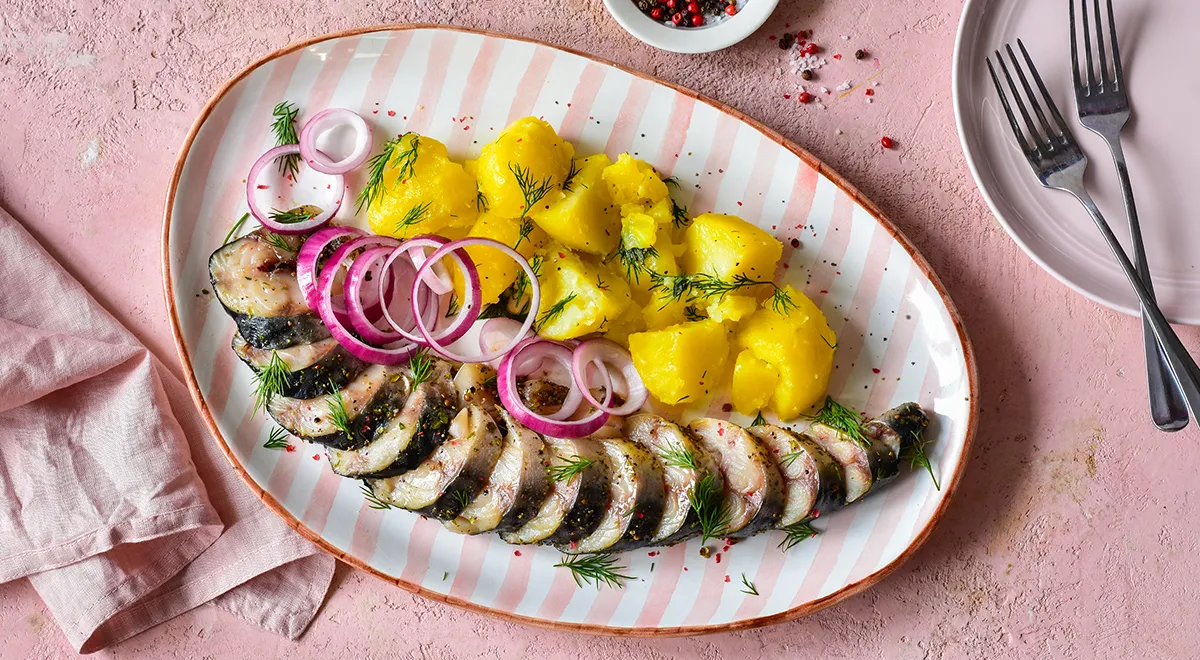
Dry-salted mackerel is a time-honored Russian technique that transforms humble fish into a delicate, umami-rich delicacy. Unlike wet brining, this dry-cure method draws out moisture while concentrating flavor, yielding a firm yet supple texture that pairs beautifully with dark rye bread, fresh dill, and a shot of ice-cold vodka. With just a handful of spices and a single mackerel, you can achieve restaurant‑quality results in your own kitchen. This recipe requires minimal effort but rewards patience with a sublime, melt‑in‑the‑mouth result.
About Dry-Salted Mackerel
Dry salting is one of the oldest preservation methods, prized in Russian cuisine for its ability to enhance the natural richness of oily fish. Mackerel—with its high fat content and robust flavor—is an ideal candidate. The process involves rubbing a blend of salt, sugar, and aromatic spices directly onto the fish, then letting time and cold work their magic. The result is a fully cured product that is ready to eat without cooking. This technique is not only simple but also highly customizable; you can adjust the spice profile to suit your taste. For the freshest result, always start with high-quality fish and store it properly in a reliable refrigerator.

Ingredients
- Mackerel – 400 g (preferably fresh or properly thawed)
- Bay leaf – 1 leaf
- Salt – 1 tbsp (use fine sea salt for even distribution)
- Sugar – ½ tbsp (balances the salt and promotes curing)
- Freshly ground black pepper – ⅓ tsp
- Ground coriander – ½ tsp (optional but traditional)
Using a glass food processor can help you grind whole coriander seeds to a uniform powder, though pre-ground coriander works well too. For a pepper that pops, grind it fresh with a non‑toxic immersion blender fitted with a spice grinder attachment.
Step‑by‑Step Guide
-
Prepare the mackerel
Gather your ingredients. If the fish is frozen, thaw it slowly on the warmest shelf of your refrigerator—never at room temperature. Once thawed, wash the mackerel under cold running water. Cut off the head, open the belly, and remove the innards. Trim the fins and tail. Rinse the cavity thoroughly and pat the fish dry with paper towels.

-
Make the curing mix
Finely chop the bay leaf with a sharp knife (or pulverize it in a compact food processor). Transfer the chopped bay leaf to a small bowl. Add the salt, sugar, ground coriander, and black pepper. Stir until the mixture is uniform.

-
Apply the cure
Rub the spice mixture all over the fish—inside the belly and over the skin. Make sure every surface is coated. Place the seasoned mackerel in a heavy‑duty resealable bag. Pour any remaining curing mix into the bag. Seal the bag tightly, pressing out excess air, then shake it gently to redistribute the spices.

-
Cure in the refrigerator
Refrigerate the bagged fish for 24 hours. Every 4–6 hours, remove the bag, shake it well, and turn it over to ensure even curing. This slow process allows the salt mixture to penetrate without toughening the flesh. For best results, maintain a steady temperature with a refrigerant leak detector to monitor your fridge’s performance. -
Serve
After 24 hours, take the mackerel out of the bag. Brush off any excess salt mixture but do not rinse. Slice the fish on the bias into 1‑cm thick pieces. Arrange on a platter, garnish with thinly sliced red onion and fresh dill or parsley. Serve immediately with dark rye bread and, if you like, a glass of organic vodka or a sweet high‑alcohol wine.
Tips for Perfect Dry‑Salted Mackerel
- Don’t skip the sugar – it balances the salt and helps create a silky texture.
- Use a sharp knife for clean cuts; a dull blade can shred the delicate flesh.
- Pat the fish completely dry before applying the cure to prevent premature spoilage.
- Shake the bag regularly – this redistributes melting salt and prevents uneven curing.
- Store leftover salted mackerel in an airtight container for up to 3 days. For longer storage, consider using a steam canner to preserve it.
Variations to Try
Experiment with additional spices: add a pinch of allspice, a crushed clove, or a star anise for aromatic complexity. For a spicy kick, include a small dried chili. You can also replace coriander with dill seeds. If you prefer a lighter cure, reduce the salt by half and increase the sugar. For a modern twist, serve the mackerel on crostini with crème fraîche and capers. Pair with a side of steamed rice made in a microwave pressure cooker for a quick meal. After dinner, enjoy an espresso brewed with a machine that delivers a consistent shot.
Frequently Asked Questions
Can I use frozen mackerel for dry salting?
Yes, but thaw it slowly in the refrigerator for 12–24 hours. Avoid using fish that has been frozen for longer than 3 months, as the texture may suffer.
How long can I store dry‑salted mackerel?
Once cured, keep it refrigerated in a sealed container for up to 3 days. For longer storage, you can freeze the salted fish for up to 2 months.
What if I don’t have ground coriander?
You can omit it or substitute with ground fennel seeds, mustard powder, or a pinch of cumin. The bay leaf and pepper are the essential aromatics.
Can I add other spices like paprika or garlic powder?
Absolutely. For a smoky note, add ½ tsp sweet paprika. Garlic powder (¼ tsp) works well, but use it sparingly as it can overpower the fish.
Why is my mackerel too salty?
This usually happens if the curing time exceeds 24 hours or if too much salt is used. Stick to the recommended quantities and timing. To reduce saltiness, soak the cured fish in cold water for 30 minutes before serving.
For a complete Russian‑style feast, consider serving with dark rye bread and pickles. A coffee maker in your kitchen can provide a warm beverage to round out the meal, while an undercounter ice maker ensures plenty of ice for chilled vodka shots. Don’t forget to clean up easily with a quality oil sprayer to mist your baking sheet for any sides you prepare.
This traditional technique showcases the beauty of simplicity. With just a few non‑toxic appliances in your kitchen, you can recreate this Russian classic at home. Enjoy the deep, savory flavor of dry‑salted mackerel—it’s a taste of the old country that never goes out of style.
Looking for the best options? Check out our article on resume builder free. Find the top-rated Cecotec secador with our comprehensive buying guide. Looking for the best options? Check out our article on Building Block Toy. For top recommendations, explore our guide on Grand Goldman Shop. For top recommendations, explore our guide on chinese calligraphy tea pot ceramic. For top recommendations, explore our guide on door reinforcement kits. Discover our expert picks for wayfair furniture quality review in our detailed review. Looking for the best options? Check out our article on carbon monoxide detector. Looking for the best options? Check out our article on gaming headsets for under 300. Looking for the best options? Check out our article on power rack for home gym.







