


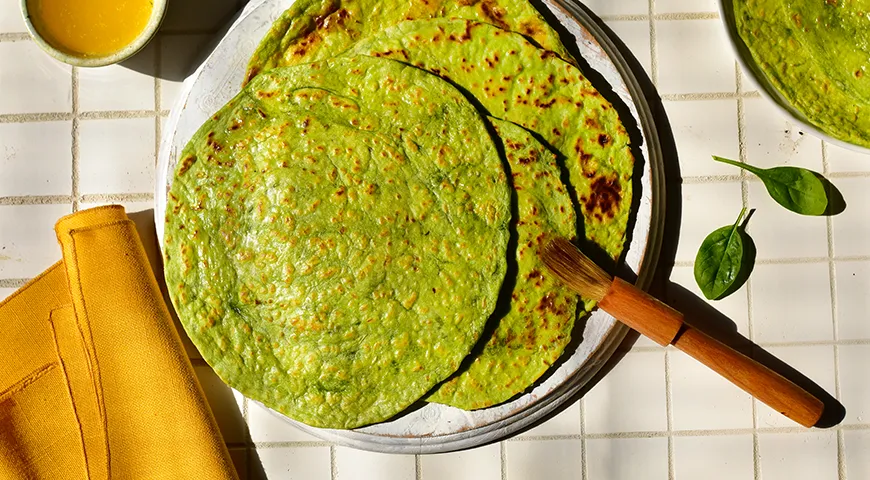
There is something profoundly satisfying about a golden, buttery flatbread that shatters into tender, flaky layers with each bite. These Cheesy Green Flatbreads, inspired by a classic Russian approach, achieve that delicate lamination through an ingenious folding technique. The dough, enriched with vibrant spinach and studded with nutty Parmesan, is rolled, brushed with butter, and then coiled into a spiral before being gently pressed into a disc. The result is a mosaic of crisp edges and soft, cheesy pockets — a dish that feels both rustic and refined. Perfect as a quick lunch, a shareable appetizer, or an accompaniment to soups and salads, these flatbreads are a celebration of simple ingredients elevated by thoughtful technique.
About This Recipe
This recipe draws on the Russian tradition of lepyoshki — pan-fried breads that are beloved for their versatility. What sets this version apart is the method: instead of simply mixing cheese into the dough, the butter-and-cheese filling is rolled into the dough, creating distinct layers that separate during cooking. The spinach, blitzed into a mineral-water base, lends a subtle green hue and earthy flavor without overpowering the Parmesan. Using a high-quality immersion blender or a glass food processor ensures the spinach puree becomes silky smooth, while the food processor can also be enlisted for mixing the dough if you prefer a hands-off approach. The technique is forgiving enough for beginners yet yields results that will impress seasoned bakers.

Ingredients
- 300 g all-purpose flour, plus extra for dusting
- 100 g Parmesan cheese (or another hard, salty cheese)
- 100 g unsalted butter, melted and cooled, plus extra for brushing
- 100 g fresh spinach (or mixed greens like chard or kale)
- 25 ml neutral vegetable oil
- 1 teaspoon baking powder (4 g)
- 1 teaspoon granulated sugar (5 g)
- ½ teaspoon fine sea salt (3 g)
- About 80–100 ml lukewarm sparkling mineral water (or still water with a pinch of baking soda for lightness)
Step-by-Step Instructions
- Blend the spinach base. Gently warm the mineral water (it should be finger-warm, not hot). In a blender or the jar of your immersion blender, combine the water, sugar, salt, and spinach. Puree until completely smooth and bright green. Set aside.
- Make the dough. In a large mixing bowl, whisk together the flour and baking powder. Pour in the spinach-water mixture and vegetable oil. Stir with a fork until a shaggy dough forms. Turn out onto a lightly floured surface and knead gently for 2–3 minutes until smooth and slightly sticky. (If using a planetary mixer, use the dough hook on low speed.) Cover with plastic wrap and rest for 15–20 minutes — this relaxes the gluten, making the dough easier to roll.
- Prepare the filling. While the dough rests, finely grate the Parmesan. Melt the butter and let it cool slightly.
- Shape the first spiral. Divide the rested dough into 4 equal portions. Roll each into a ball. On a well-floured surface, roll one ball into a very thin rectangle, about 2 mm thick (6–8 inches wide and 12–14 inches long).
- Butter and cheese layer. Using a pastry brush, spread one-quarter of the melted butter evenly over the dough. Sprinkle with one-quarter of the grated Parmesan. Starting from the long side, tightly roll the dough into a log — like a jelly roll.
- Form the spiral. Coil the log into a tight spiral, tucking the end underneath. Lightly dust with flour and gently roll the spiral into a disc about 17–18 cm (6.5–7 inches) in diameter. Repeat with the remaining three dough balls.
- Cook the flatbreads. Heat a large non-stick or cast-iron skillet over medium heat (no oil). Place one flatbread in the pan, cover with a lid, and cook for 2–3 minutes until the underside is deep golden and crisp. Flip and cook uncovered for another 2–3 minutes. Transfer to a plate and brush lightly with extra melted butter. Repeat with the remaining flatbreads. Serve hot or warm.
Note: If you wish to keep the flatbreads warm while cooking the rest, place them on a baking sheet in a low oven (80°C). A countertop convection oven works beautifully for this, maintaining an even temperature without drying them out.
Tips for Perfect Flatbreads
Use cold or room-temperature butter? The melted butter should be just warm to the touch — too hot and it will soak into the dough, preventing distinct layers. Don’t skip the rest time. Allowing the dough to relax is crucial for easy rolling without shrinkage. Keep your surfaces floured but not excessively — a light dusting prevents sticking without drying out the dough. For the crispiest results, cook uncovered on the second side so steam escapes. If your flatbreads puff up unevenly, gently press them down with a spatula. Reheating leftovers? A quick stint in an air fryer at 180°C for 3 minutes will restore their flaky texture.
Variations
These flatbreads are a canvas for creativity. Swap the spinach for arugula, watercress, or a mix of fresh herbs like basil and parsley. Instead of Parmesan, try Pecorino Romano for a saltier kick or Gruyère for nuttiness. For a dairy-free version, use olive oil in place of butter and omit the cheese (add 30 g nutritional yeast with the flour). Serve them alongside a hearty bowl of soup, or cut into wedges and dip into a garlicky yogurt sauce. For a complete meal, pair with a glass of sweet wine or a crisp organic vodka martini. End the evening with a slab of Catalan sponge cake and a cup of George Howell coffee.
Frequently Asked Questions
Can I use frozen spinach?
Yes, thaw 100 g of frozen spinach, squeeze out excess water, and blend as directed. You may need to add a tablespoon or two more warm water to achieve the right consistency.
Why did my flatbreads turn out tough?
Over-kneading or using too much flour during rolling can develop excess gluten. Handle the dough gently and dust sparingly. Also ensure your mineral water is not too cold — room temperature helps maintain a tender crumb.
Can I make the dough ahead of time?
Absolutely. Prepare the dough through Step 2, wrap tightly in plastic, and refrigerate for up to 24 hours. Bring to room temperature for 30 minutes before rolling. For longer storage, freeze the rolled spirals (ungrilled) on a tray, then transfer to a freezer bag. Cook directly from frozen, adding a minute or two per side.
What can I substitute for the sparkling mineral water?
Still water works, but the carbonation in sparkling water adds a subtle lightness. If using still water, add an extra pinch of baking powder or use a microwave pressure cooker to steam the spinach first for a tender puree.
What’s the best way to reheat leftover flatbreads?
The air fryer is ideal: 3 minutes at 180°C. Alternatively, reheat in a dry skillet over medium heat for 2 minutes per side. Avoid the microwave, which will make them soggy.
Can I use a different cheese?
Yes. Hard, salty cheeses like aged Gouda, Manchego, or dry Jack work well. Softer cheeses like mozzarella will release moisture and prevent layering; if using them, increase the flour slightly and reduce the butter.
Conclusion
These Cheesy Green Flatbreads are a masterclass in texture — crisp, flaky, and tender all at once. They celebrate the beauty of a few well-chosen ingredients, transformed by a simple but clever technique. Whether enjoyed as a quick lunch with a side salad, served alongside a bowl of borscht, or presented as an elegant appetizer at a dinner party, they never fail to delight. For more inspiration, browse our collection of indulgent treats and espresso picks to complete your culinary journey.







