


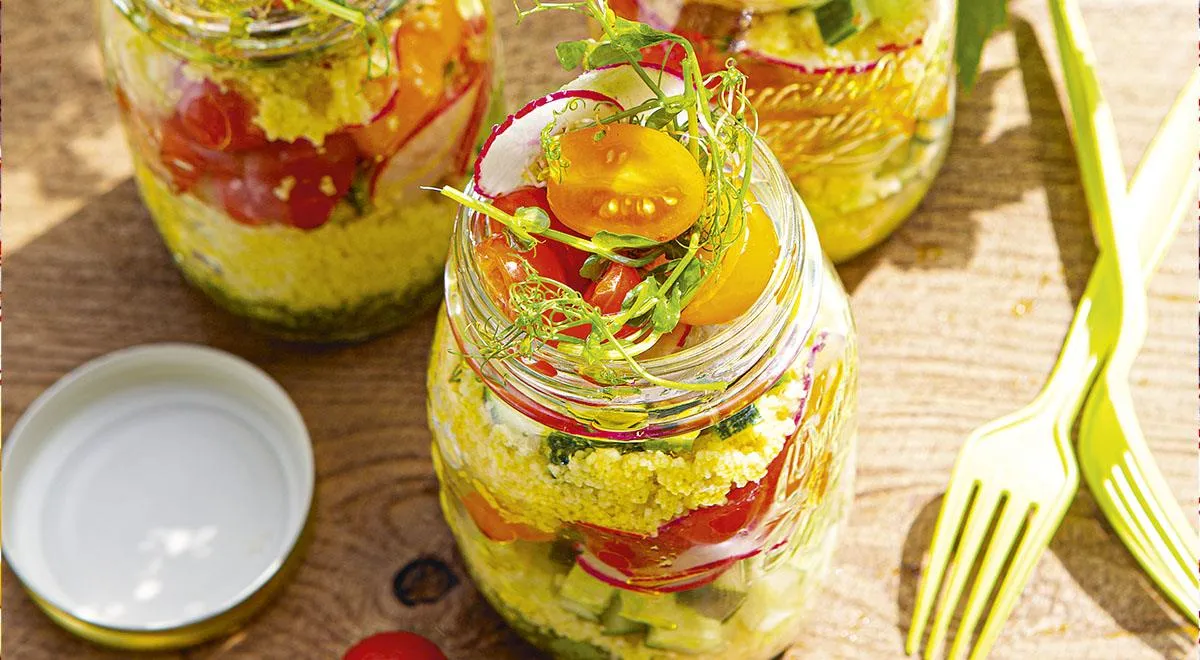
There is a quiet poetry in layering summer’s bounty into a glass jar—each stratum a promise of texture, color, and flavor. This Seasonal Vegetable and Couscous Jar Salad is more than a portable meal; it is an edible mosaic that celebrates the peak of the season. The genius lies in the method: couscous that never sees a stove, a bright herbaceous dressing, and a medley of crisp vegetables that stay distinct until you give them a shake. Whether you pack it for a picnic, a desk lunch, or a hike, this salad delivers both convenience and elegance. The key is to use the finest ingredients and the right tools—like the best glass jars that showcase the layers and keep everything fresh.
About This Recipe
This recipe transforms the humble couscous salad into a visual and culinary statement. It is a two-in-one dish—a vibrant salad and a satisfying grain component all in one vessel. The couscous is prepared simply by steeping in hot water with a touch of olive oil and lemon juice, eliminating any need for a stovetop. The dressing is a zesty emulsion of fresh herbs, garlic, white wine vinegar, and extra-virgin olive oil, designed to penetrate every layer. The vegetables—cucumber, tomato, bell pepper, radish, and young zucchini—are cut into uniform dice to ensure even eating. For the dressing, we recommend using a best non-toxic immersion blender to create a smooth, emulsified vinaigrette that clings beautifully to the couscous and vegetables. This salad is ideal for make-ahead meals—it actually improves after a few hours in the refrigerator, allowing the flavors to meld.

Ingredients
The success of this jar salad hinges on the quality and freshness of its components. For the couscous base: 150g couscous, 1 tablespoon olive oil, 1 tablespoon lemon juice, and a pinch of salt. For the herbaceous dressing: 6 tablespoons olive oil, 2 tablespoons white wine vinegar, 1 tablespoon lemon juice, 1 garlic clove (minced), a generous bunch each of fresh dill and parsley (finely chopped), salt, and freshly ground black pepper. The vegetable medley: 2 cucumbers, 2 ripe tomatoes, 1 sweet bell pepper (any color), 4 crisp radishes, and 1 small young zucchini. A light drizzle of oil is made effortless with best oil sprayer for even distribution. For a nutty crunch, you can fold in toasted pine nuts or chopped almonds—easily prepared using best food processor for nut butter if you want to grind them into a delicate crumb.
Step-by-Step Instructions
Step 1: Prepare the Dressing
Finely chop the dill and parsley, then mince the garlic. In a bowl, combine the olive oil, white wine vinegar, lemon juice, chopped herbs, and garlic. Whisk in 2–3 tablespoons of cold water to loosen the dressing. Season with salt and black pepper. Set aside. For a silky texture, you can blitz the dressing with a best non-toxic immersion blender directly in a tall cup.
Step 2: Hydrate the Couscous
Place the couscous in a small saucepan. Add a pinch of salt, the olive oil, and lemon juice. Pour 250 ml of boiling water over it, stir once, and cover with a lid. Let it sit for 10–15 minutes until the couscous is fluffy and has absorbed all the liquid. Fluff with a fork.
Step 3: Prepare the Vegetables
Dice the cucumbers, tomatoes, bell pepper, and zucchini into small, uniform cubes—about 1 cm. Slice the radishes into thin rounds. Keeping the cuts consistent ensures each bite offers a balanced mix. For extra precision, use a sharp knife; to speed up chopping, consider using best food processor for nut butter with a chopping blade (rinse well between uses).
Step 4: Assemble the Jars
Spoon 2 tablespoons of the dressing into the bottom of each clean jar. Begin layering: start with the couscous, then add a layer of cucumber, followed by tomato, bell pepper, radish slices, and zucchini. Repeat if needed, finishing with a final drizzle of the remaining dressing. Press down gently to compact the layers—this not only looks beautiful but also allows the dressing to seep through the entire jar. Seal tightly with a lid.
Step 5: Chill and Serve
Refrigerate the sealed jars for at least 30 minutes to allow the flavors to meld. When ready to serve, shake the jar vigorously to combine the layers, or turn it upside down for a few minutes before opening. For a crisp, cold salad, store in a refrigerator that maintains a steady temperature—like one from best 48-inch built-in refrigerator for optimal preservation. If you’re packing for a hike, keep the jar cool with a portable ice pack—made easily with best undercounter ice maker machine for a steady supply of ice.
Tips for the Perfect Jar Salad
To prevent sogginess, always wash and thoroughly dry your vegetables before dicing. The dressing should be added at the bottom so it doesn’t saturate the vegetables too early. If you plan to store the salad for more than a day, keep the dressing separate and add it just before serving—use a best steam canner to sterilize jars if you’re meal-prepping for a longer period. For a warm-weather variation, you can lightly char the zucchini and bell pepper using an best air fryer non-toxic for a smoky twist. The couscous can also be cooked in a best microwave pressure cooker in just minutes for an even faster preparation.
Variations to Try
This seasonal jar salad is infinitely adaptable. Swap the couscous for quinoa or bulgur for a different grain base. Add protein like grilled chicken, chickpeas, or crumbled feta cheese. For a Mediterranean twist, include Kalamata olives and sun-dried tomatoes. If you enjoy a bit of heat, incorporate a pinch of red pepper flakes into the dressing. To elevate the presentation, garnish with edible flowers or microgreens. Pair the salad with a glass of best sweet wine with high alcohol content for a delightful contrast, or serve it as a side to a grilled fish. For a refreshing after-dinner palate cleanser, a best organic vodka cocktail can complement the herbal notes. Finish the meal with a handful of best chocolate covered raisins for a sweet note. After the meal, brew a cup of coffee using a best coffee maker for Airbnb or indulge in an espresso from best espresso machine under 2000.
Frequently Asked Questions
Can I use a different grain instead of couscous?
Absolutely. Quinoa, bulgur, or even cooked farro work beautifully. Adjust the cooking liquid and time accordingly. For a gluten-free option, quinoa is ideal and can be prepared quickly in a best microwave pressure cooker.
How long will this salad keep in the refrigerator?
Stored in a sealed jar, the salad will stay fresh for up to three days. The flavors actually deepen after the first day. For longer storage, keep the dressing separate and add it just before serving. Use best steam canner to properly preserve if you plan to store for weeks.
Do I have to use a jar?
Not at all. Any airtight container works, but a transparent jar showcases the beautiful layers. Choose best glass jars with wide mouths for easy filling and eating.
Can I add a protein to make it a full meal?
Yes. Grilled chicken, shrimp, tofu, or chickpeas are excellent additions. Toss the protein with a little of the dressing before layering.
How do I prevent the vegetables from becoming watery?
Salt the diced cucumber and zucchini lightly and let them sit for 10 minutes, then pat dry with a paper towel. This draws out excess moisture and keeps the salad crisp.







