


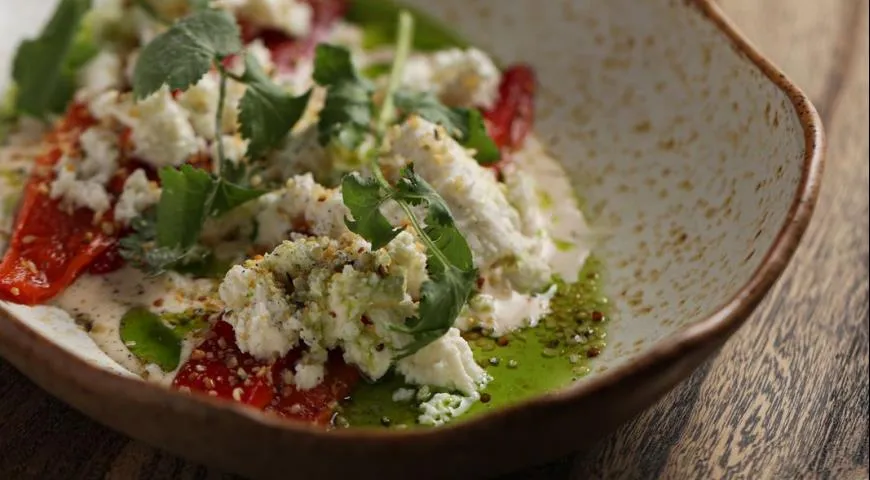
This roasted Ramiro pepper with tuna sauce, ricotta cheese, and hemp seeds is a deceptively refined appetizer that pairs smoky-sweet peppers with a rich, umami-laden tuna sauce. The creamy ricotta and nutty hemp seed garnish add texture and depth, making it a stunning start to any meal. Originating from Russian gastronomy, this dish showcases how simple ingredients—transformed by careful technique—can create extraordinary flavor. Whether you're hosting a dinner party or seeking a gourmet weeknight bite, this recipe delivers elegance without excessive effort.
About This Dish
The Ramiro pepper, a slender, sweet variety perfect for roasting, provides a silky, charred base that contrasts beautifully with the velvety tuna sauce. The sauce itself is a clever emulsion: eggs and mustard whipped into a mayonnaise-like base, then blended with tuna, anchovy, garlic, and Parmesan. Finished with ricotta crumbles, black salt, and toasted hemp seeds, each forkful offers a symphony of flavors—smoky, salty, creamy, and nutty. This dish often appears in Russian modern cuisine as a light yet indulgent appetizer, and it’s surprisingly straightforward to prepare with the right tools.

Ingredients
- 4 Ramiro peppers (or other sweet pointed peppers)
- 2 eggs (room temperature)
- 1 teaspoon Dijon mustard
- 150 ml olive oil (plus more for drizzling)
- Salt and a pinch of sugar
- 1 can (about 150 g) tuna in oil, drained
- 1/2 clove garlic
- 20 g Parmesan cheese (finely grated)
- 2 anchovy fillets (optional, but recommended)
- 100 g ricotta cheese (broken into segments)
- 2 tablespoons hemp seeds (toasted)
- Black salt (for finishing)
- Fresh cilantro sprigs (for garnish)
Step-by-Step Preparation
1. Prepare and Char the Peppers
Cut the Ramiro peppers in half lengthwise and remove the seeds and white pith. Place them skin-side down on a gas burner or use a kitchen torch to char the skin evenly until blackened. Alternatively, sear them in a dry cast-iron skillet over high heat, turning every few minutes. Once charred, transfer to a bowl, cover with plastic wrap, and let steam for 5 minutes. This loosen the skin, making it easy to peel. Rub off the blackened skin under cold running water, then pat dry.
2. Make the Egg Base
Wash the eggs thoroughly, then crack them into a blender or tall beaker. Add the Dijon mustard and blend for a few seconds. Season with a pinch of salt and sugar. With the blender running on low, slowly drizzle in the olive oil—drop by drop at first, then in a thin steady stream—until the mixture emulsifies into a thick, mayonnaise-like sauce. This is the foundation of your tuna sauce. For best results, use a glass jar to help maintain temperature stability.
3. Build the Tuna Sauce
Drain the canned tuna well, pressing through a sieve to remove excess oil. Transfer the tuna to the blender with the egg base. Finely grate the half-garlic clove and the Parmesan, then add both along with the anchovy fillets. Using an immersion blender or jar blender, pulse until completely smooth. Taste and adjust seasoning—you want a salty, umami-forward sauce that will offset the sweet peppers. A high-speed food processor can also do this job efficiently.
4. Assemble the Dish
Spoon a generous pool of tuna sauce onto a serving plate. Arrange the roasted peppers decoratively over the sauce. Crumble segments of ricotta cheese over the peppers, then sprinkle with black salt and toasted hemp seeds. Garnish with fresh cilantro sprigs and a final drizzle of olive oil. Serve immediately or chill briefly—this dish is excellent at room temperature.
Tips for Success
- Emulsion stability: Ensure all ingredients are at room temperature before making the sauce. Cold eggs can cause the oil to separate. If the sauce splits, whisk in a teaspoon of hot water to bring it back together.
- Charring alternatives: No gas burner? Roast the peppers under a broiler or on a grill. The key is to blister the skin completely, which adds smoky flavor.
- Hemp seed toasting: Toast hemp seeds in a dry pan over medium heat for 2-3 minutes, shaking frequently until fragrant. Watch carefully—they burn quickly.
- Make ahead: The tuna sauce can be refrigerated for up to 2 days. Let it come to room temperature before serving. Peppers are best charred and peeled on the day of serving. For a quick char in an air fryer, try 200°C for 10-12 minutes.
Variations
Swap the tuna for smoked mackerel or sardines for a different intensity. If you're vegetarian, replace the fish with roasted eggplant or marinated artichokes blended into the sauce—add a touch of capers for brininess. The ricotta can be substituted with burrata or fresh goat cheese for extra creaminess. For a citrusy twist, add a teaspoon of lemon zest to the sauce. Explore other Mediterranean-inspired pairings to accompany this appetizer.
Frequently Asked Questions
Can I use regular bell peppers instead of Ramiro?
Yes, but the flavor will be milder. Ramiro peppers are naturally sweeter and have thinner flesh, resulting in a silkier texture. Halve large bell peppers and cut into strips after roasting for a similar effect.
What if I can't find hemp seeds?
Sesame seeds or pine nuts make a fine substitute. For a depth of flavor try poppy seeds. Toast them lightly before sprinkling.
How do I store leftovers?
Assembled dish does not store well because the peppers release liquid. Store components separately: tuna sauce in an airtight container for up to 3 days, peppers in a covered bowl. Reassemble just before serving.
Can I make the sauce without anchovies?
Yes—add a teaspoon of fish sauce or extra Parmesan for umami. The anchovies contribute to the depth, but the flavor is still excellent without them. For a cleaner taste omit them entirely.
What can I serve with this dish?
This appetizer pairs wonderfully with crusty bread or crisp crostini. It also works as a light main course alongside a green salad. For a wine pairing, try a slightly off-dry white wine to balance the smokiness.
Conclusion
Roasted Ramiro pepper with tuna sauce, ricotta, and hemp seeds is a study in contrasts—smoky and creamy, salty and sweet, rustic and refined. The technique is surprisingly forgiving, and the result is sure to impress. With careful attention to the emulsified sauce and a quality char on the peppers, you'll create an appetizer that feels both innovative and timeless. Gather your favorite kitchen tools and enjoy the process—this dish is as rewarding to make as it is to eat.
Recipe adapted from Gastronom.ru. If you notice any errors or inaccuracies, please let us know.







