


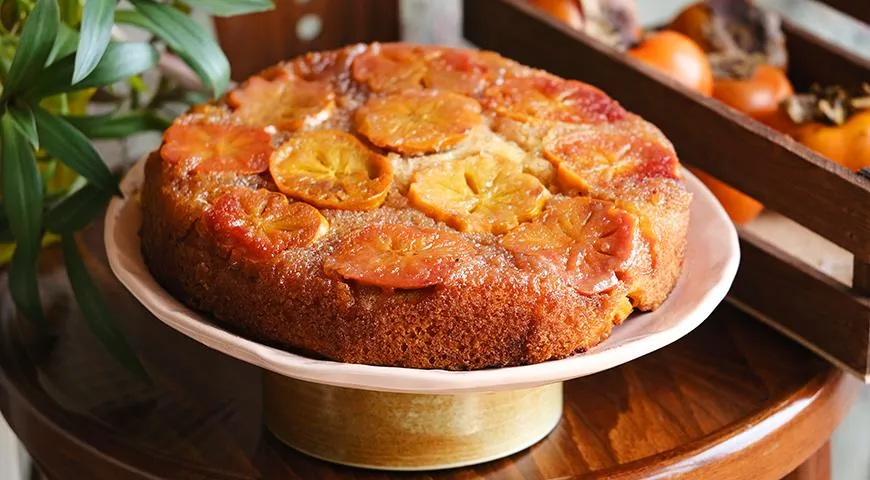
There are few desserts that capture the soul of autumn quite like a tender, fragrant cake turned upside down to reveal a mosaic of caramelized fruit. This Pumpkin Upside-Down Cake with Persimmon brings together two vibrant symbols of the season—sweet, earthy pumpkin and honeyed persimmon—in a single, stunning creation. The process is as joyful as the result: a soft, almost sponge-like batter envelops a layer of glossy fruit, and with a confident flip, little orange suns emerge, glowing like fallen leaves on russet grass. It is a dessert that demands a steaming cup of tea and a moment of pure, unhurried pleasure.
About This Recipe
Originating from the heart of Eastern European home baking, this upside-down cake transforms humble ingredients into a showstopper. The pumpkin is cooked until tender, then puréed into a velvety base that keeps the crumb moist without overwhelming sweetness. Ripe persimmons—preferably of the firm, squat variety—are sliced into rounds and nestled into a buttery brown-sugar caramel before the batter is poured over. As the cake bakes, the fruit softens and the caramel deepens, creating a sticky, jewel-like topping. The final inversion is a moment of kitchen theater, revealing a surface that glistens with autumn’s own palette.

Ingredients
- 500 g pumpkin (peeled weight)
- 2 ripe persimmons
- 200 g all-purpose flour
- 200 g unsalted butter
- 160 g granulated sugar
- 100 g brown sugar
- 100 ml kefir (or buttermilk)
- 2 large eggs
- 1 teaspoon baking powder
- ½ teaspoon baking soda
- ½ teaspoon salt
- 20 g butter for greasing the pan
For the best results, use a non-toxic immersion blender to purée the pumpkin, and consider a food processor if you prefer a smoother texture. The kefir adds a gentle tang that balances the sweetness; if unavailable, plain yogurt thinned with a splash of milk works well.
Step-by-Step Instructions
1. Preheat and Prepare the Pan
Preheat your oven to 180°C (350°F). Generously grease a round 20–22 cm (8–9 inch) non-springform cake pan with 20 g of butter. Using a solid pan rather than a springform ensures no caramel leaks during baking.
2. Cook and Purée the Pumpkin
Peel the pumpkin and cut it into small cubes. Place the cubes in a saucepan, add 100 ml of water, cover, and simmer over low heat for 15 minutes until very tender. Drain any excess liquid, then purée the pumpkin with an immersion blender or glass blender until completely smooth. Allow the purée to cool to room temperature.
3. Prepare the Persimmon Layer
Slice the persimmons into rounds about 1 cm thick. In a small bowl, melt half of the butter (100 g) and let it cool slightly. Mix the melted butter with the brown sugar and a pinch of salt until combined. Pour this mixture into the greased pan and spread it evenly with a spatula. Arrange the persimmon slices over the caramel in a single, overlapping layer—like roof tiles or flower petals.
4. Mix the Dry Ingredients
In a large bowl, whisk together the flour, baking powder, baking soda, and a pinch of salt. Set aside.
5. Combine the Wet Ingredients
In another bowl, beat the remaining 100 g of melted (and cooled) butter with the eggs using a mixer on medium speed until creamy. Add the cooled pumpkin purée, kefir, and granulated sugar, then beat again until well combined. Pour the wet mixture into the dry ingredients and mix briefly on low speed—just until the flour disappears. Do not overmix; the batter should be thick but soft.
6. Assemble and Bake
Pour the batter carefully over the persimmon layer, spreading it gently to cover all the fruit. Place the pan in the center of the oven and bake for 30–35 minutes. Test with a wooden skewer; if it comes out clean, the cake is done. If not, return it for another 5–10 minutes. Once baked, remove the pan from the oven and let it cool in the pan for exactly 15 minutes. Run a thin knife around the edges, place a large plate over the pan, and confidently invert the cake. Let it cool completely on the plate before slicing.
Tips for Success
- Choose persimmons that are ripe but still firm—too soft and they will turn to mush during baking. The squat Fuyu variety works best.
- For a more intense caramel flavor, use dark brown sugar instead of light.
- Do not skip the cooling period inside the pan; the caramel needs time to set so the cake releases cleanly.
- If your pan is not perfectly nonstick, line the bottom with a round of parchment paper before adding the caramel.
- Serve with a dollop of crème fraîche or unsweetened whipped cream to offset the sweetness.
Variations
This recipe is wonderfully adaptable. Swap the persimmons for sliced apples, pears, or even plums when in season. Add a teaspoon of ground cinnamon or pumpkin spice to the flour for extra warmth. For a nutty crunch, scatter chopped pecans or walnuts over the caramel before arranging the fruit. If you prefer a dairy-free version, substitute the butter with coconut oil and the kefir with plant-based yogurt. A non-toxic air fryer can also be used to cook smaller individual portions—just reduce the baking time to 15–18 minutes.
FAQ
Can I use canned pumpkin purée instead of fresh?
Yes, absolutely. Use 400 g of unsweetened canned pumpkin purée. Skip the cooking step and simply mix it in. The texture will be slightly denser but still delicious.
Why did my cake stick to the pan?
This usually happens if the cake wasn’t cooled long enough (15 minutes is essential) or if the pan wasn’t greased thoroughly. Running a knife around the edge before inverting also helps. Using a reliable refrigerator to chill the pan for a few minutes after baking can set the caramel further.
Can I make this cake gluten-free?
Yes, substitute the all-purpose flour with a 1:1 gluten-free baking blend that contains xanthan gum. The batter may be slightly thinner, so add an extra tablespoon of flour if needed.
How should I store leftovers?
Store the cake in an airtight container at room temperature for up to 2 days, or refrigerate for up to 5 days. Rewarm slices in a microwave or oven to restore the caramel’s gooeyness.
Can I double the recipe?
Absolutely. Use a 28 cm (11-inch) pan and increase the baking time by 10–15 minutes. Check doneness with a skewer. For large batches, a commercial countertop convection oven ensures even baking.
What if I don’t have kefir?
Substitute with buttermilk, plain yogurt, or even sour cream thinned with a little milk. The acidity is key to activating the baking soda, so avoid using sweetened or plant-based alternatives without a splash of lemon juice.
Can I use a different fruit?
Yes—firm pears, apples, or even pineapple rings work beautifully. Just adjust the sugar depending on the fruit’s sweetness. For a tropical twist, try chocolate-covered raisins scattered on top before baking for added texture.
This cake is a celebration of autumn’s finest, and with practice, it will become a signature dessert for cozy gatherings. Pair it with a sweet dessert wine or a robust black tea for a perfect finish. For more inspiration, explore our Catalan sponge cake recipe or try other organic vodka-infused desserts for a grown-up twist. Happy baking!







