


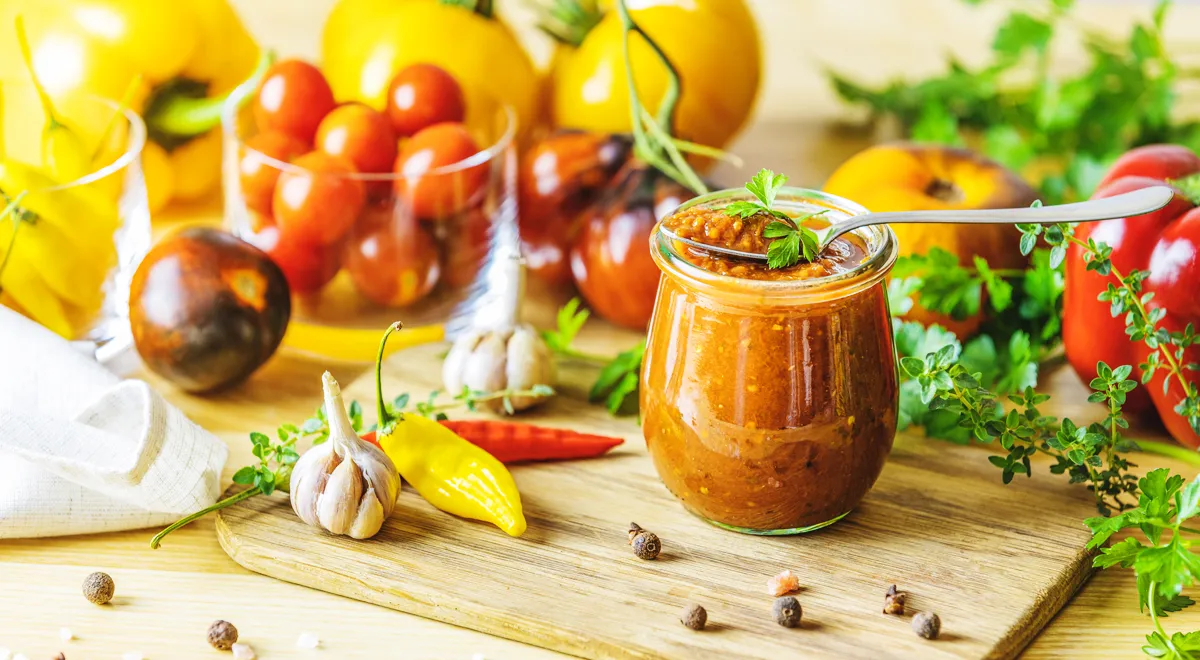
There is a quiet magic in the autumn kitchen — the scent of ripe tomatoes mingling with the tart perfume of plums, the gentle hiss of a simmering pot, and the promise of a condiment that will brighten winter meals. Plum and tomato ajika is a Georgian-inspired sauce that marries the sweetness of fruit with the heat of chili, the richness of garlic, and the tanginess of vinegar. This recipe transforms simple garden produce into a versatile, long-lasting relish that can be slathered on grilled meats, stirred into stews, or simply enjoyed with crusty bread. Unlike traditional tomato ajika, the addition of plums introduces a fruity depth and natural pectin, giving the sauce a lush, almost jammy texture. The balance of sugar and salt, oil and vinegar, creates a preserve that is both bold and nuanced — a tribute to the Eastern European love of preserving the season's bounty. Whether you are a seasoned canner or a curious cook looking to expand your repertoire, this ajika will become a staple in your pantry. The process is straightforward: blanch tomatoes, char peppers, pit plums, and let a slow simmer meld everything into a harmonious spread. In just over an hour, you will have several jars of a deeply flavorful condiment that tastes like sunshine and spice. Let us explore the ingredients, the technique, and the many ways to make this recipe your own.
About Plum and Tomato Ajika
Ajika originates from the Caucasus region, where it is traditionally a spicy, garlicky paste used to elevate simple dishes. This version, with ripe red plums and fresh tomatoes, is a modern adaptation that highlights the natural sweetness of fruit while retaining the fiery kick of chili. The plums — typically sour or semi-sweet varieties like Hungarian or Italian prune plums — break down during cooking, releasing pectin that thickens the sauce without need for artificial thickeners. The tomatoes provide a savory umami base, while roasted bell pepper adds smokiness. This condiment is not a salsa; it is a cooked, shelf-stable preserve that can be stored in a cool, dark place for months. It is a perfect companion for grilled sausages, roasted vegetables, or as a glaze for chicken. The key to success lies in the quality of ingredients — use organic, vine-ripened produce when possible, and choose a high-quality glass blender or food processor for a smooth puree. For those who prefer a chunkier texture, a non-toxic immersion blender can be used directly in the pot for partial blending.

Ingredients
- 1 kg ripe red tomatoes
- 500 g red plums
- 400 g bell peppers (about 2–3 medium)
- 100 ml neutral vegetable oil (sunflower or grapeseed)
- 50 g granulated sugar
- 40 ml 9% white vinegar
- 15 g fine sea salt
- 4 cloves garlic
- 1 fresh chili pepper (or to taste)
For best results, select plums that are slightly underripe — they hold their shape and provide more pectin. The chili can be adjusted based on your heat tolerance; remove seeds and membranes for a milder result. A powerful food processor will make quick work of the chopping, though a planetary mixer with a grinding attachment can also be used. Always taste and adjust seasoning before canning; the vinegar and salt are critical for preservation.
Step-by-Step Instructions
1. Prepare the Tomatoes
Wash the tomatoes and cut a shallow cross into the stem end of each. Bring a large pot of water to a rolling boil and prepare an ice bath. Blanch the tomatoes in batches for 30 seconds, then immediately transfer to the cold water. The skins will slip off easily. Core and roughly chop the flesh, then place it in a blender bowl.
2. Prepare the Peppers
Rinse the bell pepper and chili. Using a sharp knife, carefully remove the seeds and inner membranes. Cut the flesh into strips or quarters. Add both sweet and spicy peppers to the blender with the tomatoes.
3. Prepare the Plums
Wash the plums and pat dry. Slice each plum in half, remove the pit, and cut each half into two or three pieces. Add to the blender.
4. Blend the Base
Add the peeled garlic cloves to the blender. Pulse until the mixture becomes a coarse puree — not too smooth; a little texture is desirable. If you do not have a blender, you can pass the ingredients through a meat grinder. Transfer the puree to a heavy-bottomed pot or Dutch oven.
5. Cook the Ajika
Stir in the sugar, salt, and vegetable oil. Bring the mixture to a gentle boil over medium heat, then reduce the heat to low. Simmer uncovered for about 40 minutes, stirring occasionally to prevent sticking. The sauce will reduce and deepen in color. For even cooking, a microwave pressure cooker can shorten the time, but traditional stovetop simmering yields the best flavor concentration.
6. Finish and Jar
In the last minute of cooking, pour in the vinegar and stir well. Remove from heat. Ladle the hot ajika into sterilized glass jars, leaving 1 cm headspace. Wipe the rims, seal with lids, and invert the jars for 10 minutes to create a vacuum seal. Allow to cool completely before storing. For a reliable sealing process, consider using a steam canner or castor oil (the latter is unrelated, but a steam canner is ideal).
Tips for Perfect Ajika
- Blanching is non-negotiable: Removing tomato skins ensures a smooth, silk-like texture. A dedicated ice maker can provide a steady supply of ice for the bath.
- Do not rush the simmer: The 40-minute cook time allows flavors to meld and excess liquid to evaporate. Stir frequently with a wooden spoon to avoid scorching.
- Adjust sweetness and heat: Taste after 30 minutes and add more sugar if the plums are particularly tart, or an extra pinch of chili for heat. A high-end espresso machine is not needed here, but precise measurement of vinegar matters.
- Sterilize jars properly: Wash jars in hot soapy water, then heat in an oven at 120°C for 10 minutes. Keep them warm until filling to prevent thermal shock.
- Check seals: After jars cool, press the center of each lid. If it pops, refrigerate and use within 2 weeks.
Variations
- Herb-infused ajika: Add 2 tablespoons of chopped fresh cilantro or basil during the last 5 minutes of cooking.
- Smoky version: Roast the bell pepper over an open flame or under a broiler until the skin is charred, then peel before blending. This imparts a deep smokiness that pairs beautifully with sweet wine glazes.
- No-sugar option: Omit the sugar if your plums are very sweet, but add 1 teaspoon of honey for complexity. Check the non-toxic air fryer recipe blog for oil-free roasting ideas.
- Spicy upgrade: Include the chili seeds for an intense version; pair with a organic vodka cocktail for a fiery pairing.
How to Use Plum and Tomato Ajika
This condiment is remarkably versatile. Spread it on crusty bread with fresh cheese, use it as a marinade for chicken or pork, stir into a bean stew for depth, or serve alongside grilled sausages. It also works beautifully as a dipping sauce for spring rolls or as a base for a quick pasta sauce. For a sophisticated appetizer, spoon over baked brie and bake until bubbly. If you enjoy bold flavors, try adding a dollop to scrambled eggs or roasted potatoes. The sweet-spicy profile complements many cuisines, from Eastern European to Middle Eastern. For more inspiration, explore our Catalan sponge cake recipe for a sweet contrast, or the chocolate-covered raisins article for a dessert pairing.
Storage and Shelf Life
Properly sealed jars of ajika can be stored in a dark pantry for up to 12 months. Once opened, refrigerate and use within 3–4 weeks. The flavor will continue to develop over the first few weeks, becoming more mellow and complex. If you notice any mold or off odors, discard immediately. For long-term storage, a large built-in refrigerator can accommodate multiple jars, while a coffee subscription is unrelated but keeps your mornings bright.
Frequently Asked Questions
Can I use yellow plums instead of red?
Yes, yellow plums work well but will produce a lighter-colored, slightly less tangy ajika. Adjust sugar accordingly, as yellow plums are often sweeter.
Do I need to peel the peppers?
Not necessary for bell peppers, but for a smoother sauce, you can roast and peel them. This adds a smoky nuance.
Is it necessary to use vinegar?
Vinegar is essential for preservation and for balancing the sweetness. Do not reduce or omit it unless you plan to refrigerate and consume within a week.
Can I make this in a slow cooker?
Absolutely. Cook on low for 4–5 hours with the lid slightly ajar to allow evaporation. Add vinegar at the end.
How spicy is this ajika?
With one deseeded chili, it is mildly spicy — comparable to a mild salsa. For more heat, add a second chili or include the seeds. For less, use only a half chili.
What if my ajika is too watery?
Continue simmering uncovered for an additional 10–15 minutes, stirring frequently. The pectin from plums will eventually thicken it.
Can I freeze ajika instead of canning?
Yes, freeze in airtight containers for up to 6 months. Thaw in the refrigerator and use within a week. However, the texture may be slightly softer after thawing.







