


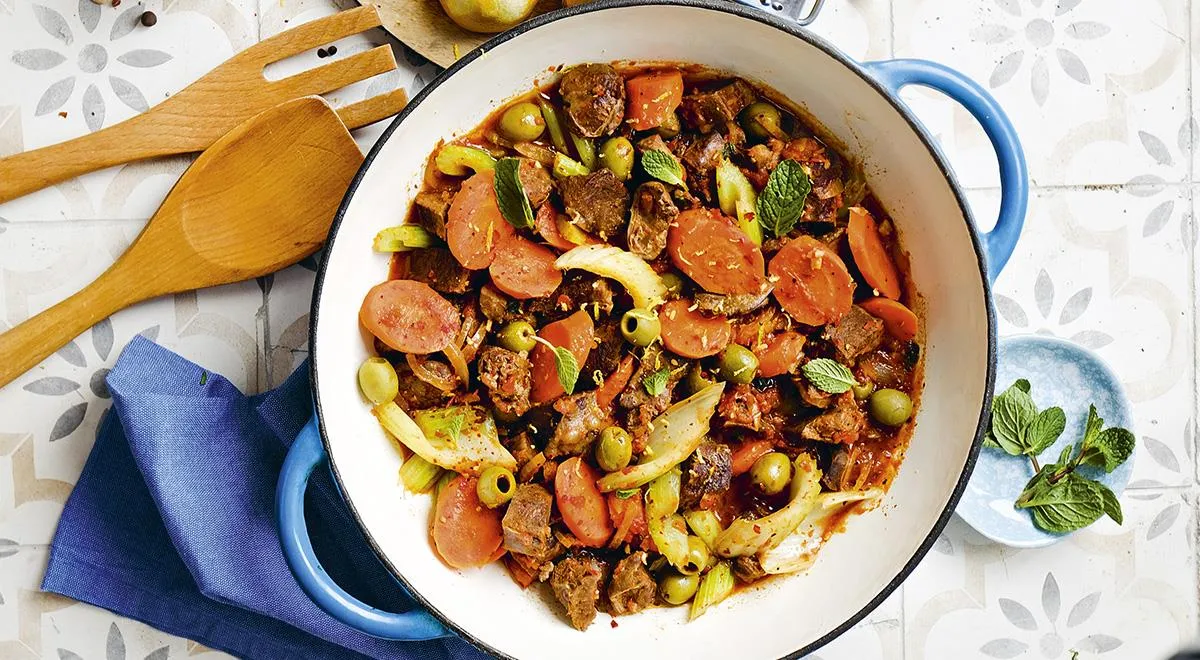
There is a quiet, soulful artistry in cooking with offal—the forgotten cuts that demand patience and reward with depth beyond measure. This Offal and Vegetable Ragù is a tribute to that tradition: a slow-braised symphony of pork heart, tender liver, and vibrant vegetables, perfumed with cumin, cinnamon, and smoked paprika. It is a dish born from thrift, perfected by time, and utterly luxurious in flavor. Whether you are a seasoned offal enthusiast or a curious newcomer, this ragù will transform how you think about organ meats.
About This Dish
In many cultures, offal is celebrated as the heart of rustic cooking—literally and figuratively. This recipe, inspired by Eastern European and Mediterranean stews, marinates pork heart overnight in apple cider vinegar to tenderize and mellow its richness. The liver is added late to preserve its delicate texture, while tomatoes, olives, and white wine create a bright, savory backdrop. The result is a ragù that is complex, hearty, and surprisingly elegant—ideal spooned over polenta, tossed with pappardelle, or served with crusty bread.

For best results, use a heavy-bottomed skillet or Dutch oven to ensure even heat distribution. A reliable oil sprayer helps control fat without smoking, and a sharp chef’s knife is essential for cleanly trimming the heart and liver. If you prefer to grind your own spices, a high‑performance juicer (though designed for greens) can also be used to pulverize small seed quantities in a pinch.
Ingredients
- 1 pork heart (300 g)
- 300 g beef or chicken liver
- 300 g canned tomatoes (in their own juice)
- 200 g olives (green or black)
- 2 carrots, sliced
- 3 celery stalks, stripped and sliced
- 1 onion, halved and cut into half-rings
- 4 garlic cloves, minced
- 3 sprigs fresh mint
- 100 ml dry white wine
- 2 tbsp apple cider vinegar
- 1 tsp cumin seeds
- 1 tsp ground cinnamon
- 2 tsp smoked paprika
- Vegetable oil
- Salt and freshly ground black pepper
- Juice and zest of ½ lemon
All ingredients should be at room temperature before cooking. For perfectly uniform cuts, a glass food processor bowl allows you to see when vegetables are evenly sliced.
Step-by-Step Instructions
-
Marinate the Pork Heart: Wash the heart, remove any arteries, and cut into 2 cm cubes. Place in a ziplock bag. Mix apple cider vinegar, 1 tsp salt, and black pepper, then pour into the bag. Remove as much air as possible, seal, and turn to coat. Refrigerate for 8 hours (or overnight).
-
Prepare the Liver and Vegetables: Cut the liver into large cubes. Slice the onion into half-rings, mince the garlic, cut carrots into rounds, and slice celery into strips. Squeeze the lemon juice and finely grate the zest. Set aside.
-
Sear the Heart and Liver: In a deep, heavy skillet, heat 2 tbsp vegetable oil over medium heat. Remove heart pieces from the marinade, pat dry with paper towels, and sear in batches until golden brown, about 5 minutes per batch. Transfer to a bowl. Add another 2 tbsp oil to the skillet, sear the liver quickly (2–3 minutes per side), and transfer to a separate bowl. For even browning, use an immersion blender to purée the canned tomatoes later—but for now, keep the heat high.
Sponsored
-
Sauté the Aromatics and Stew the Heart: Add a little more oil to the skillet. Cook the carrots, onion, and celery, stirring often, for 5 minutes. Add the garlic, canned tomatoes, salt, cumin, cinnamon, and smoked paprika. Pour in the white wine and bring to a boil. Reduce heat to low, return the seared heart to the pan, cover, and simmer for 2 hours.
-
Finish with Liver, Olives, and Mint: Uncover the skillet, add the liver and olives, and pour in the lemon juice. Stir in the lemon zest. Taste and adjust salt if needed. Cook uncovered for another 10 minutes, until the liver is just cooked through. Garnish with freshly chopped mint before serving.
For a deeper flavor base, consider deglazing the pan with a splash of stock before adding the wine. A microwave pressure cooker can also be used for a faster simmer, though the stovetop method yields the best texture.
Tips for Perfect Results
- Pat the heart dry after marinating to achieve a good sear—moisture is the enemy of browning.
- Don’t overcook the liver. Add it only in the final 10 minutes; it becomes grainy and tough if simmered for the full 2 hours.
- Let the ragù rest for 5–10 minutes after cooking to allow flavors to meld.
- If you prefer a thicker sauce, crush some of the olives against the pan with a wooden spoon.
- For a silky texture, use an air fryer to crisp the heart cubes before stewing—a surprising technique that adds a smoky crunch.
Variations
- Swap the protein: Replace pork heart with beef heart or lamb kidneys; adjust cooking times accordingly.
- Make it vegetarian: Omit offal and add 400 g of mushrooms (cremini or oyster) and 200 g of firm tofu, pan‑seared before adding.
- Spice it up: Add a pinch of cayenne or a chopped chipotle pepper for heat.
- Change the base: Serve over creamy polenta, wide egg noodles, or a bed of sautéed greens.
- If you enjoy experimenting with breads, this ragù is wonderful alongside a slice of vodka-infused rye—the spirit adds a subtle grain note.
Frequently Asked Questions
Can I use only liver instead of heart?
Yes, but the texture will be softer. To compensate, add 200 g of diced potatoes or chickpeas for heft.
Do I need to soak the heart before marinating?
No—the vinegar‑based marinade is sufficient to tenderize. However, if you prefer a milder flavor, soak the heart in salted water for 1 hour before marinating.
How long does this ragù keep?
Store in an airtight container in the refrigerator for up to 3 days. The flavors actually deepen overnight. Reheat gently on the stovetop, adding a splash of water or stock if too thick.
Can I freeze it?
Absolutely. Freeze in portion‑sized containers for up to 3 months. Thaw overnight in the fridge before reheating. The liver may lose a bit of tenderness, but the dish remains delicious.
What wine pairs best?
A dry white wine like Sauvignon Blanc or a light red like Barbera works beautifully. For a non‑alcoholic option, use a splash of George Howell coffee concentrate—its acidity mirrors the wine without alcohol.
Can I substitute canned tomatoes with fresh?
Yes, use 400 g fresh plum tomatoes, peeled and chopped, and add 2 tbsp tomato paste to build richness.
Is this dish gluten‑free?
Yes, all ingredients naturally contain no gluten. Always check labels on canned tomatoes and olives to be certain.
This ragù is a celebration of patience and resourcefulness—the kind of meal that fills your kitchen with the aroma of tradition and your table with warmth. Serve it proudly, and watch skeptics become converts. For more techniques to elevate your offal game, explore our guide to planetary mixer attachments for grinding meats, or read about the commercial convection ovens that can replicate slow‑braising results in less time.







