


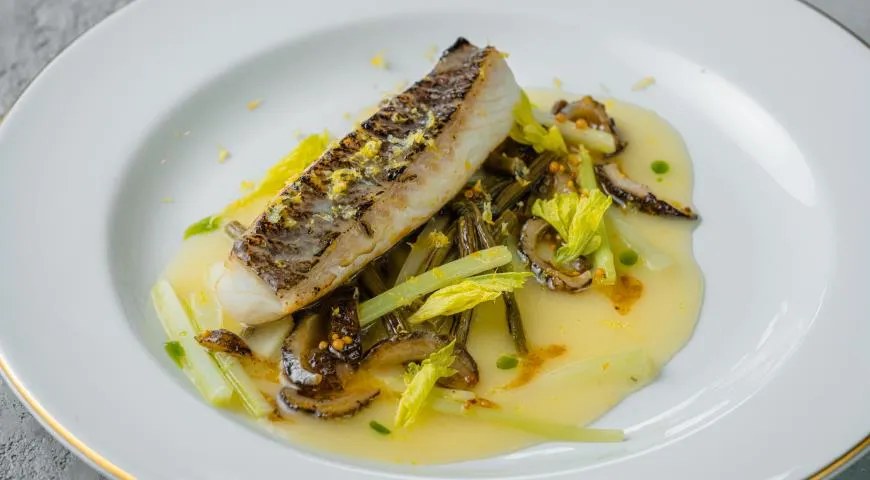
This exquisite dish from the renowned Russian restaurant Uhvat pairs tender halibut with the earthy notes of fern and a tangy salted lemon sauce. While the original recipe calls for a wood-fired oven, a home oven delivers equally impressive results. The combination of briny preserved lemons, delicate seafood, and wild greens creates a symphony of flavors that elevates any dinner table. Follow this step-by-step guide to recreate the magic in your own kitchen.
About the Dish
Salted lemons, a staple of North African and Middle Eastern cuisines, bring a unique umami richness to sauces. Here, they form the backbone of a velvety butter sauce that complements the mild sweetness of halibut. Fern—specifically bracken shoots—adds a grassy, slightly nutty texture, while sea cucumber (cucumaria) provides a subtle oceanic chew. This recipe transforms humble ingredients into a restaurant-worthy masterpiece. For the best results, use a non-toxic immersion blender to emulsify the sauce seamlessly.

Ingredients
- 4 halibut fillets (about 180 g each)
- 2 salted lemons, zest reserved
- 500 ml chicken stock
- 100 g unsalted butter, cold and cubed
- 200 g fresh or rehydrated fern (bracken shoots)
- 2 stalks celery, thinly sliced
- 150 g cucumaria (sea cucumber), cleaned and sliced
- 2 cloves garlic, minced
- Salt and white pepper to taste
For the halibut: olive oil, sea salt, and fresh dill (optional). A high-performance food processor can help slice vegetables uniformly if needed.
Step-by-Step Instructions
Prepare the Salted Lemon Sauce
Remove the zest from the salted lemons in wide strips. In a small saucepan, bring the chicken stock to a gentle simmer over medium heat. Add the lemon zest and let it infuse for 2 minutes. Gradually whisk in the cold butter cubes, one at a time, until the sauce thickens to a silky consistency. Season with a pinch of white pepper. Keep warm.
Pro tip: For a flawless emulsion, use a quality immersion blender directly in the saucepan.
Sauté the Fern and Celery
In a separate pan, heat a drizzle of olive oil over medium heat. Add the sliced fern and celery, and sauté for 2–3 minutes until just tender but still vibrant. Gently fold in the warm lemon sauce, then remove from heat. This vegetable ragout will serve as the base.
Cook the Cucumaria
In a small skillet, melt a knob of butter over medium heat. Add the sliced cucumaria and minced garlic, and cook for 2 minutes, stirring occasionally. The sea cucumber will become slightly translucent and fragrant. Set aside.
Bake the Halibut
Preheat your oven to 200°C (400°F). Pat the halibut fillets dry and season lightly with salt. Place them on a parchment-lined baking sheet. Roast for 10–12 minutes, depending on thickness, until the fish flakes easily with a fork. For an extra-crisp finish, you can use the air-fryer mode on a combo oven for the last 2 minutes.
Plate and Serve
Spoon the fern and celery ragout onto warm plates. Place a halibut fillet on top, drizzle with the salted lemon sauce, and garnish with the sautéed cucumaria. Serve immediately, accompanied by crusty bread or steamed rice.
Tips for Success
- Salt balance: Salted lemons vary in intensity; taste before adding extra salt.
- Fern alternatives: Asparagus or green beans can substitute for fern if unavailable.
- Cucumaria prep: Rinse thoroughly to remove any grit; slice thinly for even cooking.
- Oven temp: A commercial countertop convection oven ensures even heat distribution for perfect fish.
- Sauce stability: Keep the sauce at low heat; if it splits, whisk in an ice cube to re-emulsify.
Variations to Explore
Swap halibut for cod or sea bass for a milder flavor. For a vegetarian twist, omit the fish and double the fern ragout, adding roasted cherry tomatoes. The salted lemon sauce also pairs beautifully with grilled chicken or roasted cauliflower. If you love preserved citrus, try making your own salted lemons in a steam canner for a year-round supply.
FAQ
What are salted lemons?
Salted lemons are lemons preserved in salt and their own juices, common in Moroccan cuisine. They develop a mellow, briny flavor that softens the citrus bite. You can find them at specialty stores or make your own following a simple fermentation recipe (though that example is a sponge cake, the preservation concept is similar).
Can I use frozen halibut?
Yes, thaw completely in the refrigerator overnight and pat dry. Frozen halibut may release more moisture, so adjust roasting time slightly. A microwave pressure cooker can defrost quickly if you're in a hurry.
Is fern safe to eat?
Only young fiddlehead ferns (bracken) are edible when thoroughly cooked. Do not eat raw fern, as it contains toxins. If foraging, ensure correct identification. Alternatively, use store-bought canned fern or thawed frozen fiddleheads.
Where can I buy cucumaria (sea cucumber)?
Asian grocery stores or online retailers stock dried or frozen sea cucumber. Rehydrate dried ones according to package instructions. For the best quality, check reviews on specialty food blogs (despite the link being about raisins, similar sourcing tips apply).
Can I make the sauce ahead?
The sauce is best fresh but can be reheated gently over a water bath. Avoid boiling, or it may separate. Store in an airtight container in the fridge for up to 2 days. A good oil sprayer helps add a finishing touch of olive oil when reheating.
What wine pairs well with this dish?
A crisp white wine like Vermentino or a light Albariño complements the citrus and seafood. For something bold, try a high-alcohol sweet wine for a striking contrast.
Conclusion
This halibut with fern and salted lemon sauce is a celebration of culinary contrasts—briny and creamy, earthy and delicate. With careful preparation and a few quality tools, you can bring the elegance of Uhvat into your home. Experiment with the variations and make this signature dish your own.







