


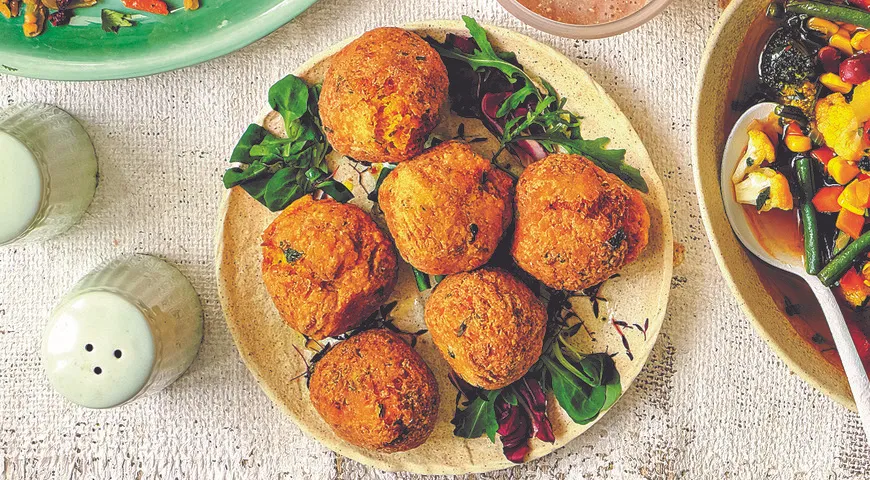
Falafel is more than just a Middle Eastern culinary icon; it is the reigning street food of the Arab world, beloved for its simplicity, affordability, and deep, earthy flavors. These small, golden spheres are crafted from ground legumes—most often chickpeas—blended with a fragrant bouquet of fresh herbs and warm spices. Served in pita, over salads, or alongside tahini sauce, falafel offers a satisfying, protein-packed bite that transcends borders. This recipe, fragrant with cumin, paprika, and cilantro, delivers the authentic taste of a Levantine kitchen. For the best texture and flavor, we recommend using a high-quality non-toxic immersion blender to achieve a coarse, uniform paste without overheating the chickpeas.
About the Dish
Falafel’s roots run deep across the Middle East, from Egypt to Israel, where it is traditionally eaten with hummus, pickled vegetables, and warm flatbread. Unlike many fried foods, falafel is surprisingly light and nutritious—rich in fiber, plant protein, and heart-healthy fats, especially when cooked in a quality oil or baked using a non-toxic air fryer. The magic lies in the preparation: dried chickpeas are soaked, not cooked, then ground with onion, garlic, and herbs, giving the mixture a tender yet sturdy consistency that fries up to a crisp, golden crust. The addition of a touch of baking powder and lemon juice ensures an airy interior, while a careful hand with sweet wine can elevate a falafel meal into a memorable pairing.

Ingredients
- 200 g dried chickpeas
- 1 onion
- 2 garlic cloves
- 5 sprigs fresh cilantro
- ½ tsp ground cumin (zira)
- ½ tsp paprika
- 1 tbsp all-purpose flour
- ½ tsp baking powder
- 1 tbsp lemon juice
- 200 ml vegetable oil (for frying)
- Salt, to taste
- Freshly ground black pepper, to taste
Step-by-Step Instructions
Step 1: Soak and Prepare the Chickpeas
Place the dried chickpeas in a large bowl and cover with cold water by at least 5 cm. Refrigerate for 6–12 hours. This long soak rehydrates the legumes without cooking, which is crucial for the right texture. Drain and rinse well. Transfer the chickpeas to a deep container and pulse using an immersion blender until you have a coarse, sand-like consistency—do not over-puree into a paste.
Step 2: Mix the Falafel Dough
Finely dice the onion and mince the garlic. In a large mixing bowl, combine the pulsed chickpeas, onion, garlic, flour, finely chopped cilantro, baking powder, cumin, paprika, lemon juice, salt, and pepper. Mix thoroughly with a spatula or your hands. Let the mixture rest for 5 minutes—this allows the flavors to meld and the flour to absorb excess moisture. For larger batches, a planetary mixer with a paddle attachment can save time and ensure even distribution.
Step 3: Shape the Falafel Balls
Moisten your hands slightly with water to prevent sticking. Scoop about 1½ tablespoons of the mixture and roll gently into a ball, applying light pressure to ensure it holds together. You should get 9–10 uniform balls. If the mixture feels too wet, add a little more flour; if too dry, a splash of lemon juice or water helps. Place the shaped falafels on a tray lined with parchment.
Step 4: Fry to Perfection
Heat the vegetable oil in a deep, heavy-bottomed saucepan or deep-fryer to 170–180°C (340–350°F). Carefully lower the falafel balls into the hot oil, a few at a time, without overcrowding. Fry for 5–7 minutes, turning occasionally, until deep golden brown and cooked through. Remove with a slotted spoon and drain on paper towels. For a healthier alternative, bake or air-fry the falafels at 200°C (400°F) for 12–15 minutes, flipping halfway, using a non-toxic air fryer. A light mist from an oil sprayer helps achieve a crisp exterior.
Tips for Perfect Falafel
- Always use dried chickpeas, not canned. Canned chickpeas are already cooked and will produce a dense, heavy falafel that falls apart in the oil.
- Soak time is critical. A 12-hour soak in the fridge yields the best texture. For a quick-soak method, bring chickpeas to a boil, then let them sit for 1 hour before processing.
- Do not skip the baking powder—it creates tiny air pockets that make the falafel light and fluffy.
- Test the oil temperature with a small piece of dough: it should sizzle immediately and float to the surface within 30 seconds.
- Store uncooked falafel balls in the refrigerator for up to 24 hours, or freeze on a tray before transferring to a bag. Cook directly from frozen, adding 2–3 minutes to fry time.
Variations
Falafel is wonderfully adaptable. For a green, herbaceous version, double the cilantro and add parsley or mint. Swap the chickpeas for dried fava beans to make an Egyptian-style ta’amiya, which has a slightly different, creamier interior. Spice lovers can add a pinch of cayenne or a dash of castor oil? Not exactly—but smoked paprika works beautifully. To bake, use a commercial countertop convection oven for even heat distribution, or a microwave pressure cooker for a quick steam-fry approach—though the texture will differ. For a gluten-free option, replace all-purpose flour with chickpea flour or rice flour.
Frequently Asked Questions
Why did my falafel fall apart during frying?
This usually happens if the mixture is too wet or if the chickpeas were under-processed. Ensure you drain the soaked chickpeas very well before blending, and avoid adding extra liquid. The flour and rest time are essential for binding. For best results, chill the shaped balls for 15 minutes before cooking. If you need a firmer binder, pulse the onion and garlic first, then combine with the chickpeas.
Can I freeze falafel?
Absolutely. Place the uncooked falafel balls on a parchment-lined tray and freeze until solid (about 1 hour). Transfer to a freezer-safe bag or container. They will keep for up to 3 months. Fry or bake directly from frozen—no need to thaw. For storage in the fridge, use airtight glass containers to maintain freshness.
What is the best oil for frying falafel?
A neutral oil with a high smoke point, such as vegetable, canola, or sunflower oil, works best. These oils allow the falafel to fry cleanly without imparting strong flavors. If you prefer to bake or air-fry, a light spray of oil from a bottle helps promote even browning.
Can I make falafel without a deep-fryer?
Yes. A heavy-bottomed saucepan or Dutch oven works perfectly. You can also use a wall oven microwave combo with air fryer to achieve a crispy result with less oil. Alternatively, pan-fry the falafels in about 1 cm of oil, turning them to brown all sides.
What should I serve with falafel?
Falafel is wonderfully versatile. Serve in warm pita with tahini sauce, pickled turnips, diced tomatoes, and cucumber. It also pairs beautifully with a fresh salad, hummus, or baba ganoush. For a complete meal, consider a side of Catalan sponge cake as a light dessert, or a small glass of sweet wine to echo the Middle Eastern tradition of sipping arak or wine with meze.
Can I use canned chickpeas?
We strongly advise against it. Canned chickpeas are already cooked and have a high moisture content, making the falafel dense, gummy, and prone to disintegrating in the oil. Stick with dried chickpeas that have been thoroughly soaked. If you are short on time, consider using a food processor for nut butter to grind the chickpeas more efficiently after a short soak.
How do I reheat leftover falafel?
The best way to revive falafel is in a commercial countertop convection oven or air fryer at 180°C (350°F) for 5–7 minutes. Avoid microwaving, which makes them soggy. For a quick fix, a microwave pressure cooker with a small amount of water can steam them back to tenderness, but the crust won’t be as crisp.
Can I make falafel oil-free?
Yes. Bake the falafels at 200°C (400°F) on a parchment-lined baking sheet. Spray lightly with oil using an oil sprayer for best browning, or skip oil entirely for a drier, chewier texture. Alternatively, steam the falafels in a microwave pressure cooker for a softer, dumpling-like consistency.
What spices are traditional in falafel?
Classic falafel relies on cumin, coriander, and sometimes a touch of cardamom or allspice. This recipe uses cumin and paprika for warmth and color. For a deeper, more complex flavor, add ½ teaspoon of ground coriander and a pinch of cayenne. Fresh herbs like cilantro and parsley are non-negotiable for an authentic taste.
How can I make falafel vegan and gluten-free?
This recipe is already vegan. For gluten-free, replace the all-purpose flour with chickpea flour (besan) or rice flour. Ensure your baking powder is gluten-free. The rest of the ingredients are naturally free of gluten.







