


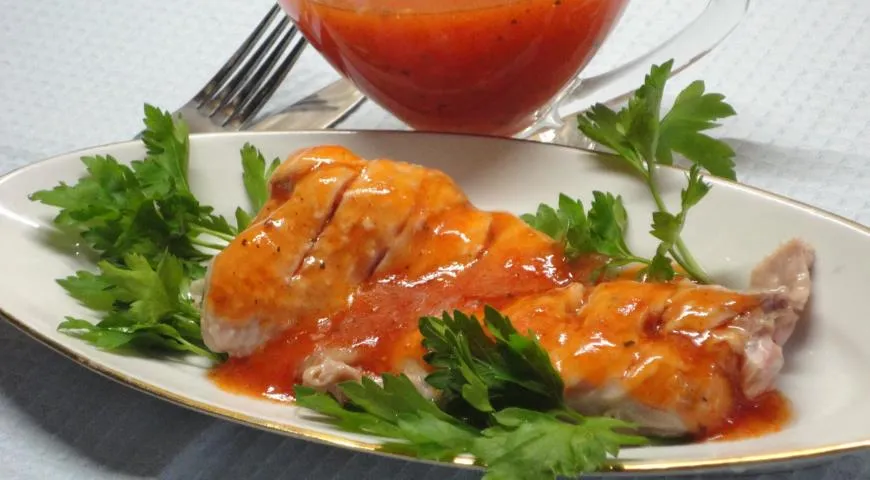
Duck fillet in tomato sauce is a dish that marries the rich, gamey notes of duck with the bright acidity of a perfectly balanced tomato glaze. This recipe, rooted in European braising tradition, transforms simple ingredients into a restaurant-worthy entrée. The duck is gently poached with aromatics to tender perfection, then finished in a silky sauce enriched with cognac and a whisper of starch. Whether served over creamy mashed potatoes, buttered noodles, or a bed of wild rice, this dish delivers deep, layered flavor with every bite. Below, we break down the technique, share insider tips, and explore variations that make this recipe endlessly adaptable.
About the Dish
Duck breast fillet is prized for its succulent texture and mild richness, but it can sometimes lack the moisture of darker cuts. This recipe solves that by simmering the fillet in a fragrant broth infused with carrot, onion, and bouquet garni — a classic bundle of herbs (thyme, bay leaf, parsley) that gently perfumes the meat. The tomato sauce, built from sautéed paste and a splash of cognac, adds a sweet-savory complexity that complements duck’s natural depth. The final touch of fresh herbs not only brightens the plate but also echoes the herbal notes in the poaching liquid. This dish is perfect for a festive dinner or a weeknight indulgence when you crave something special without hours of work. For more inspiration on high-heat finishing, check out our guide to the best air fryer non-toxic for rapid browning.

Ingredients
For the duck and broth:
– 500 g duck fillet (breast or thigh)
– 1 carrot, peeled and roughly chopped
– 1 onion, peeled and halved
– 1 bouquet garni (fresh thyme sprigs, bay leaf, parsley stalks tied together)
– 1 teaspoon salt
– 1 liter cold water
For the tomato sauce:
– 2 tablespoons tomato paste
– 1 tablespoon vegetable or duck fat (or butter)
– 1/2 teaspoon salt
– 1/2 teaspoon sugar
– 1/4 teaspoon freshly ground black pepper
– 30 ml cognac or brandy
– 100 ml duck broth (reserved from cooking)
– 1 teaspoon cornstarch (or potato starch)
– 1 tablespoon cold water (for slurry)
For garnish:
– Fresh parsley or dill, chopped
A quality food processor can simplify herb chopping if you’re scaling up.
Step-by-Step Instructions
Step 1: Poach the Duck Fillet
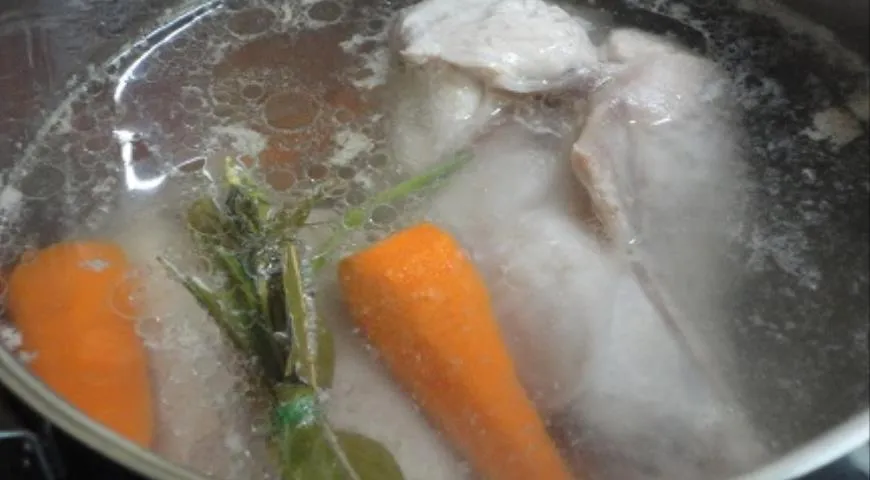
Rinse the duck fillet under cold running water and place it in a large saucepan. Add the chopped carrot, halved onion, and bouquet garni. Cover with cold water (about 1 liter) and bring to a gentle boil over medium heat. As the liquid heats, skim off any foam that rises to the surface — this ensures a clean, clear broth. Once boiling, reduce heat to low, add 1 teaspoon salt, and simmer uncovered for 20–25 minutes, or until the duck is tender and cooked through. The internal temperature should reach 65°C for medium doneness. Remove the duck from the broth and set aside; strain the broth and reserve 100 ml for the sauce.
Step 2: Prepare the Tomato Sauce
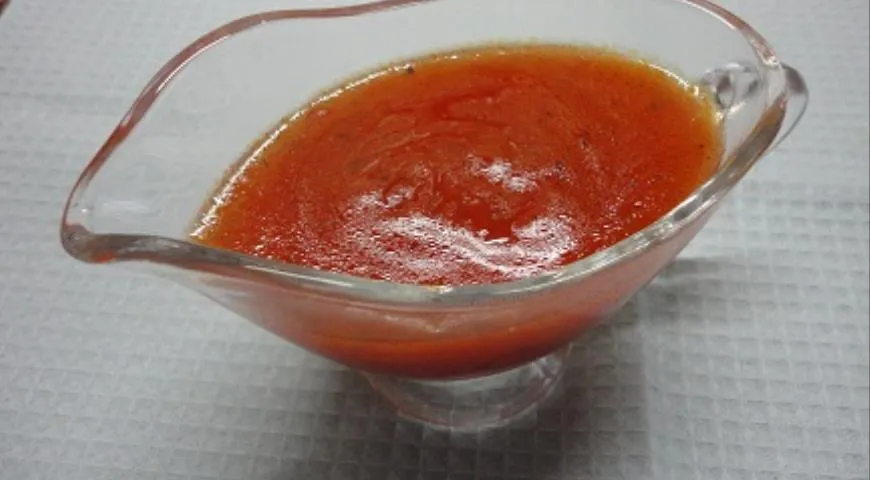
In a clean skillet or saucepan, heat the vegetable oil over medium heat. Add the tomato paste and sauté, stirring constantly, until it deepens in color and begins to smell nutty — about 2 minutes. This step caramelizes the sugars and removes raw acidity. Season with salt, sugar, and pepper. Pour in the cognac and let it sizzle for 30 seconds to cook off the alcohol. Add 100 ml of the reserved duck broth and stir to combine. In a small bowl, whisk the cornstarch with 1 tablespoon cold water to form a slurry. Pour the slurry into the simmering sauce while stirring continuously. Cook over low heat for 2–3 minutes, until the sauce thickens to a silky, coat-the-spoon consistency. Taste and adjust seasoning.
Step 3: Combine and Finish
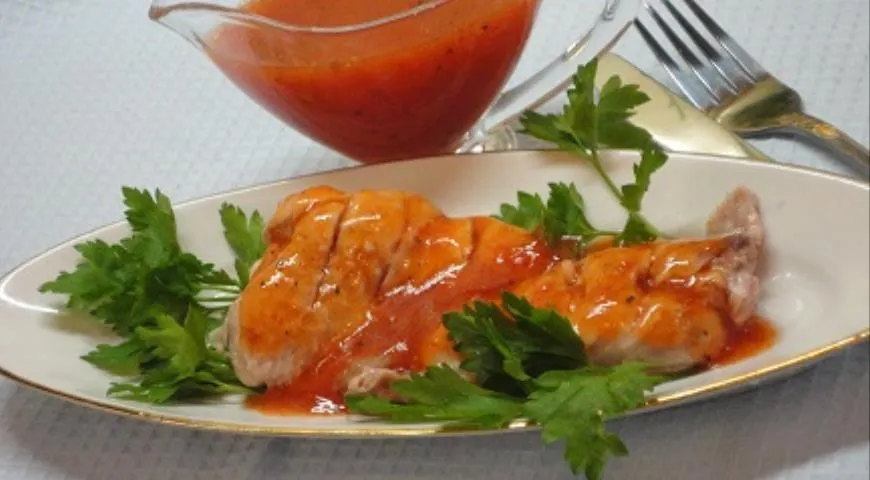
Slice the poached duck fillet into bite-sized pieces or leave whole as preferred. Add the duck pieces directly to the tomato sauce and warm everything together over low heat for 2–3 minutes, basting the duck with the sauce. The meat will absorb the flavors and gain a gorgeous glaze. Transfer to a serving platter or individual plates, spoon extra sauce over the top, and garnish generously with fresh chopped parsley or dill. Serve immediately alongside your chosen starch or vegetables. For perfectly cooked sides, a microwave pressure cooker can speed up rice or steamed greens.
Tips and Tricks
- Don’t skip skimming the broth — cloudy broth can make the sauce look dull. For a clearer result, use a fine-mesh skimmer.
- If cognac isn’t available, dry white wine or sherry works beautifully; for a non-alcoholic twist, use a splash of rich beef broth with a pinch of sugar.
- For a thicker sauce, increase cornstarch to 1.5 teaspoons; for a thinner sauce, add a little more broth. Keep a best oil sprayer handy to lightly grease the skillet without overdoing fat.
- Let the duck rest for 5 minutes after poaching before slicing — this retains juices. A wheatgrass juicer isn’t needed here, but it’s a fun tool for fresh juice pairings.
- The bouquet garni can be replaced with 1 teaspoon dried herbes de Provence tied in cheesecloth.
Variations
- Spicy Kick: Add a pinch of red pepper flakes or a minced chili to the sauce while sautéing the tomato paste.
- Mushroom Duck: Sauté 200 g sliced cremini mushrooms in butter before adding the tomato paste — the earthy umami pairs beautifully.
- Citrus Finish: Stir in the zest of half an orange and a squeeze of juice just before serving for a bright contrast. A chocolate-covered raisin dessert would round out the meal.
- Herb Blend: Swap parsley for fresh tarragon or basil — both complement tomato and duck elegantly.
- Slow Cooker Version: Poach the duck and aromatics in a slow cooker on low for 3 hours, then finish the sauce on the stovetop. Consider a best undercounter ice maker machine for chilled accompaniments.
Frequently Asked Questions
Can I use frozen duck fillet?
Yes, thaw it completely in the refrigerator overnight before poaching. Frozen duck may release extra liquid, so extend the poaching time by 5–10 minutes until tender.
What’s the best way to store leftovers?
Store duck and sauce separately in airtight containers in the refrigerator for up to 3 days. Reheat gently on the stovetop with a splash of water or broth to refresh the sauce.
Can I substitute the duck with chicken or turkey?
Absolutely. Boneless chicken thighs or turkey breast cutlets work well; adjust poaching time to 15–20 minutes for chicken, and 25–30 for turkey. The sauce remains the same.
Is it possible to make this dish gluten-free?
Yes. Use cornstarch or potato starch as the thickener (as written) and ensure your tomato paste and cognac are gluten-free; most are. Serve with gluten-free grains like rice or quinoa.
Why is my sauce too thin or too thick?
Thin sauce: you may have added too much broth or not enough slurry. Simmer uncovered for 2–3 minutes more to reduce, or whisk in an extra 1/2 teaspoon cornstarch mixed with 1 tablespoon cold water. Thick sauce: thin with a bit more broth or water until desired consistency.
For more duck-friendly tools and tips, explore our reviews on the best espresso machine under 2000 for a post-meal ritual, or the best 48 inch built-in refrigerator for ample storage. If you enjoy pairing wines, see our list of the best sweet wine with high alcohol content. And for dessert, try Catalan sponge cake or sample the best lava flavors for a surprising finish. Finally, a best steam canner is invaluable if you decide to preserve extra tomato sauce for future meals.







