


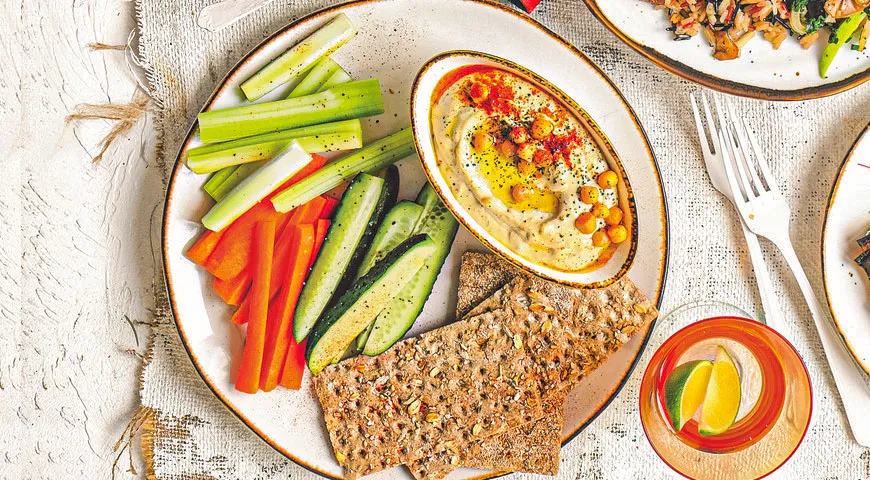
In the rush of modern life, a snack that is both swift and sophisticated can feel like a culinary contradiction. Yet here lies a solution so elegantly simple it borders on genius: crispbreads paired with velvety hummus and a vibrant array of vegetable sticks. This is not merely a snack—it is a canvas for texture, color, and nourishment. Whether you are assembling a quick lunch, a party platter, or a mindful bite between meetings, this combination delivers satisfaction without compromise. The beauty lies in its adaptability: you can dip, spread, or layer each element as your mood dictates. With store-bought hummus and crispbreads, preparation takes minutes; with a touch of creativity, it becomes a signature dish.
About This Recipe
This recipe originates from the Russian culinary tradition of zakuski—small, flavorful bites that open a meal. Here, we elevate the concept with modern health consciousness. Hummus, a creamy blend of chickpeas and tahini, provides plant-based protein and healthy fats, while raw vegetables offer crunch and vitamins. The crispbreads, typically made from rye or whole grains, add a sturdy, low-calorie base. The total time from fridge to table is under ten minutes, making it ideal for impromptu entertaining or a virtuous solo snack. For those who wish to perfect their hummus from scratch, consider using a best glass food processor to achieve that silky-smooth consistency. Alternatively, a high-speed best non-toxic immersion blender can work wonders with minimal cleanup.

Ingredients
- 2 medium carrots
- 2 stalks celery
- 2 cucumbers
- 200–300 g high-quality hummus (store-bought or homemade)
- 8–12 crispbreads (rye, buckwheat, or whole-grain)
- Optional: salt, pepper, paprika, olive oil for finishing
When selecting hummus, look for brands with simple, clean ingredients. If it tastes flat, a pinch of smoked paprika or a drizzle of extra-virgin olive oil can transform it. For homemade versions, you might need a best food processor for nut butter to grind the tahini and chickpeas into a luscious paste. The vegetables should be firm and fresh—crisp carrots, tender celery, and cool cucumbers create a triad of textures. For the crispbreads, avoid overly flavored varieties; a neutral, toasty base lets the hummus shine.
Step-by-Step Instructions
Divide the hummus evenly between two small bowls. Place each bowl in the center of a large dinner plate. This positioning creates a natural focal point for the arrangement.
Cut the carrots and cucumbers into thick, long strips—about matchstick size but chunkier for satisfying crunch. Remove the tough strings from the celery stalks with a vegetable peeler, then cut the stalks into similar sticks. Arrange the vegetable sticks and crispbreads around the hummus bowls on the plates immediately.
Serve at room temperature. Guests can spread hummus onto crispbreads or dip the vegetable sticks directly—both methods are equally delicious. For an extra flourish, sprinkle the hummus with a dash of za’atar or sumac. If you prefer a warm accompaniment, a few minutes in a best air fryer non-toxic can give the crispbreads a gentle toast.
Tips for Perfect Execution
Always use vegetables at room temperature—straight from the fridge dulls their flavor. For celery, a quick soak in icy water for five minutes restores crispness if it has gone limp. If your hummus is too thick, stir in a tablespoon of water or lemon juice until smooth. To elevate store-bought hummus, try blending in roasted red pepper or a clove of garlic using a best immersion blender. For those who love intense flavor, a finishing salt like flaky sea salt or Maldon makes a noticeable difference. When making hummus from scratch, a best wheatgrass juicer is not needed here, but a quality citrus juicer can provide fresh lemon juice for brightness.
Variations and Creative Twists
This basic formula invites endless customization. Replace hummus with white bean dip, baba ganoush, or a spicy avocado mash. For vegetable sticks, try bell peppers, radishes, fennel, or jicama. The crispbreads can be swapped for rice cakes, gluten-free crackers, or even large lettuce leaves for a keto option. A drizzle of best castor oil is not recommended here, but a high-quality pumpkin seed oil or chili oil adds a gourmet touch. For a protein boost, top the hummus with toasted pine nuts or hemp seeds. If you are hosting, present everything on a wooden board—the visual contrast of orange, green, and white against dark rye crispbreads is stunning. Pair with a crisp white wine or a light rosé; a best sweet wine with high alcohol content might overpower the delicate flavors, so stick to dry options.
FAQ
Can I make this recipe ahead of time?
Yes, but only partially. Vegetables can be cut and stored in water in the refrigerator up to 8 hours. Hummus can be made or transferred to bowls up to a day ahead. Assemble everything just before serving to preserve crunch.
What is the best hummus brand to use?
Look for brands that list chickpeas, tahini, lemon juice, and olive oil as primary ingredients. If you prefer homemade, a best food processor for nut butter will also excel at making silky hummus. Avoid brands with excessive preservatives or added sugar.
Can I use gluten-free crispbreads?
Absolutely. Many brands offer crispbreads made from rice, corn, or quinoa. Check labels for gluten-free certification if needed. For a truly grain-free option, use large cucumber rounds as the base.
How do I store leftover vegetables and hummus?
Store cut vegetables in an airtight container with a damp paper towel to maintain crispness—they will last up to 2 days. Hummus keeps refrigerated for 5–7 days in a sealed jar. Stir before serving to reincorporate any separated oil.
What if my hummus is too bland?
Add a pinch of cumin, smoked paprika, or cayenne pepper. A squeeze of fresh lemon juice or a small clove of grated garlic can also wake up the flavor. For a creamier texture, blend in a tablespoon of Greek yogurt or tahini using a best immersion blender.
Can I serve this as a main dish?
Yes—increase the portion to two or three crispbreads per person and add a side salad or a bowl of soup. For extra protein, serve with grilled chicken or tofu. A best microwave pressure cooker can quickly cook chickpeas from dried if you want to make hummus from scratch.
What kitchen tools do I need?
Minimal: a cutting board, a sharp knife, and a vegetable peeler. For homemade hummus, a best food processor for nut butter is ideal, but a best non-toxic immersion blender can also work. If you want to roast vegetables for a variation, a best commercial countertop convection oven yields even browning.
This humble snack holds the power to transform a rushed afternoon into a moment of mindful eating. With crispbreads, hummus, and vegetable sticks, you have a trio that respects both your time and your palate. Experiment with flavors, invite your favorite spices, and let this simple assembly become a staple in your culinary repertoire.







