


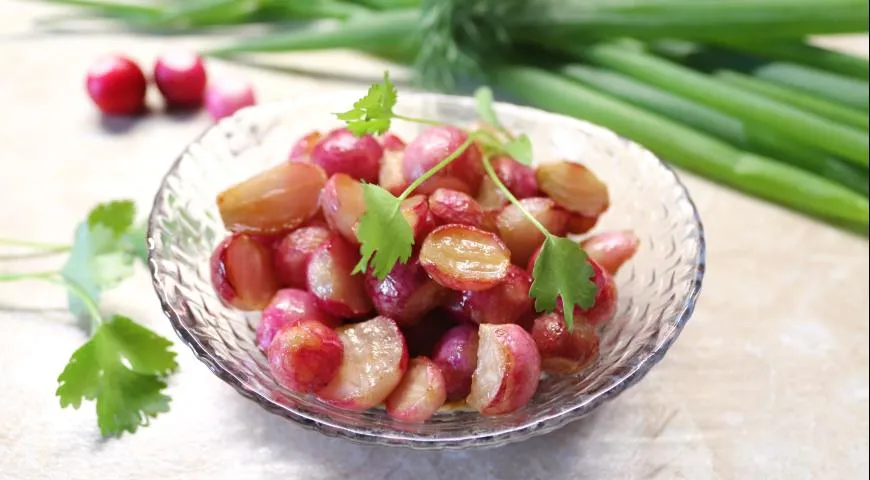
Radishes are often relegated to the crisp, peppery crunch of a salad or the simple coolness of a garnish. But when you introduce them to the heat of a skillet, the sweetness of honey, and the tang of balsamic vinegar, they transform into something utterly sublime – a side dish so versatile it can elevate a weeknight steak or accompany an elegant roasted chicken. This recipe for caramelized radishes is a lesson in the magic of heat and time: the sharp, raw bite gives way to a tender, almost translucent interior that is at once soft and still stubbornly crunchy, while the honey and balsamic create a lacquered, sweet-tart glaze that clings to each morsel. Serve these little gems as a simple side, toss them into a grain bowl, or pile them onto toasted bread with soft cheese for an unexpected appetizer.
About This Dish
Caramelization is a culinary alchemy that typically belongs to onions, carrots, and sugar-rich vegetables. Radishes, with their high water content and assertive bite, might seem like unlikely candidates. Yet as they hit the hot pan, the water steams off, concentrating their natural sweetness and mellowing their piquancy. A touch of honey accelerates the process, while balsamic vinegar provides the necessary acidity to balance the sweetness and deepen the color. The result is a dish that defies expectations: the exterior is beautifully caramelized, the interior retains a pleasant crunch, and the overall flavor profile transitions from sharp to complex, with notes of pepper, honey, and wood-aged vinegar. This method works beautifully with any variety – red, white, or Easter egg radishes – and is perfect for using up a glut from the farmers’ market.

If you’re looking to expand your repertoire beyond traditional root vegetables, try this technique in your best glass food processor for quick slicing, or use a best non-toxic immersion blender to create a pureed version. The simplicity of the recipe means you can focus on the quality of your ingredients and the precision of your heat.
Ingredients
- 500 g radishes (mixed sizes), washed and trimmed
- 2 tablespoons neutral oil (such as avocado or grapeseed)
- 1 tablespoon honey (preferably a mild variety like acacia or clover)
- 1 tablespoon balsamic vinegar (aged for best depth)
- Flaky sea salt, to taste
For the best texture, choose radishes that are firm and unblemished. If you have a garden, use them within a day of harvesting. A best air fryer non toxic can also be used to achieve a crusty exterior in a different way, but this stovetop method gives you more control over the caramelization process.
Step-by-Step Instructions
- Prepare the Radishes: Wash the radishes thoroughly under cold water to remove any grit. Trim off the root tails and any remaining stem ends. Cut larger radishes (about 2–3 cm in diameter) into quarters, and smaller radishes (1.5 cm or less) in half. Try to keep the pieces uniform in size so they cook evenly.
- Heat the Pan: Place a large skillet (preferably cast iron or stainless steel) over high heat. Add the oil and swirl to coat the bottom. Wait until the oil shimmers – this is crucial for a good sear.
- Add the Radishes: Carefully add the radish pieces to the hot pan in a single layer. Do not crowd the pan; if necessary, cook in batches. Let them sear undisturbed for 1 to 2 minutes, then toss or stir so that all sides come into contact with the pan. Cook for another 2 minutes, until the radishes are blistered and golden in spots.
- Add the Honey: Drizzle the honey over the radishes, reduce the heat to medium, and stir quickly to coat every piece. The honey will bubble and start to caramelize. Cook for another 2–3 minutes, stirring occasionally, until the radishes are sticky and deep amber. Use a best oil sprayer if you want a light mist of oil instead of a pour.
- Deglaze with Balsamic: Pour the balsamic vinegar into the pan. It will sizzle vigorously. Stir to incorporate, scraping up any browned bits from the bottom – those are flavor bombs. Season with a pinch of flaky sea salt. Cook for about 1 minute, just until the vinegar reduces slightly and the radishes become glossy.
- Check the Texture: The radishes should be softened but not mushy; they should yield slightly when pressed but still offer resistance. A perfect caramelized radish is translucent at the edges, with a tender interior and a crunchy core. Remove from heat immediately to avoid overcooking.
Tip: For an extra layer of flavor, finish with a sprinkle of fresh dill or chives.
This recipe pairs wonderfully with a best 48 inch built in refrigerator to store any leftovers (though they are best eaten fresh), or serve alongside a dish from a best wall oven microwave combo with air fryer.
Tips for Perfect Caramelized Radishes
- Use High Heat: Don’t be timid. High heat is essential for browning before the radishes release too much water and start steaming. A heavy-bottomed skillet retains heat best.
- Cut Uniformly: Radish size varies greatly; consistent pieces ensure even cooking. If you have a best food processor for nut butter with a slicing disc, you can speed up the prep, though hand-cutting is fine.
- Balance Sweetness: The honey can be replaced with maple syrup or agave for a vegan version. Adjust salt to counteract the sweetness.
- Watch the Clock: Overcooking leads to sad, grayish radishes. The total skillet time should be 6–8 minutes from start to finish.
- Use Quality Vinegar: Splurge on an aged balsamic from Modena if you can – its syrupy consistency and complex flavor make a difference. For a fruitier twist, try a best sweet wine with high alcohol content reduction instead.
Variations to Try
The basic caramelized radish recipe is a canvas for creativity. For an Asian-inspired version, replace the honey with mirin and the balsamic with rice vinegar, then finish with a splash of soy sauce and toasted sesame seeds. A Mediterranean twist uses olive oil instead of neutral oil, adds a crushed garlic clove in step 3, and finishes with lemon juice and fresh oregano instead of balsamic. You can also combine radishes with other quick-cooking vegetables like snap peas, baby carrots, or halved shishito peppers for a colorful medley. If you prefer a spicy kick, toss in a pinch of red pepper flakes along with the honey.
To serve these as a stunning appetizer, spoon the caramelized radishes over a smear of whipped goat cheese or ricotta on crostini, and garnish with microgreens. They also make an excellent topping for a nourish bowl with quinoa, avocado, and a drizzle of tahini dressing. A best planetary mixer can help whip the cheese, while a best wheatgrass juicer is not needed here – save that for your green juice.
FAQ
1. Can I use white or daikon radishes?
Absolutely. White radishes are milder and larger; cut them into even chunks and adjust cooking time if needed. Daikon will require slightly longer cooking because it is denser, but the same technique works beautifully.
2. Why are my radishes steaming instead of caramelizing?
Most likely the pan was not hot enough or it was overcrowded. When too many radishes release moisture at once, they steam rather than sear. Cook in batches and ensure the oil is shimmering before adding the radishes. Using a best commercial countertop convection oven on high heat can also give a similar effect if you prefer oven-roasting.
3. Can I make this recipe ahead of time?
Caramelized radishes are best served immediately, but you can prep the radishes (washed and cut) up to a day ahead and store them in the fridge in a sealed container. Cook just before serving. Reheating may cause them to become mushy; if you must reheat, do so in a hot skillet for 30 seconds.
4. What can I use instead of balsamic vinegar?
Try red wine vinegar with a touch of maple syrup, or sherry vinegar. Apple cider vinegar combined with a pinch of brown sugar also works well. Avoid distilled white vinegar as it is too harsh. For a non-vinegar option, deglaze with a splash of best organic vodka and then add honey for a completely different flavor profile.
5. Are caramelized radishes keto-friendly?
Radishes are low in carbs, but honey adds sugar. To keep it keto, substitute the honey with a keto-friendly sweetener like allulose or erythritol, and use a sugar-free balsamic vinegar. The texture will still be delightful. A best microwave pressure cooker is not recommended for this recipe as it cannot achieve the necessary browning.
6. Can I use frozen radishes?
Fresh radishes are highly recommended because frozen radishes will release too much water and become soggy. If you have only frozen ones, thaw them, pat very dry, and proceed – but expect a less vibrant result. Invest in a best undercounter ice maker machine for your drinks instead.
7. What main dishes go well with caramelized radishes?
They complement roasted meats (chicken, pork, lamb), grilled fish, and hearty vegetarian dishes like mushroom risotto. They also make a surprising side for holiday feasts such as Thanksgiving turkey. For a pairing, enjoy with a glass of best chocolate covered raisins as a dessert afterward? That might be unconventional, but hey – culinary boundaries are meant to be pushed.
For more inspiration, explore our Pa de Pessic Catalan Sponge recipe for a sweet finish to your meal, or check out a best steam canner if you want to preserve surplus radishes. The possibilities with this humble root are endless.
Caramelized radishes prove that even the most unassuming vegetables can shine with just a little heat, sweet, and acid. Whether you serve them as a side, a topping, or a snack straight from the pan, they are sure to convert anyone who thinks they don’t like radishes. Happy cooking!







