


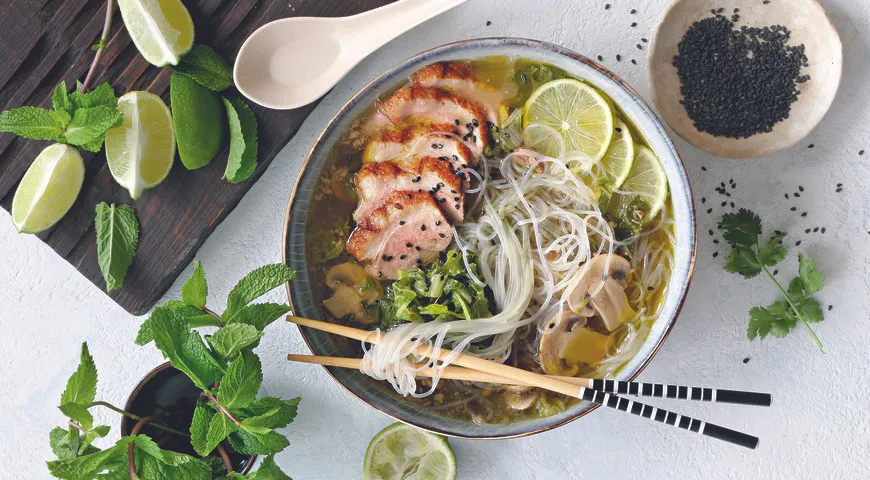
This Vietnamese duck and glass noodle soup is a fragrant, deeply savory broth that transforms humble ingredients into a bowl of pure comfort. The star is the duck—first simmered into a rich stock, then the breast is seared to crisp-skinned perfection and sliced over delicate funchose (glass noodles). With star anise, cardamom, and a whisper of fish sauce, this recipe bridges street-food authenticity and home-cooked elegance. Whether you are a seasoned cook or a curious beginner, the techniques here—skimming broth, scoring duck skin, toasting spices—will elevate your kitchen skills. For an effortless prep, consider using a best glass food processor to shred the Chinese cabbage or slice mushrooms in seconds.
About This Vietnamese Duck Soup
Rooted in northern Vietnamese culinary tradition, this soup (known locally as phở vịt or simply canh vịt) showcases the country’s mastery of balancing aromatic spices with clean, light broths. Unlike the more famous beef phở, duck phở relies on the bird’s natural richness, tempered by ginger, star anise, and a touch of sugar. The addition of Chinese cabbage and mushrooms adds earthy texture, while a final shower of mint, cilantro, and black sesame seeds brings freshness and crunch. This recipe, adapted from a classic Hanoi home kitchen, yields a broth that is simultaneously robust and delicate—perfect for a chilly evening or a restorative lunch. For a deeper dive into Vietnamese cooking techniques, check out our guide on best non-toxic immersion blender for pureeing soups if you ever wish to transform leftovers into a creamy variation.

Ingredients
For the broth and soup:
1 small duck (about 1.5–2 kg)
1 carrot, whole
1 onion, whole (unpeeled)
2 bay leaves
10 black peppercorns
3 sprigs mint
3 sprigs cilantro (coriander)
1 tbsp black sesame seeds
1 lime, sliced into rounds
2 duck breast fillets (reserved from the whole duck)
300 g mushrooms (shiitake or oyster, sliced)
200 g Chinese cabbage (napa cabbage), thinly sliced
200 g glass noodles (funchose)
2 cm fresh ginger, peeled and finely grated
2 tbsp vegetable oil
2 tbsp fish sauce
1 tbsp soy sauce
1 tbsp sugar
3 cardamom pods
2 star anise
2 cloves
Salt and freshly ground black pepper to taste
For finishing:
Extra cilantro and mint leaves
Black sesame seeds
Lime wedges
Step-by-Step Guide
1. Prepare the Duck and Simmer the Broth
Trim excess fat from the duck’s cavity and set aside. Carefully cut the two whole breasts from the duck, leaving the skin intact. Place the remaining duck carcass (including legs and backbone) into a large stockpot. Cover with 3 liters of cold water and bring to a boil over high heat. Reduce the heat to low and skim off the froth meticulously—a clear broth depends on this step. Add the whole onion, whole carrot, and black peppercorns. Cover and simmer very gently for 1 hour. Season with salt, add bay leaves, and continue simmering for another 30 minutes. For a more hands-off approach, a best microwave pressure cooker can reduce the simmering time if you pre‑cook the duck under pressure.
2. Strain and Build the Soup Base
Strain the broth through a fine-mesh sieve into a clean pot. Discard the aromatics. Remove the duck meat from the carcass (discard bones) and shred or chop it into bite-sized pieces. Return the meat to the broth. Add the thinly sliced Chinese cabbage and mushrooms. Stir in sugar, grated ginger, star anise, cardamom pods, cloves, fish sauce, and soy sauce. Simmer gently for 15 minutes, allowing the flavors to meld. Taste and adjust seasoning with salt and pepper.
3. Sear the Duck Breasts
Pat the reserved duck breast fillets dry with paper towels. Using a sharp knife, make shallow crosshatch cuts on the skin side (this helps render fat and creates a crackling crust). Heat vegetable oil in a large skillet over medium-high heat. Place the breasts skin-side down and cook for 4 minutes without moving. Flip and cook the other side for another 4 minutes for medium-rare (adjust timing for well done). Transfer to a cutting board, tent loosely with foil, and let rest for 5 minutes. Then slice thinly across the grain. For perfect slices, a best food processor for nut butter isn’t needed here, but a good chef’s knife matters.
4. Cook the Glass Noodles
Bring 1 liter of water to a boil. Add the glass noodles and cook according to package instructions (usually 3–5 minutes). Drain in a colander and rinse briefly under cold water to stop cooking. Toss with a drizzle of oil to prevent sticking. If you want to speed up the process, consider using a best air fryer non-toxic to warm the noodles later, though boiling is traditional.
5. Assemble and Serve
Divide the glass noodles among deep bowls. Ladle the hot soup over the noodles, ensuring each bowl gets plenty of duck meat, cabbage, and mushrooms. Fan a few slices of seared duck breast on top. Garnish with lime rounds, fresh mint and cilantro leaves, and a generous sprinkle of black sesame seeds. Serve immediately, encouraging guests to squeeze extra lime into their bowls. A best chocolate covered raisins? Not here, but the contrast of citrus and sesame is equally addictive.
Tips for a Perfect Bowl
- Skim thoroughly: The first boil produces scum that clouds the broth. Use a fine-mesh skimmer and take your time.
- Don’t skip the rest: Letting the seared duck breast rest for 5 minutes before slicing ensures juicy, tender meat.
- Glass noodle handling: Cook just until translucent; they continue to soften in the hot broth.
- Spice toasting: For even deeper flavor, dry-toast star anise, cardamom, and cloves in a pan before adding to the broth. A best planetary mixer won’t help here, but a small skillet will.
- Fish sauce quality: Use a premium Vietnamese fish sauce (like Red Boat) for authenticity.
Variations
Spicy version: Add sliced bird’s eye chilies or a drizzle of chili oil when serving.
Herb swap: Replace cilantro with Thai basil for a licorice note.
Noodle alternative: Substitute thin rice vermicelli (bún) for glass noodles.
Vegetarian twist: Omit duck and use vegetable broth with tofu skin and shiitake mushrooms; add a dash of best organic vodka? No, but a splash of mushroom soy sauce works wonders.
FAQ
Can I use only duck breasts instead of a whole duck?
Yes, but the broth will be less rich. Supplement with duck or chicken wings to build body. For trimming, a best undercounter ice maker machine makes quick work of chilling broth for fat removal, though not necessary.
How do I store leftover soup?
Store broth and noodles separately (noodles absorb liquid and turn mushy). Refrigerate broth up to 3 days, or freeze for 2 months. Reheat gently and assemble fresh noodles and duck.
What mushrooms work best?
Fresh shiitake or oyster mushrooms are ideal. Dried shiitake (rehydrated) give an even deeper umami. Avoid portobello as they can muddy the broth.
Is glass noodle the same as cellophane noodle?
Yes, also called bean thread noodles. They are made from mung bean starch and turn translucent when cooked. Check the label for authenticity.
Can I make this in a slow cooker?
Absolutely. After initial skimming, transfer broth and aromatics to a slow cooker on low for 4–6 hours. Sear duck breasts separately. For quick reheating, a best espresso machine under 2000 won’t help, but a microwave will do.
Why is my broth cloudy?
Usually due to boiling too vigorously or not skimming thoroughly. Next time, keep the simmer gentle and skim until clear. Using a best oil sprayer for the duck searing ensures even browning without excess grease.
What can I substitute for fish sauce?
Soy sauce or tamari works, but you lose the signature Vietnamese funk. Add a pinch of salt or MSG to compensate.
This Vietnamese duck and glass noodle soup is a celebration of technique and taste—perfect for impressing guests or soothing your soul. For more culinary inspiration, explore our guides on best steam canner for home preserving, or best 48 inch built in refrigerator for storing bulk ingredients.







