


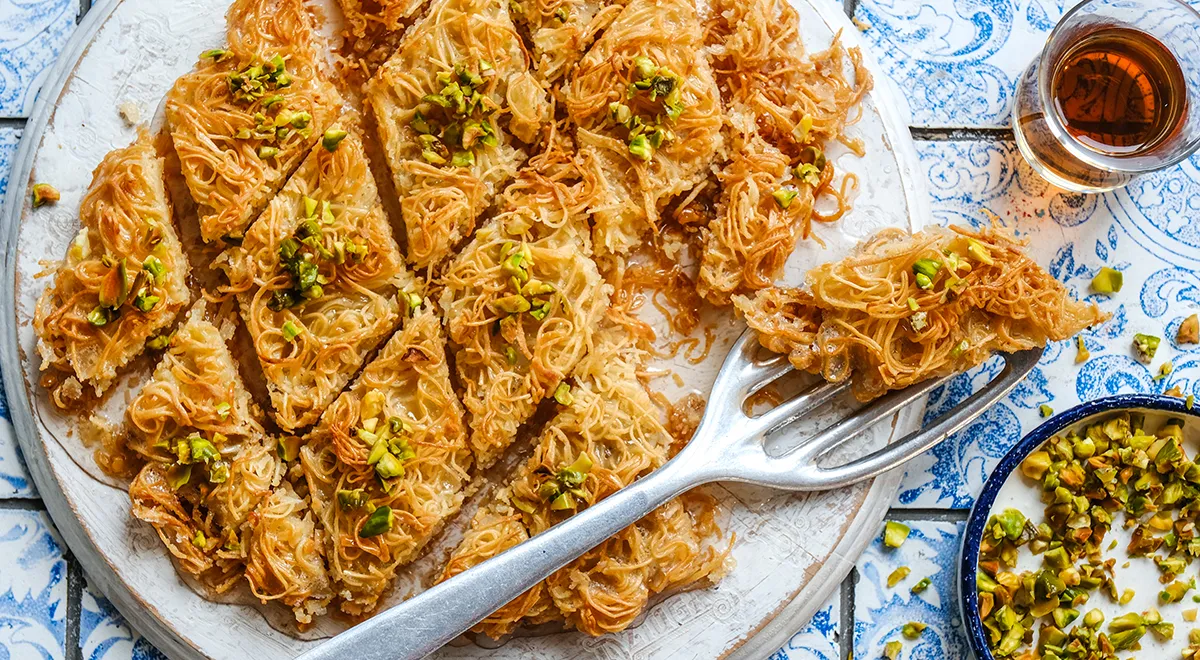
Turkey is celebrated for its dazzling array of sweets, but beyond the world-famous baklava lies a hidden gem that deserves equal acclaim: kadayıf. This exquisite dessert, also known as kataifi or kadaif, is a close relative of baklava, yet it possesses a unique texture and charm all its own. Made from shredded phyllo dough that resembles delicate threads of angel hair pasta, kadayıf is layered with a luscious nut filling, drenched in a fragrant syrup, and baked to golden perfection. The result is a symphony of contrasts—crispy, buttery strands yielding to a tender, syrup-soaked interior, punctuated by the earthy crunch of walnuts or pistachios. Traditionally served during celebrations and family gatherings, this dessert is a testament to the artistry of Turkish pastry-making. In this guide, we’ll walk you through every step to create an authentic kadayıf at home, from preparing the syrup to achieving that perfect golden crust.
About Kadayıf: A Sweet Tradition
Kadayıf has deep roots in Ottoman cuisine and remains a beloved treat across Turkey, the Balkans, and the Middle East. Unlike baklava, which uses whole sheets of phyllo, kadayıf employs kadayıf dough—thin, vermicelli-like strands that are either hand-spun or machine-made. The dough is generously buttered, filled with chopped nuts, and baked before being soaked in a cool, citrus-kissed syrup. The technique of pouring syrup over a hot pastry while it's still warm ensures maximum absorption, creating a dessert that’s simultaneously crunchy and succulent. For the best results, using a reliable planetary mixer can help when working with sticky doughs, though this recipe relies on simple hand mixing.

Ingredients
- Kadayıf dough (shredded phyllo) – 300 g
- Unsalted butter, melted – 300 g
- Granulated sugar – 1 kg
- Water – 750 ml (3 cups)
- Vanilla sugar – 1 packet (10 g)
- Walnuts and/or pistachios, finely chopped – 300 g
- Fresh lemon juice – 15 ml (1 tablespoon)
All measurements are metric. If you’re sourcing kadayıf dough, look for it in Middle Eastern markets or online. For the best nut butter consistency for fillings, consider a high-powered food processor designed for nut butters.
Step-by-Step Instructions
Step 1: Prepare the Syrup
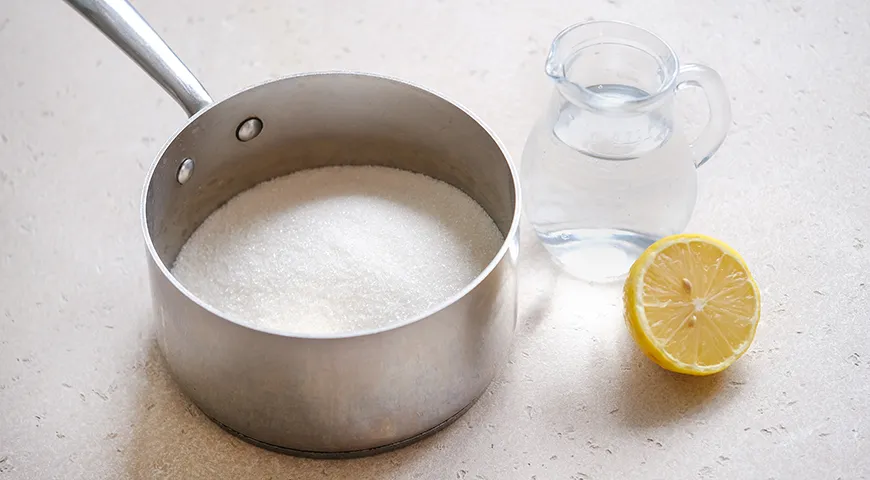
In a medium saucepan, combine the granulated sugar and water. Bring to a gentle boil over low heat, stirring occasionally until the sugar dissolves completely. As soon as it reaches a boil, remove from heat. Stir in the lemon juice and vanilla sugar. Set aside to cool completely. The syrup should be thin and fragrant—think of it as a liquid jewel that will later saturate every strand.
Step 2: Melt the Butter
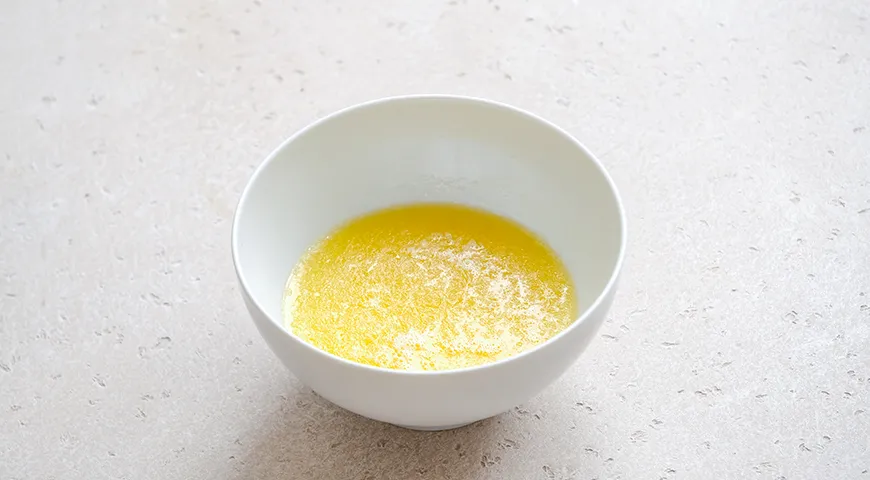
Gently melt the 300 g of butter in a small saucepan or in the microwave. You want it fully liquid but not browned. A fine-mesh strainer can help remove any milk solids if desired.
Step 3: Butter the Kadayıf Dough
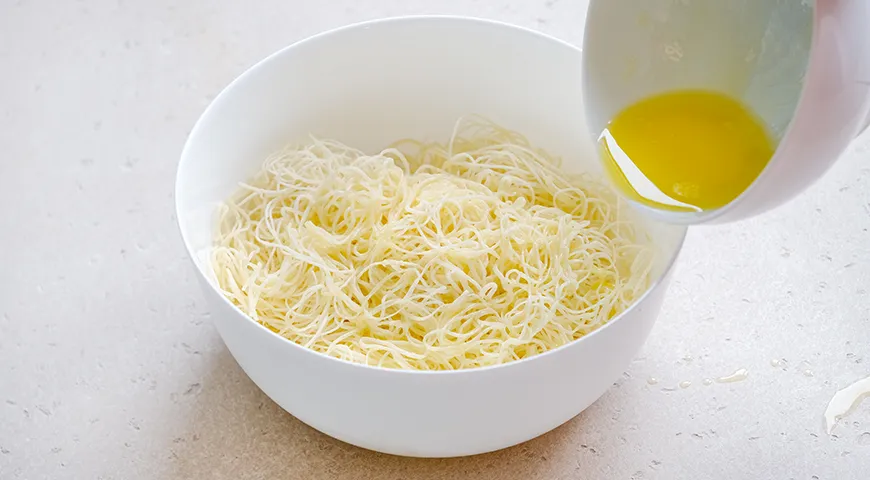
Place the shredded kadayıf dough in a large mixing bowl. Gradually drizzle the melted butter over the strands, using your hands or two forks to gently toss and separate the threads. Ensure every strand is lightly coated—this is key for a crispy, flaky texture. Don’t overwork; just lift and fluff.
Step 4: Layer the Base
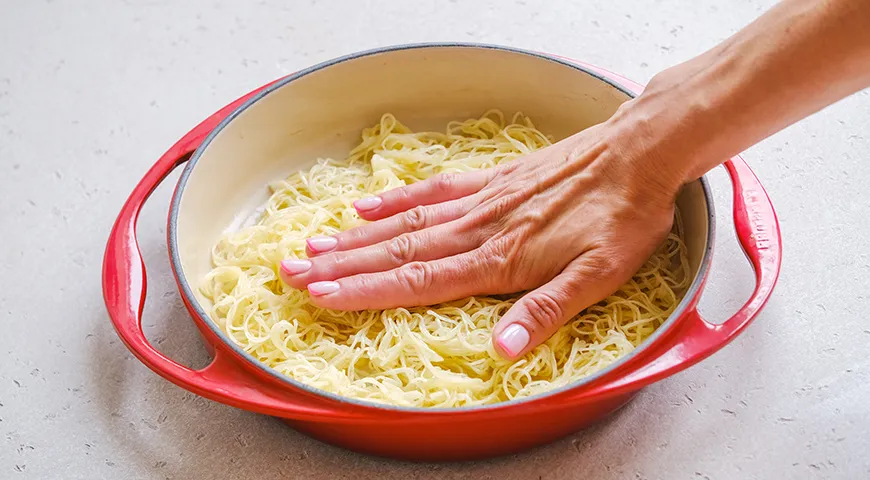
Transfer half of the buttered dough to a baking tray (approximately 30×40 cm). Press down gently and evenly with your palm to form a compact layer. This base will support the nut filling.
Step 5: Add the Nut Filling
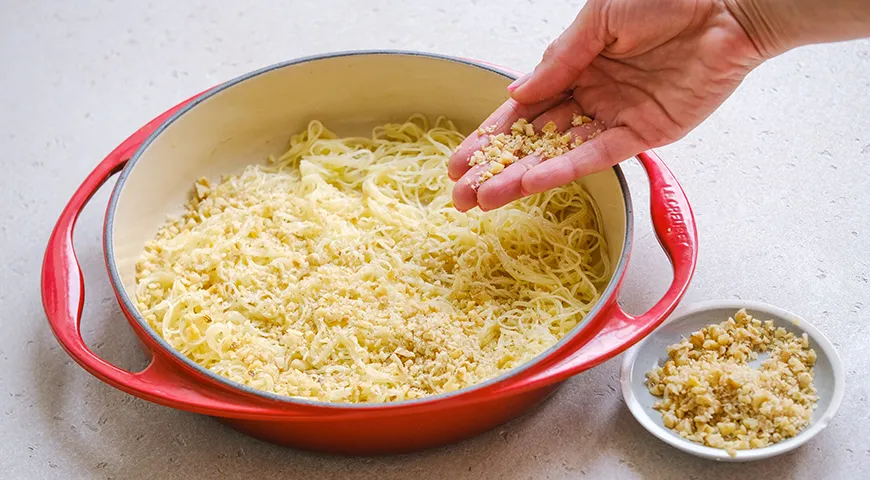
Finely chop the walnuts and/or pistachios. For the finest, even crumb, a dedicated nut grinder or food processor works wonders. Sprinkle the nuts evenly over the pressed dough layer.
Step 6: Top with Remaining Dough
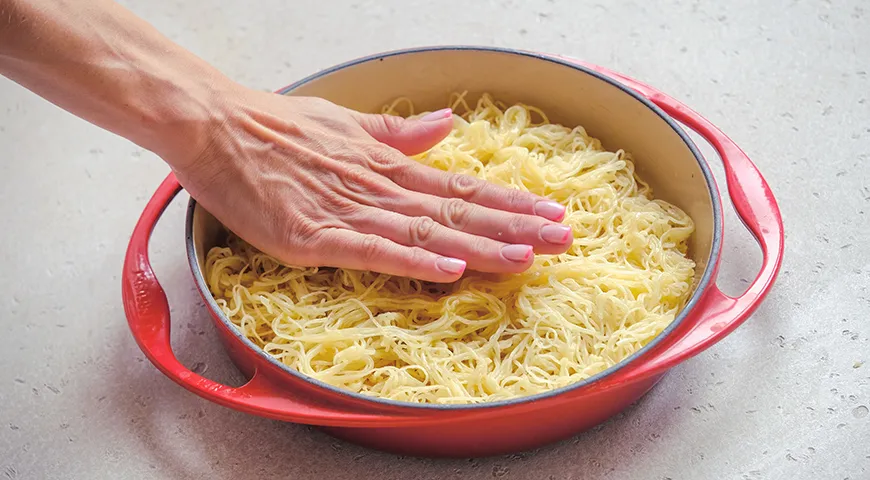
Cover the nuts with the remaining buttered kadayıf threads. Gently press everything together with your hands—don’t compact too firmly; you want the layers to remain airy. Trim any stray edges for a neat rectangle.
Step 7: Bake to Golden Perfection
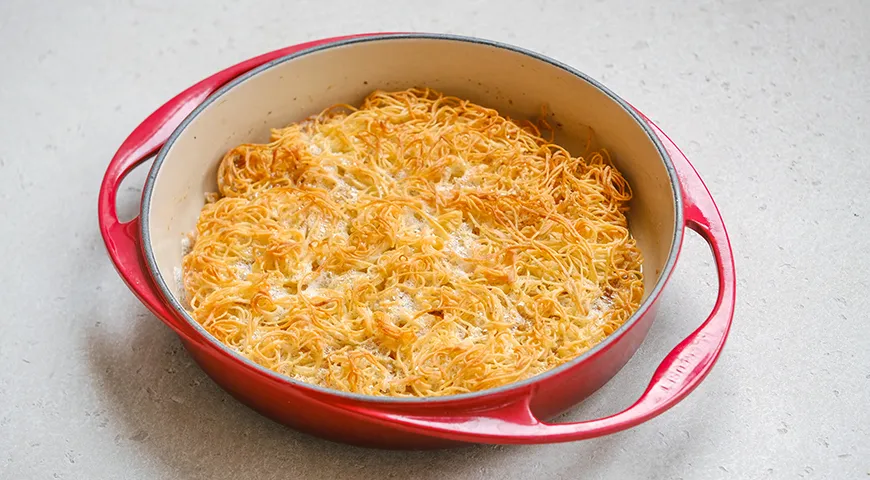
Preheat your oven to 180°C (350°F). Place the baking tray on the lowest rack—this ensures the bottom browns slowly while the top crisps evenly. Bake for 40–45 minutes until the surface is deep golden brown and the edges are slightly caramelized. For an even bake, a countertop convection oven can circulate heat beautifully.
Step 8: Soak with Syrup
Remove the kadayıf from the oven and let it cool to room temperature—about 30 minutes. Slowly pour the cooled syrup evenly over the entire surface. The pastry will hiss as it absorbs the liquid. Let it sit for several hours (or overnight) until the syrup is fully absorbed and the strands are tender yet still distinct.
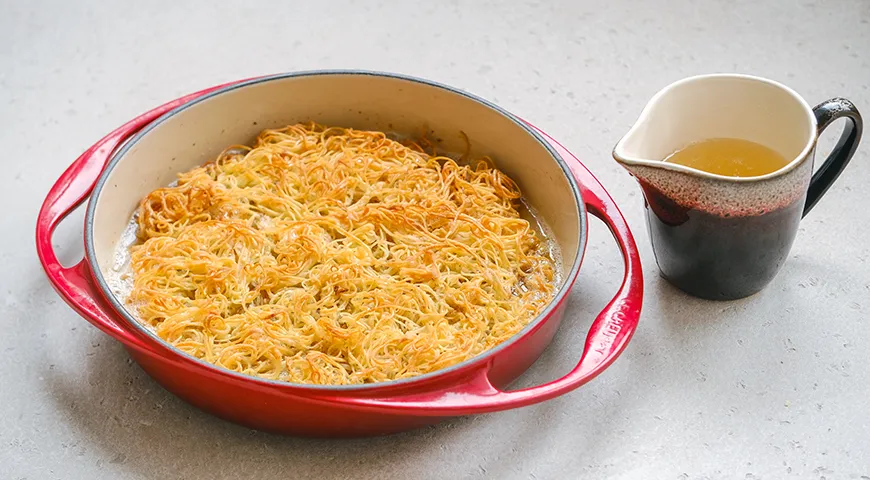
Once fully soaked, cut into squares or diamonds. Serve at room temperature, optionally with a dollop of clotted cream or a dusting of crushed pistachios.
Tips for Perfect Kadayıf
- Syrup temperature is crucial: Always use completely cooled syrup on room-temperature pastry. Hot syrup on hot pastry can make it soggy.
- Don't skimp on butter: The generous amount ensures the threads separate and crisp. If your dough seems dry, add a little more melted butter.
- Press lightly: Over-packing the layers will result in a dense, heavy dessert. Gentle pressure is best.
- Use a sharp knife: For clean cuts, a serrated blade (surprisingly good for pastries) or wet knife helps prevent sticking.
- Patience is a virtue: Let the syrup soak for at least 4 hours, preferably overnight, for the most harmonious texture.
Variations to Explore
While the classic walnut-pistachio filling is divine, kadayıf is endlessly adaptable. Try these twists:
- Cheese kadayıf: Replace nuts with unsalted mozzarella or ricotta for a creamy, savory-sweet balance.
- Chocolate infusion: Sprinkle cocoa powder or chocolate chips among the nuts for a modern indulgence.
- Spiced syrup: Add a cinnamon stick, a few cloves, or orange zest to the syrup while it heats for aromatic depth.
- Individual portions: Shape the buttered dough into small nests in a muffin tin, fill with nuts, and bake for single-serving treats.
Frequently Asked Questions
Where can I buy kadayıf dough?
Kadayıf dough is available at Middle Eastern grocery stores, specialty food shops, or online. Look for it in the freezer or refrigerated section. If unavailable, you can substitute with finely shredded phyllo, though the texture will differ.
Can I make kadayıf ahead of time?
Absolutely. In fact, kadayıf tastes better the next day as the syrup continues to permeate. Store covered at room temperature for up to 3 days. Do not refrigerate—it will dry out the pastry.
Why is my kadayıf hard instead of crispy?
Overbaking or insufficient syrup can cause hardness. Ensure you bake only until golden (not dark brown) and pour enough syrup to fully saturate. The right balance of syrup and butter is essential.
Can I use honey instead of sugar syrup?
Traditional syrups are made with sugar, but you can substitute half the sugar with honey for a floral note. Keep in mind honey-based syrups are thicker; thin with a little water if needed.
What tools are essential for this recipe?
A good baking tray, a saucepan for syrup, and your hands. For even nut chopping, an immersion blender with a chopper attachment is helpful. To test syrup readiness, a candy thermometer isn’t needed, but a digital one can ensure precision if you’re new to syrup-making.
Kadayıf is more than a dessert—it’s an experience. Each forkful reveals layers of history, craftsmanship, and flavor. Whether you’re recreating a childhood memory or discovering Turkish sweets for the first time, this recipe promises a journey into the heart of Anatolian pastry. For more inspiration, explore our sponge cake recipes or perfect coffee pairings to accompany your sweet creations.







