


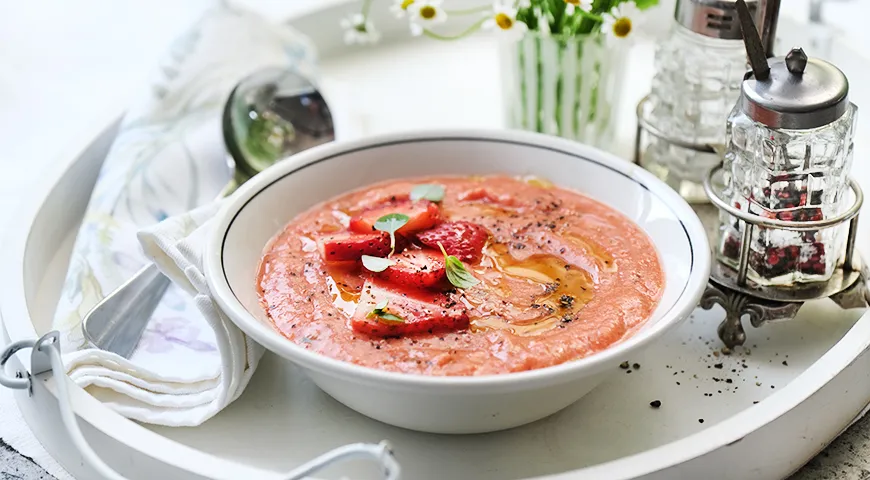
If you think strawberry gazpacho is a dessert soup, think again. This vibrant, refreshing creation is every bit the savory appetizer as its classic Spanish cousins—only more aromatic. During strawberry season, any self‑respecting cold‑soup enthusiast must make this. The riper and sweeter the berries, the more fragrant your gazpacho. Conversely, if the strawberries are lackluster, gazpacho is a brilliant way to use them up. A pinch of sugar can balance sweetness, while a squeeze of lemon or extra balsamic vinegar adds brightness. This recipe elevates the humble gazpacho into a showstopping summer starter.

About Strawberry Gazpacho
Gazpacho traditionally hails from Andalusia, Spain, where sun‑soaked tomatoes, cucumbers, and peppers are blended into a cold, silky soup. Strawberry gazpacho is a modern, playful variation that swaps some tomatoes for strawberries, lending a gentle fruitiness without tipping into dessert territory. The key is balancing the berries’ natural sweetness with savory elements: garlic, olive oil, balsamic vinegar, and fresh basil. The result is a sophisticated, restaurant‑worthy dish that celebrates peak‑season produce. For the smoothest texture, use a high‑quality non‑toxic immersion blender or a powerful glass food processor.
Ingredients
- Strawberries – 400 g
- Tomatoes – 200 g
- Cucumber – 200 g
- Red bell pepper – 150 g
- Garlic – 2 cloves
- Extra virgin olive oil – 2 tbsp
- Balsamic vinegar – 1 tbsp
- Fresh basil – 15 g
- Salt – to taste
- Black pepper – freshly ground, to taste
Optional: a pinch of sugar if strawberries are not sweet enough, or a squeeze of lemon for extra acidity. For the best flavor, choose organic strawberries and vine‑ripened tomatoes. A quality oil sprayer helps finish the soup with a fine mist of olive oil.
Step‑by‑Step Instructions
Step 1: Prepare the tomatoes. Score a small cross on the bottom of each tomato. Blanch them in boiling water for 10–20 seconds, then transfer immediately to a bowl of ice water. The skins will slip off easily. Peel and set aside.
Step 2: Prep the vegetables. If the cucumber has tough skin, remove it with a vegetable peeler. Halve the bell pepper and remove seeds and membranes. Roughly chop the peeled tomatoes, cucumber, and bell pepper into uniform pieces. Place them in a blender or high‑performance food processor along with the garlic cloves. Blend until completely smooth.
Step 3: Purée the strawberries. Hull the strawberries (reserve a few for garnish). Purée the remaining berries in a blender until silky. Combine the strawberry purée with the vegetable purée and stir well.
Step 4: Season and chill. Stir in the olive oil and balsamic vinegar. Season with salt to taste. Finely chop the fresh basil leaves and add them to the soup. Refrigerate for at least 30 minutes to allow flavors to meld. For faster chilling, use an undercounter ice maker to produce plenty of ice cubes.
Step 5: Serve. Ladle the gazpacho into glasses or bowls. Add a few ice cubes if desired. Garnish with reserved strawberry slices, tiny basil leaves, a crack of black pepper, and a drizzle of olive oil. Serve immediately.
Tips for Perfect Strawberry Gazpacho
- Chill thoroughly – the soup should be served ice‑cold. Refrigerate for at least 2 hours if possible.
- Use ripe fruit – overly green strawberries or under‑ripe tomatoes will make the soup tart. If needed, add a pinch of sugar or a few drops of organic vodka (a trick used by some chefs to enhance fruitiness without alcohol taste).
- Texture control – for a finer consistency, pass the purée through a fine‑mesh sieve. For a chunkier version, pulse instead of full blending.
- Balance acidity – balsamic vinegar is key; its sweetness complements strawberries. A high‑quality balsamic reduction can add depth.
Variations
Watermelon Strawberry Gazpacho – replace half the cucumber with watermelon for a lighter, sweeter version. Spicy Kick – add a small serrano or jalapeño pepper (seeded) when blending the vegetables. Herb Swap – try mint or cilantro instead of basil. For an extra layer of umami, stir in a teaspoon of premium au jus (though unconventional). You can also serve the gazpacho with a side of crusty bread brushed with olive oil.
Serving Suggestions
This strawberry gazpacho makes an elegant starter for summer dinner parties. Pair it with a crisp white wine or a sweet high‑alcohol wine for contrast. For a complete meal, follow with grilled seafood or a Catalan sponge cake for dessert. The gazpacho can be stored in the refrigerator for up to two days; stir before serving.
Frequently Asked Questions
Can I make strawberry gazpacho ahead of time?
Yes, it tastes even better after a few hours in the fridge. Store in an airtight container for up to 2 days. The flavors meld beautifully.
Is this soup vegan?
Absolutely. All ingredients are plant‑based. Ensure your balsamic vinegar is vegan‑friendly (most are). Use a planetary mixer if you want to whip up a vegan crème fraîche topping.
What if I don't have a blender?
You can use a food processor or even a masticating juicer for the vegetables, then combine with finely chopped strawberries. The texture will be chunkier but still delicious.
Can I freeze strawberry gazpacho?
Freezing is not recommended because the fresh texture of the vegetables and strawberries will become waterlogged upon thawing. For a frozen treat, try turning it into gazpacho ice pops – perfect for hot days.
How do I adjust sweetness or acidity?
If the strawberries are under‑ripe, add 1–2 teaspoons of sugar or honey. If too sweet, add a splash of lemon juice or extra balsamic vinegar. A pinch of salt also balances sweetness.
Strawberry gazpacho proves that cold soups can be both inventive and deeply satisfying. Whether you serve it at a casual barbecue or a formal luncheon, its jewel‑toned color and bright flavor will impress. For the best results, use the freshest produce and a reliable countertop convection oven to roast extra tomatoes if you want an even richer base. Experiment with garnishes like edible flowers or toasted almonds. This is summer in a bowl.







