


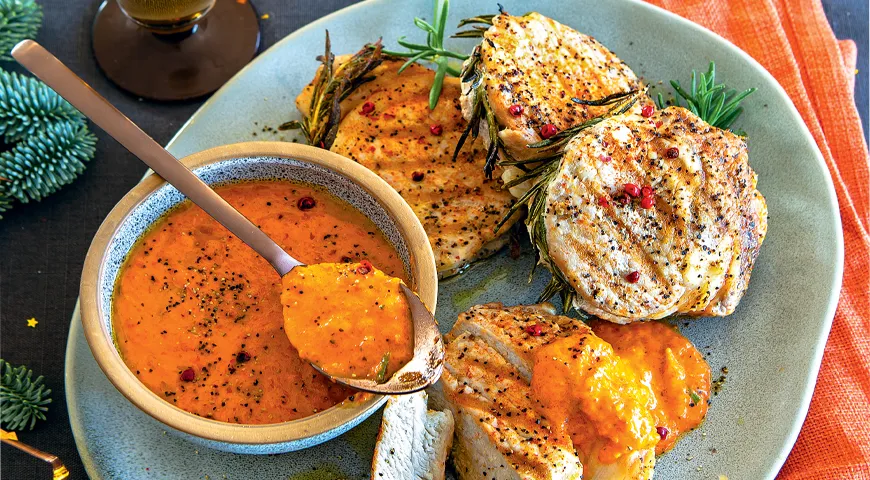
Few dishes capture the essence of refined comfort cooking as beautifully as pork medallions draped in a velvety roasted pepper sauce. This recipe, rooted in Russian culinary tradition but inspired by Mediterranean flavors, transforms humble ingredients into a show-stopping main course. The smoky sweetness of charred bell peppers and a hint of chili meld with fragrant rosemary and thyme, creating a sauce that elevates perfectly seared pork medallions. Whether you are hosting an intimate dinner or seeking a weekend culinary project, this dish promises restaurant-quality results with a home cook's touch.
About the Dish
The beauty of this recipe lies in its duality: the rich, caramelized exterior of the pork and the silky, fire-kissed sauce. Roasting peppers at high heat until blackened is a technique cherished across Europe—from Spanish romesco to Italian peperonata. Here, the sauce is whizzed into a smooth emulsion with garlic and olive oil, then paired with herb-wrapped medallions. The result is a balanced plate where acidity, sweetness, and umami dance together. For the best texture, use a food processor to blend the sauce effortlessly, or opt for a non-toxic immersion blender for direct-in-bowl convenience.

Ingredients
- 4 large red bell peppers
- 1 red chili pepper (optional)
- 4 cloves garlic
- 1 fresh rosemary sprig (plus extra for wrapping)
- 2 fresh thyme sprigs
- 90 ml extra-virgin olive oil, plus more for brushing
- Freshly ground black pepper
- Salt
- 4 pork medallions (cut from pork tenderloin, about 150g each)
- Kitchen twine
Step-by-Step Instructions
- Roast the Peppers – Preheat the oven to 200°C (use the grill function if available). Cut the bell peppers and chili (if using) in half; remove stems and seeds. Place them skin-side up on a baking sheet. Roast in the upper third of the oven until the skin is charred black. Transfer the peppers to a bowl, cover with a plate or lid, and let cool for 10 minutes.
- Prepare the Sauce – Peel the charred skin off the peppers. Place the flesh into a blender along with the garlic, olive oil, all the thyme leaves, and 10–15 rosemary leaves (discard the stalks). Blend until completely smooth. Season with salt and pepper. If the sauce is too thick, add a tablespoon of warm water. For a perfectly emulsified sauce, a planetary mixer isn't needed—a simple blender suffices, but a wheatgrass juicer is not recommended for this task!
- Season and Wrap the Pork – Season the medallions generously with salt and pepper. Brush lightly with olive oil. Wrap each medallion with a sprig of rosemary, securing it with kitchen twine. This infuses the meat with herbaceous aroma as it cooks.
- Sear and Finish – Heat a grill pan or outdoor grill to high heat. Sear the medallions for 2–3 minutes per side until nice grill marks appear. Transfer them to a baking sheet and finish in the preheated 200°C oven for 10–12 minutes for medium (internal temperature 63°C). For a crispier crust, try using an air fryer for the final cooking stage.
- Rest and Serve – Let the medallions rest for 5 minutes before removing the twine and rosemary sprigs. Spoon the roasted pepper sauce onto plates, place the pork on top, and garnish with fresh rosemary leaves. A drizzle of good olive oil and a sprinkle of flaky salt elevate the dish further.
Tips for Perfect Medallions
- Choose the right cut: Pork tenderloin is ideal—lean yet tender. Avoid overcooking; use a meat thermometer for precision.
- Char the peppers thoroughly: Blackened skin is essential for that smoky depth. If using an electric oven without grill, you can finish them under a broiler or over a gas flame using tongs.
- Make the sauce ahead: The pepper sauce can be refrigerated for up to 3 days. Reheat gently before serving.
- Equipment matters: For evenly roasted peppers, a commercial countertop convection oven provides consistent heat. When searing, a best oil sprayer helps apply a thin, even coat of oil to the medallions.
Variations
This recipe is wonderfully adaptable. Swap the pork for chicken breast or thick salmon fillets—adjust cooking times accordingly. For a vegetarian version, use thick slices of halloumi or roasted cauliflower steaks. Add a tablespoon of smoked paprika or a splash of sherry vinegar to the sauce for extra complexity. Pair the dish with creamy polenta, roasted potatoes, or a crisp green salad. For wine lovers, a medium-bodied sweet wine with high alcohol content can offset the smoky spice beautifully.
Frequently Asked Questions
Can I use jarred roasted peppers instead?
Yes, in a pinch. Drain and rinse them well, then pat dry before blending. The flavor will be milder—add a pinch of smoked paprika to compensate. For best results, always roast fresh peppers using a refrigerator to store them fresh beforehand.
How do I prevent the sauce from being too oily?
Use a good quality olive oil and blend gradually. If the sauce separates, add a teaspoon of mustard or a splash of cold water and re-blend. A best glass immersion blender helps achieve a stable emulsion.
Can I cook the medallions entirely on the stove?
Absolutely. Sear them as directed, then reduce heat, cover, and cook for 8–10 minutes, turning once. For a crispy finish, use a wall oven microwave combo with air fryer at the end.
What if I don't have fresh rosemary or thyme?
Dried herbs work in a pinch—use 1 teaspoon each. But fresh herbs impart a brighter flavor. Growing your own? Check out best castor oil for plant care? Not directly related, but a good garden tip!
Can I make this dish dairy-free or gluten-free?
Yes, the recipe is naturally dairy-free and gluten-free. Ensure your kitchen twine is unbleached. For a richer sauce, swirl in a spoonful of organic vodka before blending—it adds depth without altering texture.
How do I store leftovers?
Refrigerate the medallions and sauce separately in airtight containers for up to 3 days. Reheat the pork gently in a best microwave pressure cooker or a low oven. The sauce thickens when cold; thin with a splash of water or stock.







