


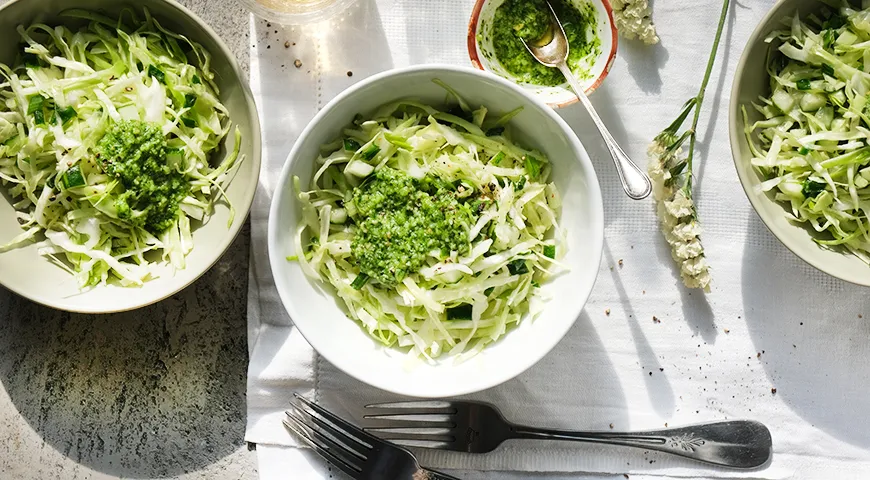
There are salads that merely nourish, and then there are salads that enchant. The Green Goddess Salad belongs to the latter category—a masterful composition of pale green cabbage, crisp cucumber, and a velvety, chlorophyll-rich dressing that tastes like the essence of a spring meadow. This is not just a recipe; it is a celebration of texture, colour, and nutritional intelligence. Every forkful delivers a symphony of crunch and cream, brightness and depth, all while flooding your body with vitamins A, B1, C, P, K, B6, and U. The secret protagonist? Cashews, whose milky sweetness tempers the lemon’s acidity and brings a protein punch that fights anaemia and lowers cholesterol. Whether you serve it alongside grilled lamb or pack it for a picnic, this salad proves that monochrome on the plate can be anything but boring.
About the Green Goddess Salad
Inspired by the classic American Green Goddess dressing—itself named after a 1920s play—this Russian interpretation takes the concept to new heights. Instead of the traditional mayonnaise-anchovy base, it relies on a raw, plant-forward emulsion of spinach, basil, cashews, and Parmesan. The result is a dressing so vibrant it borders on luminous. The vegetables are chosen for their contrasting shades of green: early white cabbage offers a creamy, almost ivory hue, while cucumbers and green onions add deeper jade notes. The dressing, a whirl of basil and spinach, is the darkest green of all—like a secret garden captured in a blender. This dish is proof that eating your greens never tasted so elegant.

Ingredients
- ½ head of early white cabbage
- 3 cucumbers
- 1 bunch of spring onions (green onions)
- 80 g fresh spinach
- 1 bunch of basil (leaves only)
- 2 garlic cloves
- 1 white onion
- Juice of 2 lemons (about 60 ml)
- 3 tbsp extra virgin olive oil
- 50 g raw cashews
- 30 g finely grated Parmesan or similar hard cheese
- 2 tbsp rice vinegar
- Freshly ground black pepper
- Sea salt
For the best results, choose a high‑quality immersion blender or a countertop blender with a glass jar to avoid any metallic taste during emulsification. The cashews benefit from a quick soak if your blender is not ultra‑powerful; ten minutes in hot water works wonders.
Step-by-Step Instructions
Step 1: Prepare the vegetables – Finely shred the cabbage using a sharp knife or a mandoline. Dice the cucumbers into small, uniform cubes—about ½ cm each. Slice the green onions thinly, using both white and green parts. Transfer everything to a large mixing bowl. The key here is precision: even cuts ensure every bite carries the same delicate crunch.
Step 2: Create the dressing – In the bowl of your blender, combine the spinach, basil leaves, cashews, grated cheese, diced white onion, and garlic cloves. Add the lemon juice, rice vinegar, and olive oil. Blend on high until completely smooth, scraping down the sides as needed. Season generously with salt and black pepper, then blend once more. The dressing should be thick, glossy, and intensely green—like liquid malachite. If your blender struggles, consider using a best food processor for nut butters, which handles nuts with ease.
Step 3: Assemble and serve – Pour the dressing over the shredded vegetables and toss thoroughly until every strand is coated. Taste and adjust seasoning—perhaps a touch more salt or a squeeze of lemon. Serve immediately as a stand‑alone salad or as a refreshing companion to grilled proteins. For a picnic, pack the vegetables and dressing separately; shake the dressing well just before tossing. This dish also pairs beautifully with air‑fryer chicken thighs or a smoky convection‑roasted fish.
Tips for Perfect Results
• Choose early cabbage: Its leaves are tender and less fibrous, yielding a salad that stays crisp without becoming watery. Summer‑harvested cabbage works best.
• Soak the cashews if your blender lacks power—this ensures a silky emulsion without graininess. A wheatgrass juicer is unnecessary here; a standard blender does the job.
• Don’t skip the rice vinegar: It adds a gentle acidity that balances the richness of the cashews and cheese. Substitute with apple cider vinegar if needed.
• Dress just before eating: The cabbage will release liquid if left too long. For meal prep, store dressed components separately and combine at the table. Use an oil sprayer to lightly coat the bowl if you want to save on calories.
Variations
This recipe is wonderfully adaptable. Swap the white cabbage for young savoy cabbage or even thinly sliced fennel for a licorice note. Substitute the Parmesan with nutritional yeast for a vegan version. For a spicier kick, add a small green chilli to the blender. The dressing also works as a dip for crudités or a spread on toast—yes, coffee aficionados, a green goddess toast is a thing. If you’re planning a large gathering, double the dressing and keep it in a sealed jar in the fridge for up to three days.
Frequently Asked Questions
Can I make this salad ahead of time?
Absolutely. Prepare the vegetables and dressing separately up to 24 hours in advance. Keep the dressing in a tightly sealed jar and the vegetables in a container lined with paper towels. Toss only when ready to serve. For extra convenience, a ice maker can help you keep refreshments cold for outdoor dining.
What can I use instead of cashews?
Raw almonds or macadamia nuts work well, though the creamy sweetness will differ. For a nut‑free version, use soaked sunflower seeds or pumpkin seeds. A best food processor for nut butters ensures a smooth paste even with seeds.
Is this salad suitable for a gluten‑free diet?
Yes, all ingredients are naturally gluten‑free. Just verify that your rice vinegar and cheese are certified gluten‑free. Pair with a crisp white wine; check out best sweet wine with high alcohol content for an unexpected pairing.
How do I prevent the dressing from turning brown?
The lemon juice and vinegar act as natural antioxidants, keeping the dressing vibrant for hours. If storing, press a piece of plastic wrap directly onto the surface before sealing. Avoid direct sunlight. For a quick clean‑up, a steam canner can sterilize jars for extended storage, though that’s overkill for a single batch.
Can I use frozen spinach?
Fresh spinach is recommended for its bright colour and texture. Frozen spinach contains excess water that will thin the dressing. If you must use frozen, thaw and squeeze dry thoroughly before blending.
What main dishes pair best with this salad?
Grilled lamb chops, chicken skewers, or seared salmon are classic choices. The dressing’s herbaceous notes also complement roasted vegetables or a hearty chocolate‑covered raisins dessert (yes, sweet and savoury work beautifully).
Why is my dressing grainy?
Graininess typically comes from under‑blended cashews or poor emulsification. Ensure your blender is powerful enough—consider upgrading to a planetary mixer for heavy blending tasks, though a standard blender with a non‑toxic immersion blender is often sufficient. Soaking cashews for 30 minutes solves most texture issues.
Final Thoughts
The Green Goddess Salad is more than a recipe; it is a philosophy of mindful eating—where colour, nutrition, and flavour converge. Whether you are hosting a summer barbecue, packing a sophisticated picnic, or simply craving a bowl of green goodness, this salad delivers. Its beauty lies in simplicity: a handful of fresh ingredients, a whirl of the blender, and a dish that looks as vibrant as it tastes. Embrace the monochrome. Your body—and your palate—will thank you.







