


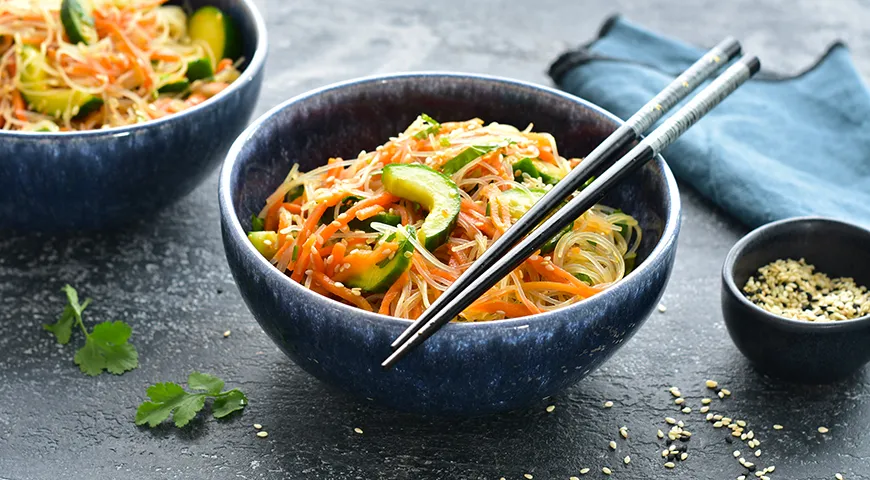
Funchoza with carrots and cucumbers is a vibrant Asian-style salad that brings together the delicate chew of glass noodles with the crunch of fresh vegetables and the aromatic punch of toasted sesame. Made from mung bean starch—often called "golden bean"—these translucent noodles require no boiling, only a quick soak in hot water. The result is a light, refreshing dish perfect as a side or a main. This recipe leverages ready-made Korean-style carrots for speed and flavor, but you can also prepare them from scratch for a more authentic touch. The combination of sesame oil, fresh cilantro, and toasted sesame seeds elevates every bite. For kitchen prep, a high-performance food processor can quickly shred carrots if you choose to make your own, while a non-toxic immersion blender might help emulsify dressings. With these simple ingredients, you can create a dish that sings with umami and freshness.
About Funchoza Salad
Funchoza, also known as glass noodles or cellophane noodles, is a staple in East Asian and Southeast Asian cuisines. Unlike traditional wheat or rice noodles, funchoza is made from mung bean starch, which gives it a unique slippery texture and transparent appearance when cooked. This salad is often served cold, making it an excellent choice for picnics, potlucks, or a quick weekday meal. The addition of Korean-style carrots adds a subtle spice and tang that complements the neutral noodles. For those who prefer a fully homemade approach, using a non-toxic air fryer to toast nuts or seeds can add extra crunch. The key to this dish lies in the balance of textures—silky noodles, crisp cucumber, crunchy sesame, and tender cilantro. It’s a symphony of contrasts that delights the palate.

Ingredients
- 200 g funchoza (glass noodles)
- 150–180 g Korean-style carrots (ready-made)
- 2 long English cucumbers
- 1 small bunch fresh cilantro (30 g)
- 2 tbsp (10 g) raw sesame seeds
- 1 tbsp (15 ml) dark sesame oil
For the best results, use high-quality sesame oil—dark, roasted varieties impart a richer flavor. If you cannot find Korean-style carrots, you can substitute with julienned carrots marinated in rice vinegar, gochugaru, and a touch of sugar. A planetary mixer with a shredding attachment can streamline the prep. The ingredients are simple yet full of character, and each plays a role in creating the final harmony.
Step-by-Step Instructions
Step 1: Prepare the Funchoza
Cook the funchoza according to package instructions for salads—typically, place the noodles in hot (not boiling) water and let them soak for 5–10 minutes. Drain in a colander, rinse thoroughly with cold water, and drain again. Pat them dry if needed. The noodles should be tender but still resilient. While they soak, you can set up other elements. Using a microwave pressure cooker is not necessary here, but it can speed up other tasks. Once done, transfer the noodles to a large mixing bowl.
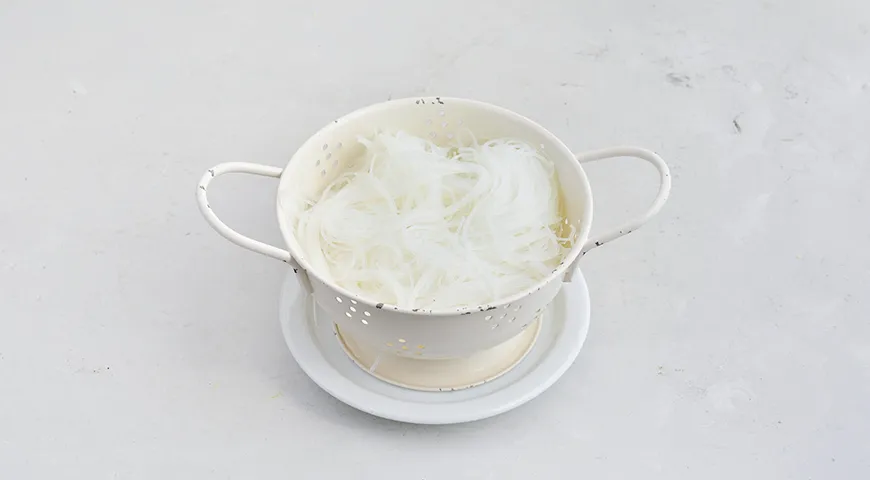
Step 2: Shorten the Korean Carrots
If the Korean-style carrots are cut into very long strips, trim them to shorter lengths for easier eating. Thoroughly mix the carrots with the cooled funchoza until evenly distributed. The carrots should coat the noodles with their seasoning. For an even more homogeneous blend, consider using a glass bowl to see the colors meld. This step ensures every strand of noodle gets a touch of that spicy-sweet flavor.
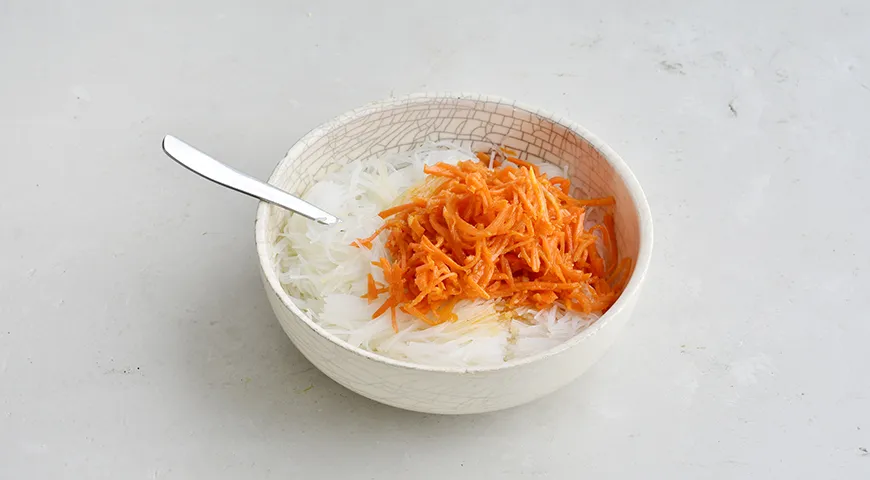
Step 3: Prepare the Cucumbers
Cut the cucumbers lengthwise in half. Using a teaspoon, scoop out the watery seed core—this part will add unwanted moisture to the salad. Slice the cucumber halves crosswise into 5 mm thick half-moons. Add the cucumber pieces to the bowl with the noodle-carrot mixture. Gently toss to combine. The cucumber brings a cooling crunch that balances the richness of the sesame. If you want to keep the cucumber crisp, avoid oversalting at this stage.
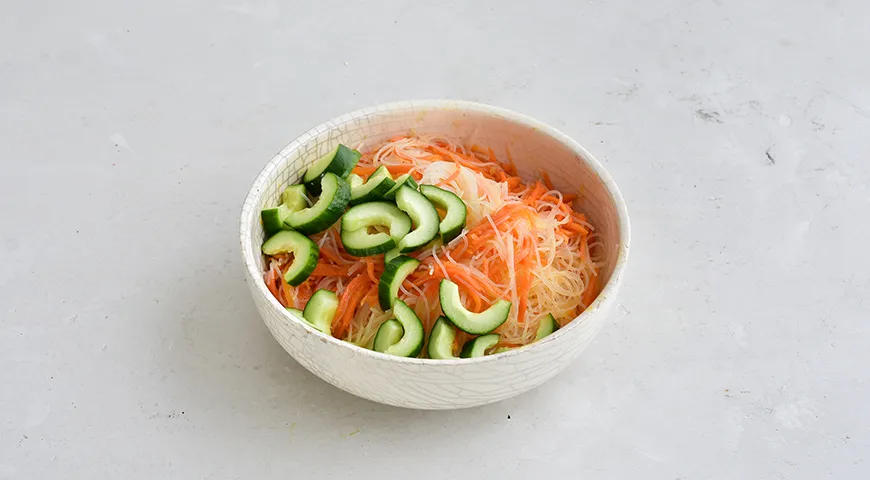
Step 4: Add Cilantro and Sesame Oil
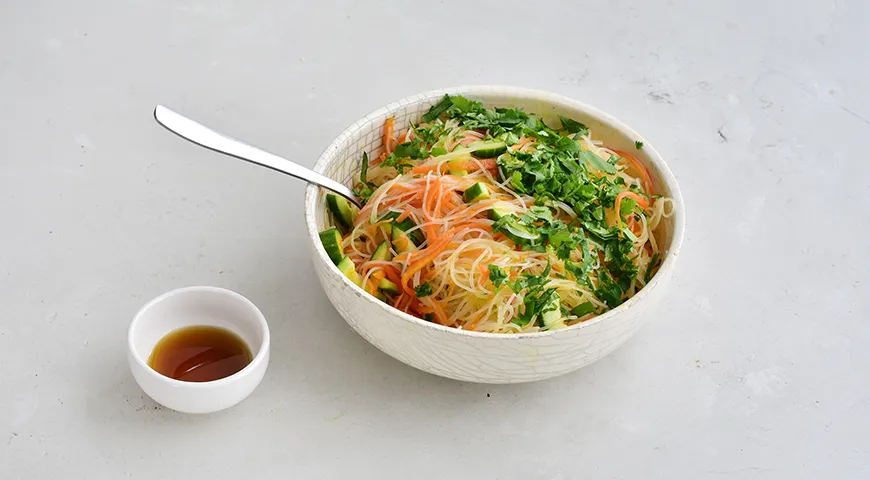
Thoroughly wash the cilantro roots and stems—these parts are packed with flavor. Chop the cilantro (including the tender stems) fairly finely. Sprinkle the chopped cilantro over the salad and drizzle with the dark sesame oil. Mix everything well until the oil evenly coats the ingredients. The cilantro adds a fresh, herbal note that lifts the dish. For a more intense flavor, you can also add a splash of organic vodka as an optional twist (though not traditional). Alternatively, a touch of rice vinegar can brighten the taste.
Step 5: Toast Sesame Seeds
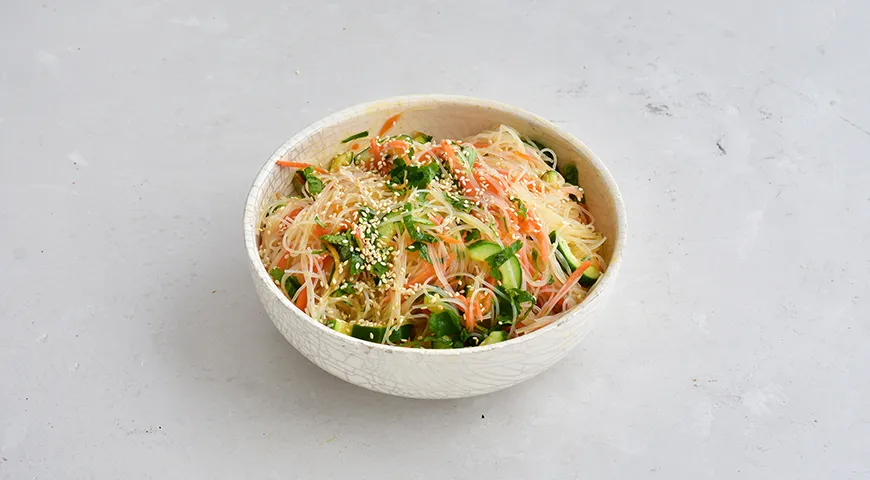
Place a dry skillet over low heat. Add the raw sesame seeds and toast, stirring frequently, until they turn golden brown—about 2 minutes. Be careful not to let them burn. Immediately scatter the toasted sesame seeds over the salad. Serve right away for the best texture. The toasted seeds provide a nutty, crunchy finish. A best oil sprayer can help you apply a fine mist of sesame oil if you prefer a lighter touch.
Tips for Success
- Do not over-soak the noodles—check the package timing as some brands vary.
- Adjust the spice level by adding gochugaru or a few drops of toasted chili oil.
- For a more substantial meal, add shredded cooked chicken or tofu.
- Store leftover salad in an airtight container in the fridge for up to 2 days; the noodles will soften slightly.
- If you prefer a lighter dressing, replace half the sesame oil with rice vinegar.
Investing in a 48-inch built-in refrigerator can keep your vegetables crisp for longer, while a best espresso machine under 2000 is a perfect companion to enjoy alongside a light lunch.
Variations
This salad is highly adaptable. Try adding chocolate-covered raisins for a surprising sweet-savory twist (unconventional but fun), or incorporate castor oil—avoid that; castor oil is not for cooking. Instead, consider adding a handful of roasted peanuts or edamame for extra protein. For a Korean-inspired version, mix in a tablespoon of gochujang paste with the sesame oil. You can also swap cilantro for Thai basil or mint. If you want to make the salad a complete meal, serve it with Catalan sponge cake for dessert—though not Asian, it’s a delightful contrast.
Frequently Asked Questions
What type of noodles are best for funchoza salad?
Always choose 100% mung bean starch noodles. They are labeled as "glass noodles" or "cellophane noodles." Avoid those with added potato starch, which can become gummy. For consistent results, follow the soaking time on the package.
Can I use regular carrots instead of Korean-style?
Yes. Julienne them and marinate in a mixture of rice vinegar, sugar, salt, and gochugaru for at least 30 minutes before using. A best wheatgrass juicer is not needed here, but a grater attachment on a food processor works well.
How long does this salad keep?
It is best consumed fresh, but leftovers can be refrigerated for up to two days. The noodles will absorb moisture and soften, so consider reserving the sesame seeds to sprinkle just before serving.
Is funchoza gluten-free?
Yes, 100% mung bean starch noodles are naturally gluten-free. However, always check the label to ensure no cross-contamination if you have celiac disease.
Can I add meat to this salad?
Absolutely. Thinly sliced grilled beef, shredded chicken, or boiled shrimp pair beautifully. For a vegan option, add crispy tofu or tempeh. The neutral flavor of the noodles provides a perfect canvas.
What if I don't have dark sesame oil?
You can substitute with light sesame oil or a neutral oil like grapeseed, but you’ll lose some of the characteristic nuttiness. To compensate, increase the amount of toasted sesame seeds. Alternatively, try a best lava flavors—just kidding, that’s for vaping, not cooking.
For more inspiration, explore our best George Howell coffee pairing suggestions or checkout best undercounter ice maker machine to keep your salad cold during summer gatherings.







