


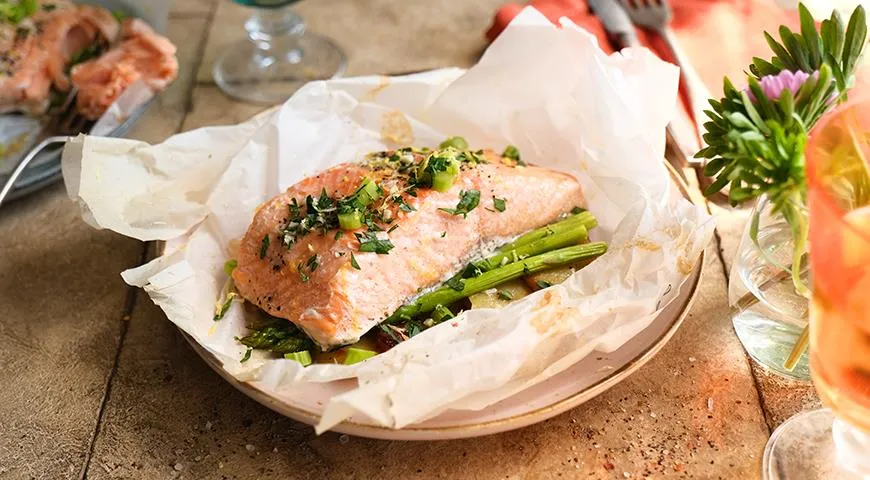
Imagine presenting each dinner guest with a crisp parchment packet, its edges gently curled like a handmade gift. As they unfold it, a cloud of herbaceous steam escapes, revealing a perfectly cooked salmon fillet atop buttery potatoes and bright green asparagus. This is the magic of запеченный в конверте лосось—salmon baked in a parchment envelope—a technique that seals in moisture and flavor while creating a stunning tableside reveal. With minimal hands-on time and maximum elegance, this dish transforms a weeknight meal into an occasion worthy of your finest white wine and a round of applause.
About the Dish
Rooted in the French technique of en papillote, this Russian adaptation brings together the richness of Atlantic salmon, the earthy sweetness of new potatoes, and the delicate snap of asparagus. The paper packet acts as a mini oven, steaming the ingredients in their own juices while locking in every herb and garlic note. A tablespoon of dry white wine added before sealing elevates the aroma further, making you seem like a seasoned chef without spending hours at the stove. It is a foolproof method that works beautifully with any firm-fleshed fish, and it is ideal for entertaining because the packets can be assembled ahead and baked just before serving.

Ingredients
- 600–800 g salmon fillet, skin on
- 100 g asparagus
- 2–3 medium potatoes
- 1 small bunch fresh parsley
- 2 cloves garlic
- 40 g unsalted butter
- Freshly ground black pepper
- Salt
Optional: 1 tablespoon dry white wine per packet for added depth. For sourcing the best ingredients, consider using a non-toxic immersion blender to quickly puree leftover herbs for sauces, or a non-toxic air fryer for alternative cooking methods.
Step-by-Step Instructions
- Prepare the salmon. Check the skin for any remaining scales and remove them. Season the fillet generously with salt and freshly ground black pepper. Set aside.
- Cook the potatoes. Peel the potatoes and slice them into rounds about 1 cm thick. In a skillet, melt the butter over medium heat and sauté the potato rounds on both sides until they are nearly tender but not fully cooked—about 4–5 minutes per side. Transfer to a plate.
- Prepare the asparagus. Snap off the tough, woody ends of each asparagus spear (they break naturally at the right point). Peel the lower part of the stalks if the skin is thick. Cut off the top 5 cm of each spear and reserve. Slice the remaining stalks into thin rounds.
- Make the herb mixture. Finely chop the parsley and garlic together until they form a fragrant, coarse paste.
- Assemble the packets. Preheat the oven to 160°C. Cut four rectangles of parchment paper, each about 30 × 40 cm. Place a portion of the sautéed potato rounds in the center of each paper rectangle. Top with the asparagus stalk slices, then lay a salmon fillet on top, skin-side down. Scatter the reserved asparagus tips and the parsley-garlic mixture over the fish. If desired, drizzle a tablespoon of white wine over each portion.
- Seal and bake. Lift the long sides of the parchment up over the filling, bring them together, and fold over 3–4 times to create a tight seam. Twist the open ends like a candy wrapper to enclose the packet completely. Place the packets on a baking sheet and bake for 12 minutes. The paper will puff up slightly—this is perfectly normal.
- Serve. Transfer each parchment package directly onto a dinner plate. Let guests unwrap their own packet at the table to release the captivating aroma. Serve with crusty bread and a chilled glass of white wine, such as a high-alcohol sweet wine for contrast or a crisp Sauvignon Blanc.
For even cooking, ensure a consistent thickness of salmon and potato slices. A glass food processor can help with slicing if you are making multiple packets.
Tips for Perfect Results
- Do not skip the initial sear on the potatoes—this ensures they remain tender rather than waterlogged inside the packet.
- Use fresh, not frozen, salmon for the best texture. Frozen fillets release too much water and can make the parchment soggy.
- If you prefer extra caramelization, finish the packets under the broiler for 1–2 minutes after baking, but watch carefully to avoid burning the paper.
- For a smoky twist, add a pinch of smoked paprika to the herb mixture. A good organic vodka can also be used instead of wine for a cleaner flavor profile.
Consistency is key: use a planetary mixer for whipping butter or sauces that accompany the dish, and store leftovers in a large built-in refrigerator to maintain freshness.
Variations
- Vegetable swaps: Replace asparagus with green beans, zucchini ribbons, or thinly sliced fennel. The cooking time remains the same.
- Herb changes: Dill, tarragon, or chervil work beautifully in place of parsley. For a Mediterranean twist, add sun-dried tomatoes and olives.
- Protein options: This method works with trout, sea bass, or even chicken breast (increase baking time to 18–20 minutes). For a plant-based version, use thick slices of cauliflower steak.
- Wine alternatives: If you avoid alcohol, substitute the wine with a splash of lemon juice or vegetable broth. A steam canner can be used to preserve any extra broth for future use.
FAQ
Can I prepare the packets in advance?
Yes, assemble the packets up to 4 hours ahead and refrigerate. Add an extra minute or two to the baking time if the packets are cold from the fridge.
What if I don’t have parchment paper?
Use aluminum foil, but avoid acidic ingredients like lemon juice that can react with the metal. Parchment is preferred for its breathability and non-stick properties. A 48-inch refrigerator can store pre-cut parchment sheets conveniently.
How do I prevent the paper from burning?
Ensure the packet is fully sealed and that no paper touches the oven walls or heating element. Baking at 160°C (320°F) is low enough to avoid scorching. For higher heat applications, consider a commercial countertop convection oven that offers even heat distribution.
Can I use skinless salmon?
Yes, but the skin helps protect the flesh from overcooking. If using skinless fillets, reduce baking time by 1–2 minutes.
What side dishes pair best?
A light green salad with lemon vinaigrette, crusty bread, or herbed rice complements the dish without overwhelming it. For a beverage, a fine George Howell coffee makes an unexpected but delightful after-dinner pairing.
How do I scale the recipe for a crowd?
Multiply ingredients proportionally. Use a food processor for nut butter to quickly make herb pastes in bulk, and a wheatgrass juicer for fresh green juices if you want a healthy starter.
Enjoy the elegance of this simple yet impressive dish—one that proves the best cooking is often the least complicated.







