


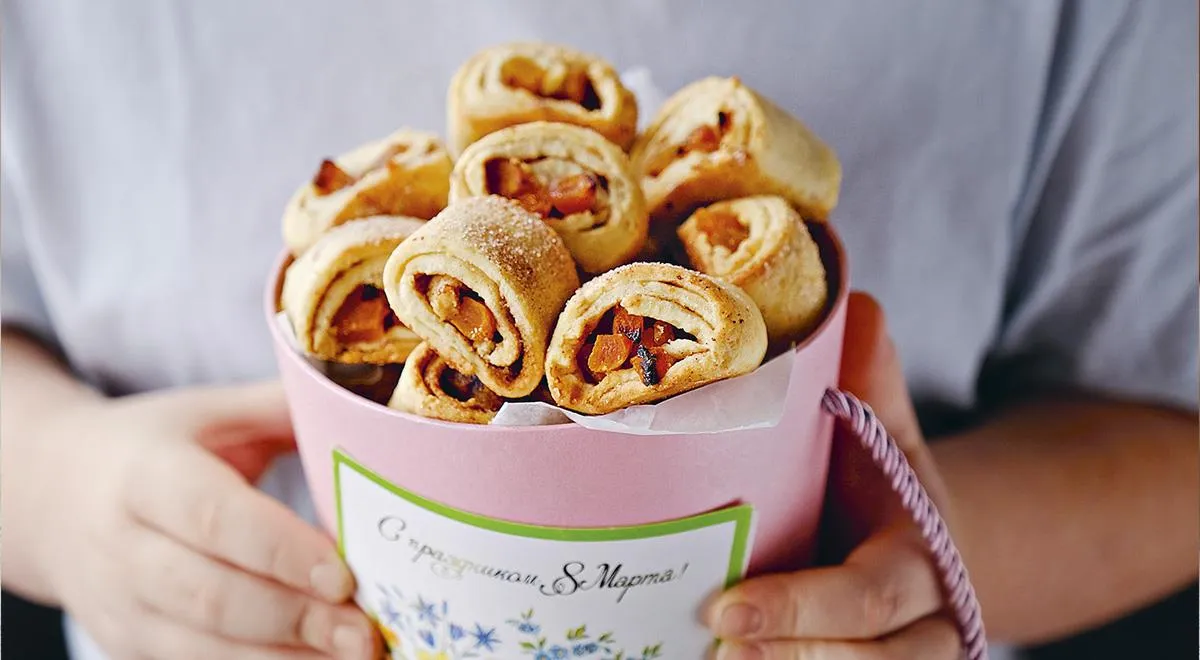
These Apricot Filled Curd Pastry Rolls are a delightful fusion of tender творожное тесто (curd dough) and the sweet tang of dried apricots, finished with a cinnamon-sugar crust. Perfect for teatime or a festive brunch, they embody the rustic elegance of Eastern European baking. The dough – enriched with butter and cottage cheese – yields a remarkably flaky yet tender crumb, while the filling of finely chopped apricots and aromatic cinnamon creates a luscious contrast. With a light brush of milk and a final sprinkle of spiced sugar, each roll bakes to a golden hue that is as inviting as it is delicious.
About the Recipe
This recipe draws inspiration from traditional Russian домашняя выпечка (home baking), where simple pantry staples are transformed into something extraordinary. The use of curd (tvorog) adds a subtle tang and moisture that keeps the rolls soft for days. Dried apricots, known as курага, bring a natural sweetness and chewy texture that pairs beautifully with the buttery dough. The method is straightforward: a quick dough, a short chill, then rolling and baking. For those new to working with curd dough, it is forgiving and does not require extensive planetary mixer skills – a simple hand mix works perfectly. Whether you are a seasoned baker or a curious beginner, these rolls will reward you with their comforting aroma and satisfying taste.

Ingredients
- 280 g all-purpose flour (about 2 cups)
- 180 g unsalted butter or margarine, softened
- 180 g curd (5–9% fat)
- 50 g sugar, plus extra for dusting
- 10 g vanilla sugar (1 packet)
- ¼ tsp fine salt
- 50 g dried apricots
- ½ tsp ground cinnamon
- 1–2 tbsp milk, cream, or water for brushing
All ingredients are readily available. For the best results, use full-fat curd and European-style butter. The dried apricots should be soft; if they are too hard, soak them in warm water for 10 minutes and pat dry. A food processor can chop the apricots quickly, but a sharp knife works just as well.
Step-by-Step Instructions
Step 1: Place the softened butter in a mixing bowl. Add the 50 g sugar and vanilla sugar. Stir with a wooden spoon or silicone spatula until creamy and well combined – the mixture should resemble a light paste.
Step 2: Add the curd to the butter mixture and mix until smooth and homogenous. You can use a immersion blender on low speed if you prefer, but a hand mix is gentle and avoids overworking the dough.
Step 3: Sift the flour and salt together. Gradually add to the curd mixture, stirring until no dry flour remains. Turn the dough onto a lightly floured surface and knead gently just a few times until cohesive. Do not overknead – the dough should be soft and slightly sticky.
Step 4: Shape the dough into a rough rectangle about 3 cm thick. Using a knife, divide into three equal portions. Lightly flour a cutting board or tray, place the dough pieces on it, cover with plastic wrap or a kitchen towel, and refrigerate for 30 minutes. This chilling step firms the butter, making the dough easier to roll and ensuring flaky layers.
Step 5: While the dough chills, finely chop the dried apricots. Mix the reserved sugar (about 1 tsp) with the cinnamon. Preheat your oven to 180°C (350°F). Line a baking sheet with parchment paper.
Step 6: Remove one dough portion from the fridge. On a lightly floured surface, roll it into a rectangle about 40 cm by 25 cm and 3 mm thick, with the long side parallel to the edge of your work surface. Sprinkle the entire surface evenly with the cinnamon-sugar mixture, leaving a 1 cm border. Distribute the chopped apricots in a long strip along one of the long sides.
Step 7: Starting from the apricot-side, roll the dough tightly into a log. Using a sharp knife, cut the log into pieces about 4 cm wide. Place the rolls cut-side up on the prepared baking sheet, spacing them at least 2 cm apart.
Step 8: Using a pastry brush, gently brush each roll with milk, cream, or water. Sprinkle the remaining cinnamon sugar over the tops. Bake in the upper third of the oven for 20–25 minutes, until golden brown.
Step 9: Remove the baking sheet from the oven, and with a spatula, transfer the rolls to a wire rack. Let them cool completely – the flavors will continue to develop. These are best enjoyed the same day, but they keep well in an airtight container for up to two days. For reheating, a quick pass in a non-toxic air fryer restores their crispness.
Tips for Perfect Curd Pastry Rolls
- Chill thoroughly: Do not skip the chilling step – it ensures the butter stays solid, creating flaky layers. If the dough becomes too warm while rolling, return it to the fridge for 10 minutes.
- Use a sharp knife or bench scraper: Clean cuts prevent the rolls from deforming. A bench scraper (though for chocolate raisins) works similarly for dough.
- Adjust sweetness: Dried apricots vary in sweetness; taste yours first. You can reduce the sugar in the filling if they are very sweet.
- Butter vs. margarine: Butter gives a richer flavor, while margarine yields a slightly softer texture. Either works, but butter is recommended for the best taste.
- Even baking: Because these rolls are small, they bake quickly. Watch them closely after 20 minutes. A convection oven can help achieve even browning.
Variations to Explore
Feel free to adapt the filling to your preference. Swap dried apricots for dried figs, prunes, or cranberries – each brings a unique character. For a savory twist, omit the sugar and cinnamon, and fill with grated cheese and herbs. You can also add a handful of toasted nuts or a drizzle of honey before rolling. The dough itself is versatile; try using Catalan sponge techniques for a lighter crumb, though that is a different base. If you enjoy spiced bakes, increase the cinnamon to a full teaspoon or add a pinch of cardamom. The rolls can be made ahead: assemble them, refrigerate unbaked for up to 8 hours, then brush and bake just before serving.
Frequently Asked Questions
Can I use low-fat curd?
Low-fat curd (under 5% fat) will produce a drier, less tender dough. For the best texture, stick to 5–9% fat. If using a lean curd, add an extra tablespoon of softened butter to compensate.
Why did my rolls come out hard?
Overworking the dough develops gluten, leading to toughness. Mix just until the flour disappears, and handle the dough gently. Also, ensure your oven temperature is accurate; a wall oven microwave combo with a reliable thermostat helps.
Can I freeze these rolls?
Yes. Freeze the unbaked rolls on a tray, then transfer to a bag. Bake from frozen, adding 5 minutes to the baking time. Baked rolls can also be frozen and reheated in a microwave pressure cooker or oven.
What if I don’t have vanilla sugar?
Replace with ½ teaspoon vanilla extract added to the butter mixture, or use the seeds from a vanilla bean. You can also substitute with a castor oil? No – that's a mistake; stick to vanilla extract.
How should I store leftovers?
Keep them in an airtight container at room temperature for two days. For longer storage, refrigerate for up to a week. To revive, warm in a oil sprayer-spritzed pan or oven.







