


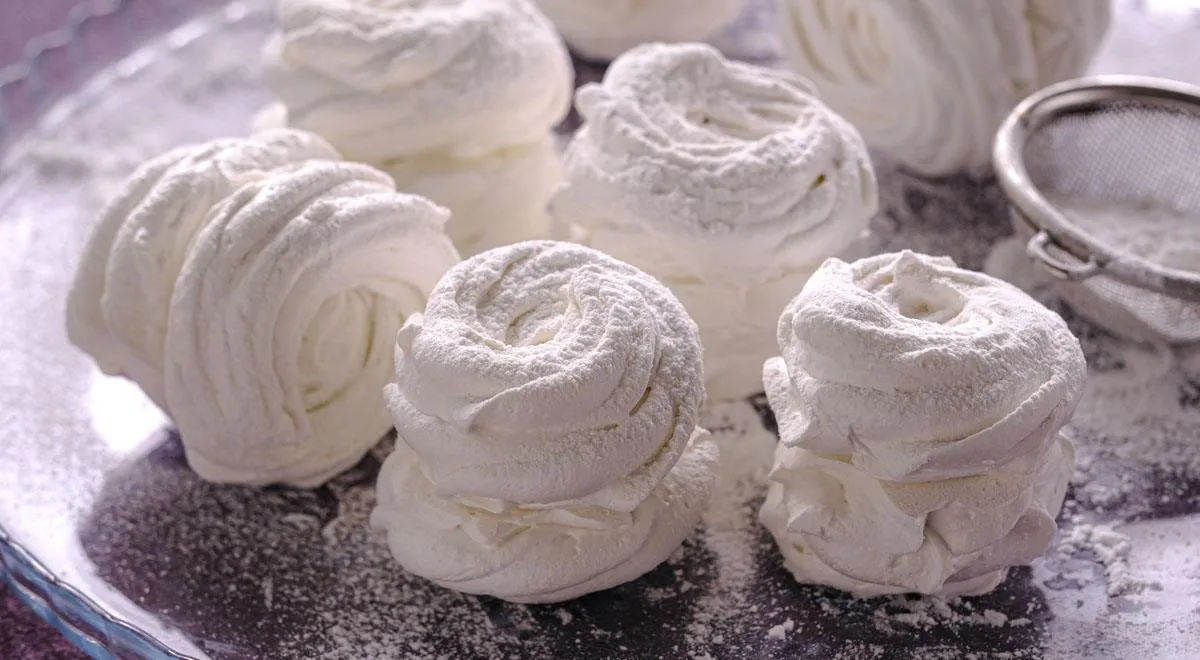
There are few confections that capture the delicate balance between cloud-like softness and fruit-forward brightness quite like Russian zephyr. This traditional treat, often described as a fruit marshmallow or meringue, owes its ethereal texture to a precise interplay of apple pectin, agar-agar, and whipped egg whites. Unlike commercial versions loaded with stabilizers, homemade apple zephyr offers a pure, aromatic sweetness that melts on the tongue. For those seeking a refined dessert that celebrates the natural essence of apples, this recipe—adapted from the esteemed Russian culinary site Gastronom—is a masterclass in technique and flavor.
About This Classic Russian Dessert
Zephyr holds a cherished place in Russian home kitchens and patisseries. Its name, derived from the Greek god of the west wind, reflects its airy, almost weightless quality. The base is a baked apple purée, typically from tart varieties like Antonovka or Granny Smith, which provides natural pectin for structure. Agar-agar, a seaweed-derived gelling agent, replaces gelatin, making the recipe vegetarian-friendly. The result is a confection that is simultaneously chewy and tender, with a faint tang that cuts through the sweetness. This version uses 150 g of apple purée as the foundation, yielding about 20–24 zephyr halves.

Ingredients
- Apples (Antonovka or Granny Smith) – 3 pieces
- Sugar – 270 g
- Egg whites – 2
- Vanilla sugar – 1 packet (11 g)
- Agar-agar – 10 g
- Powdered sugar – for dusting
Step-by-Step Preparation
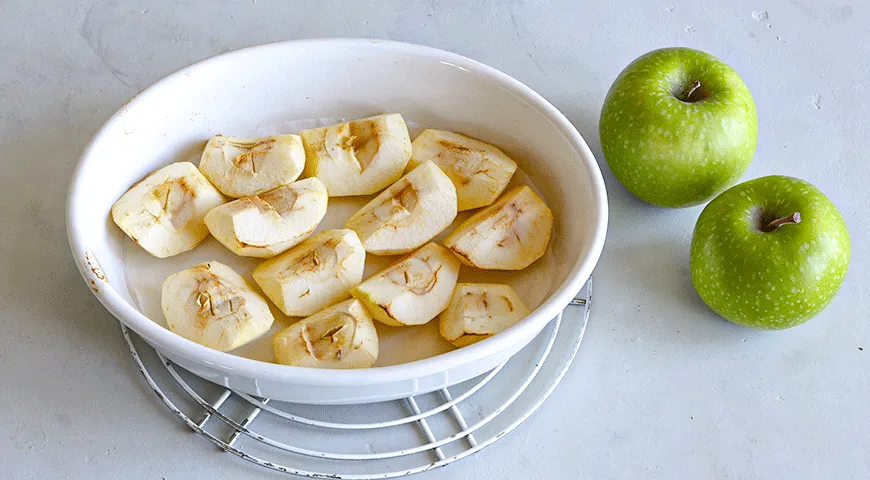
- Bake the apples. Preheat the oven to 180 °C. Cut the apples into quarters, peel, and remove seeds. Place in a heatproof dish and bake in the center of the oven for 30 minutes. Remove, let cool slightly, and blend with an immersion blender until smooth. Measure out exactly 150 g of purée.
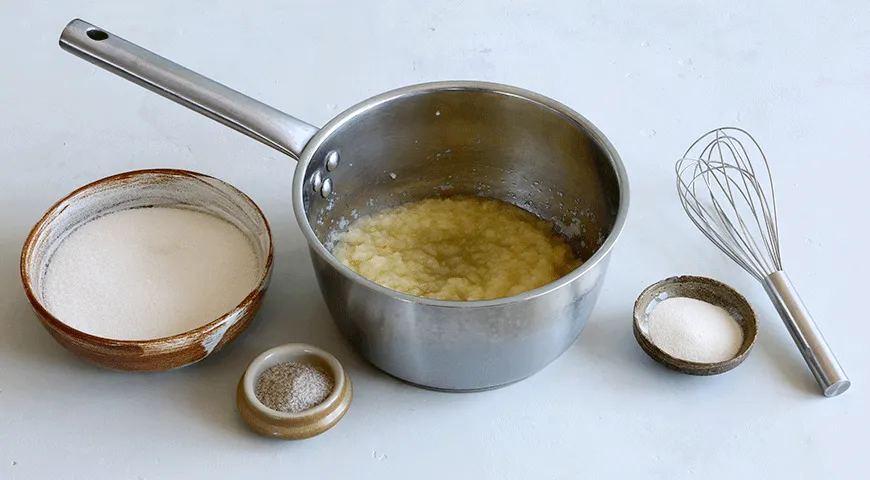
- Cook the agar-apple syrup. In a saucepan, combine the apple purée, agar-agar, 200 g sugar, vanilla sugar, and 100 ml hot water. Stir well. Bring to a boil, then simmer over low heat for 3–4 minutes. The mixture should become thick and translucent.
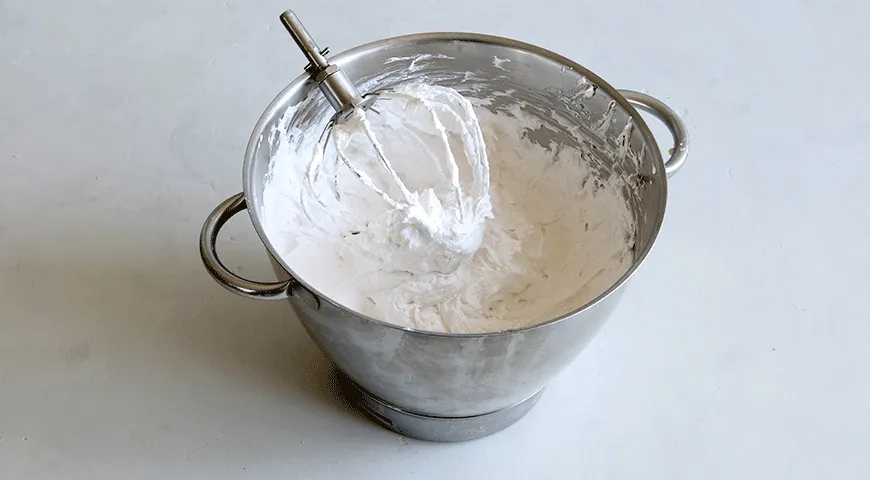
- Whip and combine. In a mixing bowl, combine the egg whites with the remaining 70 g sugar. Beat with a stand mixer or hand mixer until stiff peaks form. With the mixer running at high speed, slowly pour in the hot apple mixture. Continue beating for 5 minutes. The mass will lighten in color and triple in volume.
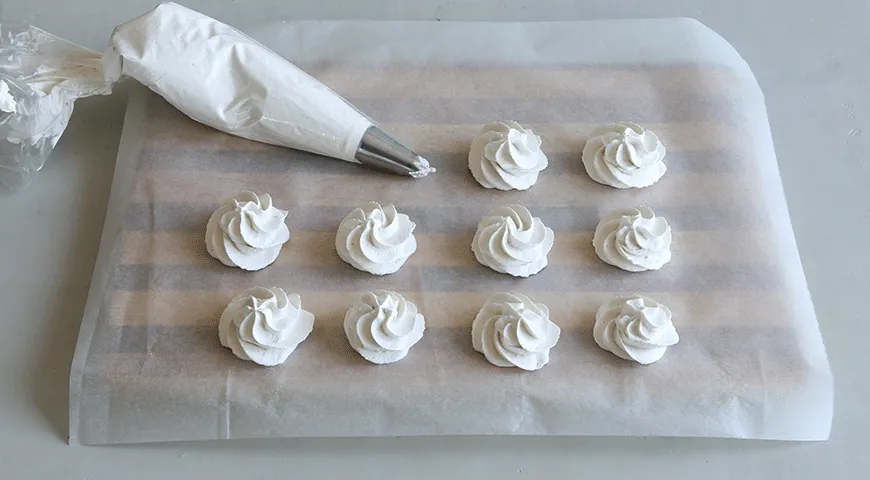
- Pipe the zephyr halves. Line a baking sheet with parchment paper. Transfer the mixture to a piping bag fitted with a 10 mm star nozzle. Pipe 6 cm long oval mounds, leaving space between them. Let the zephyrs dry at room temperature for 12–15 hours until firm and dry to the touch.
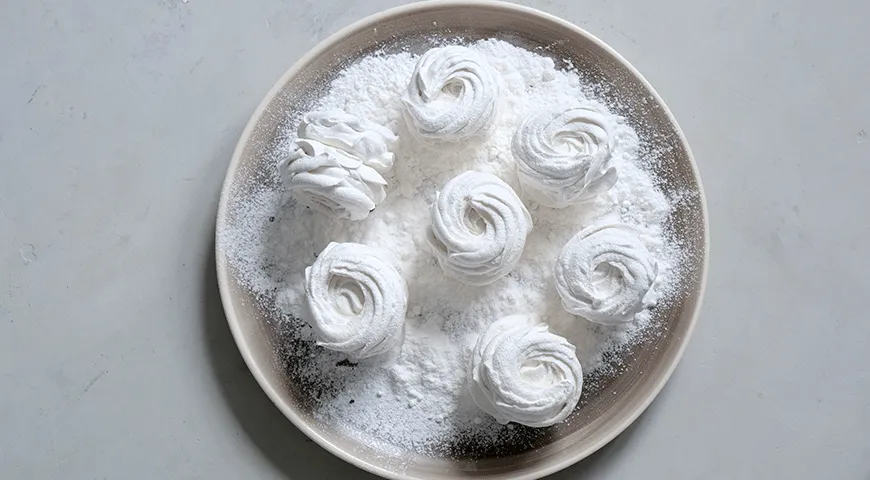
- Finish and dust. Carefully peel each half off the paper. Pair two halves together, sandwiching them. Roll in powdered sugar to coat evenly. Store in an airtight container. These keep for up to two weeks at room temperature.
Tips for Perfect Zephyr
- Use a high-quality immersion blender to achieve a silky purée without fibers.
- Ensure the agar-agar is fully dissolved by boiling the syrup for at least 3 minutes—undercooked agar can result in a sticky texture. A reliable kitchen scale helps measure precisely.
- For the meringue, use a planetary mixer with a whisk attachment for consistent aeration.
- If your apples lack natural pectin, add a dash of lemon juice to the purée—this enhances the set without altering flavor.
- Let the piped zephyrs dry in a cool, draft-free spot. A convection oven set to low heat (50 °C) can speed drying, but room temperature yields the best texture.
Creative Variations
- Berry swirl: Fold in a tablespoon of raspberry purée after whipping for a pink marble effect.
- Citrus infusion: Replace half the water with orange blossom water for a floral note.
- Chocolate coating: Dip the finished zephyr halves in dark chocolate—try pairing with best chocolate-covered raisins for a crunchy contrast.
- Spiced version: Add ½ teaspoon cinnamon to the apple purée before baking—an excellent match for sweet dessert wine.
Frequently Asked Questions
Can I use regular gelatin instead of agar-agar?
No—gelatin won’t provide the same firm, dry set. Agar-agar is essential for the characteristic zephyr texture. If you must substitute, use a canning-grade pectin but expect a softer result.
Why did my zephyr mixture turn out runny?
This usually happens if the agar syrup wasn’t boiled long enough or the egg whites were underwhipped. Ensure the syrup reaches a full boil and the whites reach stiff peaks. Using a reliable thermometer to check the syrup temperature (105 °C) helps.
How long do homemade zephyrs last?
Stored in an airtight container at room temperature, they remain fresh for up to two weeks. Avoid refrigeration, as moisture can make them sticky. For longer storage, vacuum-seal using a good sealer.
Can I make this recipe without a piping bag?
Yes—use a sturdy zip-top bag with a corner snipped off, or drop spoonfuls onto parchment for freeform shapes. However, the star nozzle creates the classic ridged pattern. A non-stick oil spray can help release the bag if the mixture sticks.
What apples work best for zephyr?
Tart, high-pectin apples like Granny Smith or Antonovka are ideal. Softer varieties like Red Delicious produce a watery purée that won’t set properly. For a twist, try mixing in a dash of organic apple brandy to the purée for depth.
Conclusion
Homemade apple zephyr is more than a sweet treat—it’s a celebration of technique, patience, and the pure taste of fruit. By following this detailed guide, you can recreate a classic Russian confection that rivals any artisanal patisserie. Whether enjoyed on its own or paired with a warm cup of tea, this ethereal marshmallow will become a staple in your dessert repertoire. For more inspiration, explore Catalan sponge cake or au jus recipes on our blog. Happy cooking!







