


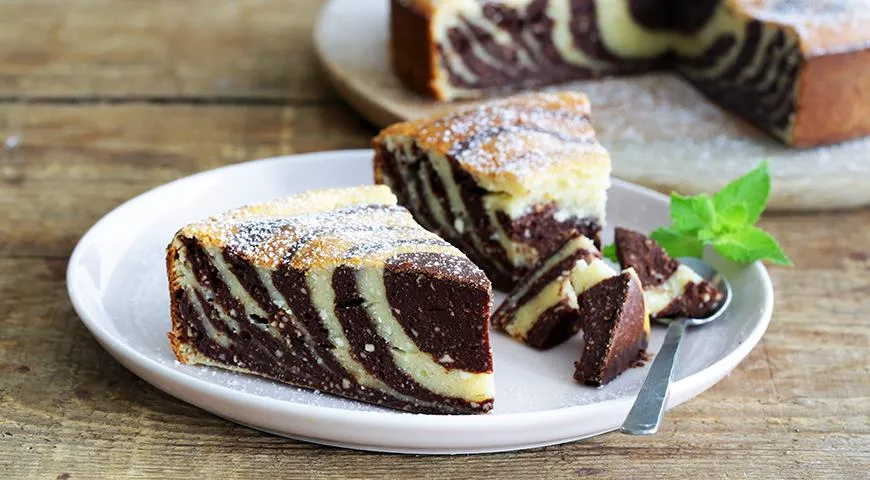
There is a quiet poetry in the way a simple cheesecake batter can transform into a canvas of swirling dark and light ribbons. The Zebra Curd Casserole (Творожная запеканка Зебра) is a beloved Eastern European comfort bake that marries the creamy tang of cottage cheese with the bittersweet richness of cocoa. Unlike its more famous American cousin, this casserole is denser, more rustic, and wonderfully forgiving — perfect for lazy weekend mornings or a teatime treat. Its striking marble pattern, achieved by layering plain and chocolate batters, makes every slice a unique piece of edible art. With just a handful of everyday ingredients and a standard oven, you can recreate this nostalgic dessert that has graced Russian tables for generations.
About the Recipe
This Zebra Curd Casserole belongs to the family of tvorozhnaya zapekanka — baked cottage cheese puddings that are a staple of Slavic home cooking. The trick lies in the gentle layering technique: alternating spoonfuls of vanilla and cocoa batter create the zebra stripes without any special equipment. The 9% fat cottage cheese ensures a creamy yet firm texture, while a planetary mixer (or a sturdy hand whisk) aerates the eggs to give the casserole a light lift. Cornstarch replaces flour, keeping the bake naturally gluten-free and exquisitely tender. It is served completely cooled, dusted with powdered sugar, often alongside a handful of dark chocolate raisins or a dollop of sour cream.

Ingredients
- 500 g cottage cheese (9% fat), preferably smooth or pressed through a sieve
- 4 large eggs
- 80 g plain natural yogurt
- 150 g granulated sugar
- 5 tablespoons cornstarch
- 4 tablespoons unsweetened cocoa powder
- 1 teaspoon vanilla sugar (or ½ teaspoon vanilla extract)
- Powdered sugar, for garnish
- Butter, for greasing the pan
For the best results, use high-quality cocoa — it makes all the difference in depth of flavour. If your cottage cheese is grainy, pulse it in a food processor until smooth.
Step-by-Step Instructions
- Prepare the oven and pan. Preheat your oven to 170°C (340°F). Butter a round baking dish (20–22 cm diameter) generously. A convection oven works beautifully here, ensuring even heat distribution.
- Make the base batter. In a large mixing bowl, combine the eggs with granulated sugar and vanilla sugar. Beat with a mixer until the mixture is pale, thick, and tripled in volume — about 5 minutes on high speed. Add the cottage cheese and cornstarch, then mix on low until just combined. Do not overmix.
- Divide and chocolate half. Transfer half of the batter (about 2 cups) to a separate bowl. To the remaining half, add the yogurt and cocoa powder. Beat again with the mixer until the cocoa is fully incorporated and the batter is a uniform dark brown.
- Layer the stripes. Using a tablespoon, drop 3 generous spoonfuls of the plain (vanilla) batter into the centre of the prepared pan. Directly on top, drop 3 spoonfuls of the chocolate batter. Continue alternating — always placing the next spoonful on top of the previous one — until both batters are used. The layers will spread and create a marbled zebra pattern as they bake.
- Bake to perfection. Carefully transfer the pan to the preheated oven. Bake for 45–50 minutes, until the top is set and a skewer inserted near the centre comes out clean (moist crumbs are fine). Avoid opening the oven door during the first 30 minutes to prevent sinking.
- Cool completely. Remove the casserole from the oven and let it cool entirely in the pan. This is crucial — the structure firms up as it sits, making slicing easier. Once cool, run a knife around the edge, invert onto a serving plate, and dust generously with powdered sugar.
Tips for Perfect Zebra Casserole
- Use full-fat cottage cheese (9%) for the creamiest texture; low-fat versions can turn rubbery.
- If you don't have an immersion blender, push the curd through a sieve to eliminate lumps.
- For a more dramatic zebra pattern, use a smaller pan (18 cm) — the layers will stack higher and stripe more distinctly.
- Let the casserole cool completely — at least 1½ hours — before unmoulding. Chilling in the refrigerator overnight improves flavour and slicing.
- Dust with powdered sugar just before serving to keep it dry and pristine.
Variations
This versatile base welcomes tweaks: swap half the sugar with brown sugar for a caramel note; fold in chopped walnuts or dried cranberries; replace the yogurt with sour cream for extra richness. For a dairy‑free version, use coconut yogurt and a vegan cottage cheese alternative. You can also swirl in a teaspoon of instant espresso with the cocoa to intensify the chocolate flavour. Serve with a spoonful of home‑canned berry compote for a tangy contrast.
Frequently Asked Questions
Can I use low‑fat cottage cheese?
We don't recommend it. The 9% fat content is key to the casserole's creamy, moist crumb. Lower‑fat versions often separate during baking and produce a drier texture.
Why did my zebra stripes disappear?
If the batters were too thin or you stirred them together while layering, the stripes may blur. Ensure both batters are thick enough (add an extra teaspoon of cornstarch if needed) and place each spoonful gently without spreading.
Can I freeze this casserole?
Yes! Once completely cooled and unsweetened, wrap individual slices in cling film and freeze for up to 3 months. Thaw in the refrigerator overnight and reheat gently in a non‑toxic air fryer for 5 minutes at 160°C.
How do I know it's baked through?
The top should be golden and slightly cracked, and a skewer inserted into the centre should come out with just a few moist crumbs attached. If it's still wet, bake for another 5–10 minutes.
Can I make this without a mixer?
Absolutely. Use a whisk and some elbow grease — beat the eggs and sugar until pale and foamy (about 8 minutes). A good whisking arm will do the job, but the result will be slightly less airy.
What pan size is best?
A 20–22 cm round springform pan works perfectly. If using a larger pan, the casserole will be thinner and will bake faster — check at 35 minutes.
This Zebra Curd Casserole is more than a dessert; it's a nostalgic embrace from the heart of Russian home baking. Whether you serve it for a brunch spread or as an after‑school snack, its marbled beauty and creamy tang never fail to delight.







