


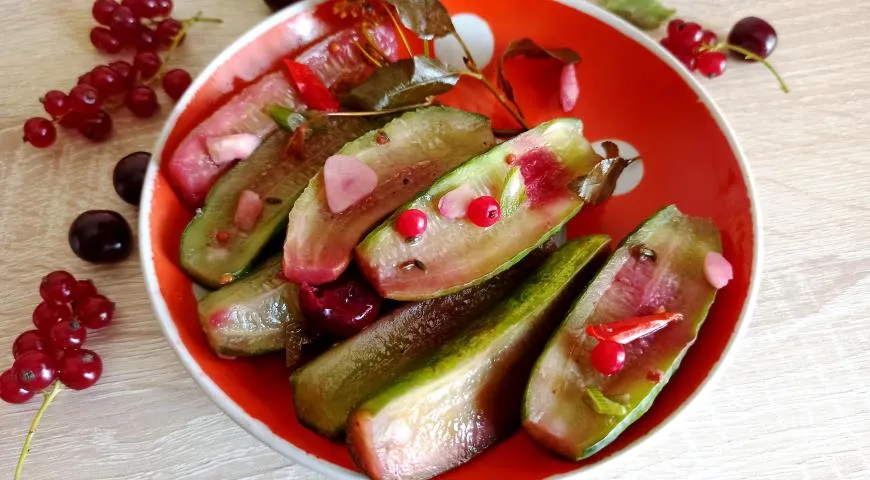
In the height of summer, when gardens overflow with fragrant herbs and sun-warmed berries, the Russian kitchen offers no finer tribute than malosolnye ogurchiki—lightly salted cucumbers that capture the season's essence in every crisp bite. This recipe elevates the classic quick pickle by introducing a medley of fresh red currants, cherries, and aromatic leaves, creating a balance of tangy, sweet, and herbaceous notes. The technique is deceptively simple: a brief brining period, gentle shaking, and patience yield a dish that belongs on every festive table, from casual picnics to elegant summer feasts.
About This Recipe
Traditional Russian homemade preserves often rely on fermentation or lengthy pickling, but the beauty of malosolnye (literally "little salt") cucumbers lies in their speed. Within just a few hours, the cucumber absorbs salt and aromatics while retaining its signature crunch. The addition of red currants and cherries is a summer twist—their natural acidity and fruit sugars enhance the brine without overpowering the delicate cucumber flavor. This recipe comes from the respected Russian culinary site Gastronom.ru, adapted here with tips for modern kitchens. For the best results, choose firm, small cucumbers; avoid long, smooth, greenhouse-grown varieties that tend to become limp.

Ingredients
- Cucumbers: 500 g
- Red currants: 70 g
- Cherries: 70 g
- Garlic: 1 clove
- Chili pepper: 5 g
- Cherry leaves: 3 pieces
- Currant leaves: 1 piece
- Bay leaf: 1 piece
- Fresh mint: 1 sprig
- Dill: 1 umbrella (or a generous bunch of fronds)
- Salt: to taste (about 15–20 g for a balanced brine)
All ingredients are readily available at farmers' markets or well-stocked grocers. If you cannot find fresh currant leaves, substitute a few extra cherry leaves or a strip of lemon zest.
Step-by-Step Instructions
1. Prepare the cucumbers. Thoroughly wash 500 g of small, firm cucumbers. Pat them dry with a clean towel. Trim off the stem ends and blossom ends, then cut each cucumber lengthwise into halves. Place them in a container with a tight-fitting lid.
2. Prepare the aromatics. Peel the garlic clove and slice it thinly. (Alternatively, you can crush it through a press for a more intense garlic flavor.) Finely slice the chili pepper into thin rounds. Chop the fresh mint and dill umbrella with a sharp knife. Gently crush the cherry and currant leaves between your fingers to release their essential oils. Using the flat side of a knife, crush the cherries until they release their juices but remain mostly intact.
3. Assemble the pickle. To the cucumbers in the container, add the bay leaf, red currants, crushed cherries, sliced garlic, chili, chopped dill, mint, and the aromatic leaves. Sprinkle salt to taste—about 1 heaped tablespoon for a well-seasoned brine. Secure the lid and shake vigorously for 30 seconds to distribute everything evenly.
4. Brine and chill. Place the container in the refrigerator for 4 hours. Every hour, remove and give it a good shake to redistribute the salt and juices. During this time, the cucumbers will gradually soften yet remain crunchy, absorbing the vibrant flavors of the berries and herbs.
5. Serve. After 4 hours, the malosolnye ogurchiki are ready. They can be eaten immediately or stored in the refrigerator for up to two days—though they rarely last that long. Serve chilled as a side dish, part of a zakuski spread, or alongside grilled meats.
Tips for Perfectly Crisp Cucumbers
Achieving that iconic crunch is the hallmark of a successful malosolnye. To ensure peak texture, start with the freshest cucumbers possible—ideally picked that morning. If the cucumbers are slightly wilted, soak them in ice water for 30 minutes before brining. The cherry and currant leaves contain tannins that help maintain firmness; do not skip them. A high-quality oil sprayer or airtight container is essential for shaking—avoid metal lids that might react with the salt. For an extra boost, you can also add a pinch of sugar to balance the acidity of the berries.
Variations
This recipe is wonderfully adaptable. Swap the cherries for raspberries or blackberries for a different fruity kick. If you prefer less heat, omit the chili and add a few whole peppercorns instead. For a more herb-forward pickle, include fresh tarragon or basil alongside the dill. A splash of apple cider vinegar or wine vinegar can accelerate the process, but the original method relies solely on natural fruit acids. If you are looking to expand your culinary toolkit, consider using a high-quality juicer to process surplus berries into a brine base—or explore non-toxic air fryers for complementary summer appetizers.
FAQ
Can I use regular pickling cucumbers?
Yes, but choose small, bumpy specimens labeled for pickling. Smooth, greenhouse cucumbers contain more water and turn mushy quickly. For best results, seek out heirloom varieties known for their texture.
How long will these cucumbers keep?
They remain at peak quality for 2 days in the refrigerator after brining. After that, they soften and become saltier. If you want longer storage, transfer them to a brine with vinegar and seal properly.
Can I add other vegetables?
Absolutely. Slices of carrots, daikon radish, or even cauliflower florets work well—adjust brining time accordingly (root vegetables need an extra hour).
My cucumbers turned out bitter. What went wrong?
Bitterness often comes from the stem end or from over-mature cucumbers. Always trim the ends and taste a small piece before brining. If using a planetary mixer to combine ingredients? Not needed here, but ensure your container is non-reactive.
Can I make this without berries?
Yes—just omit the fruit and add a squeeze of lemon juice for acidity. However, the berries add a unique complexity that elevates the dish; try using dried cranberries or frozen currants when fresh are unavailable.
For more seasonal inspiration, explore Catalan sponge recipes or store-bought au jus options to accompany your centerpieces. The key to this pickle is confidence—shake, smell, taste, and enjoy the process. A fine undercounter ice maker ensures your cucumbers stay cold, while a spacious refrigerator gives you room for all the summer produce. Finally, don't forget to pair these crunchy gems with a sweet, high-alcohol wine or a clean organic vodka for an authentic Russian experience.







