


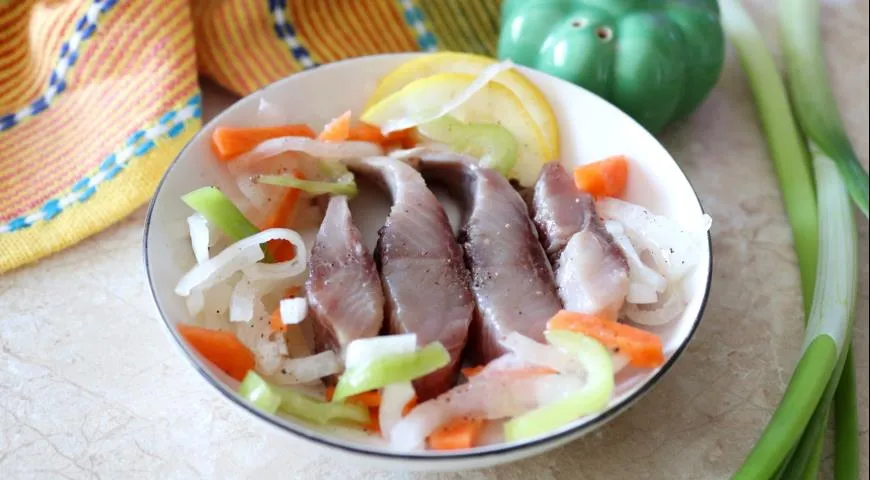
There are appetizers that merely accompany a meal, and then there are those that become the story. This layered herring and vegetable appetizer—known in Russian as zakuska iz seledki s ovoshchami—belongs firmly to the latter category. It is a dish of quiet profundity: humble ingredients transformed by patience and precision into something far greater than the sum of their parts. The marriage of mildly salted herring, crisp vegetables, and fragrant sunflower oil, allowed to meld overnight, yields a symphony of flavors and textures that is both deeply Slavic and universally appealing.
About the Dish
In Russian culinary tradition, herring holds a place of honor. It appears on every festive table—from the iconic seledka pod shuboi (herring under a fur coat) to simple fillets with boiled potatoes. This layered version is a lighter, brighter cousin: no mayonnaise, no heavy cream—just the pristine taste of fish, vegetables, and oil, with a whisper of sugar to balance the salt. The technique of layering in a jar or container, pressing gently, and allowing time to work its magic is a classic method for creating what the French call confit-like harmony. The result is an appetizer that is at once rustic and refined, perfect for a holiday spread or a quiet Sunday dinner. For more inspiration on bringing global flavors home, explore our guide to the best non-toxic immersion blender for emulsifying dressings and sauces.

Ingredients
The beauty of this recipe lies in its simplicity. You will need:
- 1 large mild-salted herring (about 300–400 g), filleted
- 1 medium carrot
- 1 medium onion
- 1 sweet bell pepper (green or red)
- 1 lemon, sliced into thin rings
- Apple cider vinegar (for marinating the onion)
- Granulated sugar (about 2–3 tablespoons total)
- Unrefined sunflower oil (enough to cover the layers)
- Salt and freshly ground black pepper to taste (optional)
Using a sharp knife and a steady hand is key here. If you prefer precision, consider investing in a best food processor for nut butter to uniformly julienne your vegetables—though a mandoline or chef’s knife works beautifully.
Step-by-Step Instructions
Patience is the secret ingredient. Follow these steps with reverence, and the dish will reward you.
- Prepare the herring: Fillet the herring by removing the head, tail, and backbone. Cut the fillet into pieces about 1–1.5 cm thick. Set aside.
- Julienne the vegetables: Peel the carrot and cut into thin, matchstick-like strips. Cut the onion into thin half-rings. Slice the bell pepper into similar strips. Place the onion in a small bowl, cover with cold water and a splash of apple cider vinegar, and let it marinate for 10 minutes. Drain and discard the liquid.
- Mix the vegetables: In a separate bowl, combine the carrot, bell pepper, and drained onion. Toss gently.
- Layer in a jar or container: Choose a clean glass jar or a non-reactive container. Start with a layer of herring pieces, then sprinkle with a generous pinch of sugar. Top with a layer of the vegetable mixture and one lemon ring. Repeat the layers—herring, sugar, vegetables, lemon—until all ingredients are used. Important: Every herring layer must be dusted with sugar. This small but vital step draws out moisture and balances the salt.
- Press and add oil: Using the back of a spoon, gently press down the layers to compact them. Pour in enough unrefined sunflower oil to completely cover the mixture. The oil acts as both a preservative and a flavor carrier.
- Rest overnight: Cover the container and refrigerate for at least 12 hours, preferably 24. The magic happens as the sugar dissolves, the vegetables soften slightly, and the oil infuses every layer with richness.
Tips for Perfect Results
- Always use unrefined sunflower oil—it has a distinctive, nutty aroma that complements herring. If unavailable, a light olive oil is acceptable but not authentic.
- Do not skip the sugar sprinkling. It is not sweetness that you taste but a subtle counterpoint that lifts the entire dish.
- For the best texture, slice vegetables uniformly. A best oil sprayer can help evenly coat the final layer without disturbing the arrangement.
- Allow the jar to come to room temperature for 15 minutes before serving—cold mutes the flavors.
- Use a very sharp knife for the herring to avoid tearing. A best castor oil is not related, but sharpening your blades is essential for any kitchen task.
Variations to Explore
This recipe is a canvas. Try these twists:
- Add a thin layer of finely chopped fresh dill or parsley between the vegetable layers.
- Substitute half the herring with smoked mackerel for a deeper, woodier flavor.
- Include a few capers or thinly sliced pickled cucumbers for acidity.
- For a spicy kick, add a thinly sliced red chili pepper to the vegetable mix.
- Serve on dark rye bread or alongside boiled new potatoes—or both, as is traditional in Russian homes.
- If you enjoy the precision of small-batch canning, a best steam canner can help you preserve larger quantities of this appetizer for future gatherings.
Frequently Asked Questions
Can I use a different type of fish?
Absolutely. While mild-salted herring is traditional, you can use trout, mackerel, or even sardines. Adjust the salt accordingly—some fish are saltier than others.
How long does this appetizer keep?
Stored in the refrigerator, submerged in oil, it will keep for up to 5 days. The flavors actually deepen after the first 48 hours. For longer storage, consider using a best undercounter ice maker machine to keep it consistently cold, though refrigeration is sufficient.
Can I freeze it?
Freezing is not recommended—the texture of the vegetables and herring will become mushy upon thawing. This dish is best enjoyed fresh from the fridge.
Is this appetizer gluten-free?
Yes, all ingredients are naturally gluten-free. Just ensure your vinegar and oil are certified gluten-free if you have sensitivities.
What should I serve alongside it?
Dark rye bread, boiled eggs, sour cream, and pickled mushrooms are classic accompaniments. For drinks, consider a crisp white wine or, for authenticity, a shot of best organic vodka.
Why is sugar necessary?
The sugar is not for sweetness—it draws out moisture from the fish and vegetables, creating a gentle brine that balances the saltiness of the herring and the acidity of the lemon. It is the quiet architect of the dish’s harmony.
This layered herring and vegetable appetizer is a testament to the fact that true elegance does not require complexity—only care. Whether you serve it at a festive table or a quiet family dinner, it carries the soul of Russian home cooking: rustic, generous, and deeply satisfying. For more tools to perfect your homemade fare, check out our reviews of the best air fryer non-toxic for crisp sides, or the best coffee maker for Airbnb to round off the meal. Enjoy the journey.







