


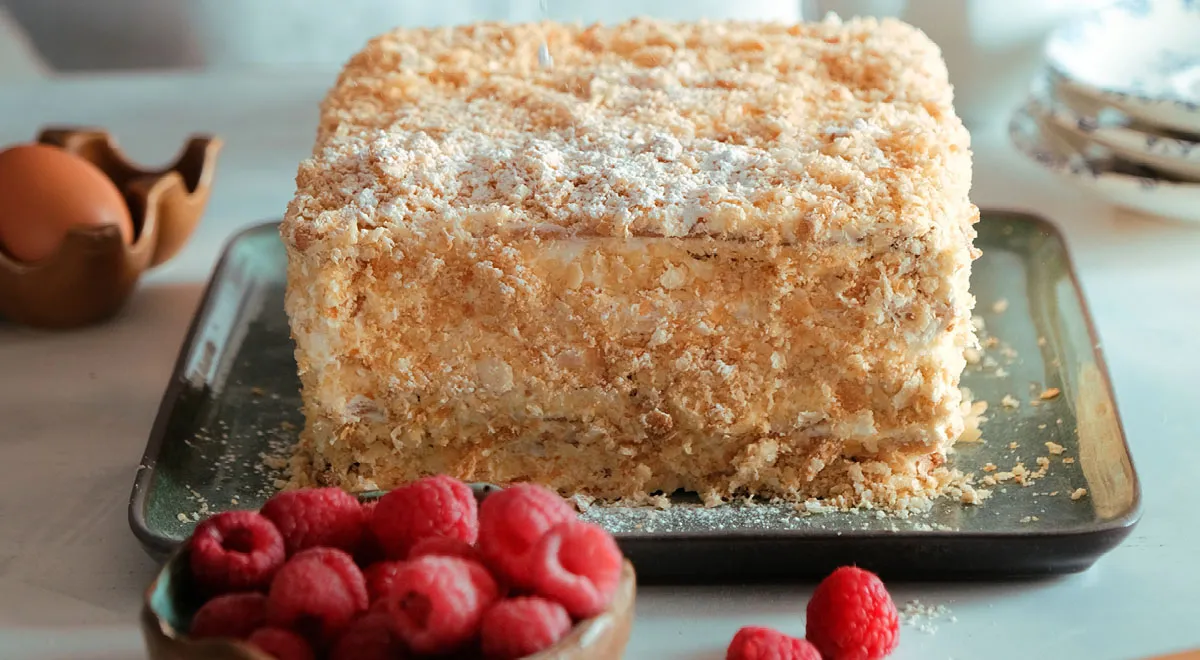
Few desserts evoke the same awe as a perfectly crafted Napoleon cake—an ethereal stack of paper‑thin, buttery layers and a silky custard cream that yields under the fork with a delicate shatter. This classic Russian recipe, passed down through generations, transforms humble ingredients into a towering showpiece. Whether you're a seasoned pastry enthusiast or an ambitious home baker, mastering the Napoleon is a rite of passage that rewards patience with unparalleled flavour and texture.
About the Napoleon Cake
Originally inspired by the French mille‑feuille, the Russian Napoleon became a beloved staple of Soviet‑era celebrations. Its signature character comes from the contrast between crisp, flaky pastry and a luscious, not‑too‑sweet cream that soaks into the layers over hours. The result? A dessert that's both elegant and deeply comforting—perfect for birthdays, holidays, or simply when you want to impress.

Ingredients
For the dough:
- 450 g all‑purpose flour
- ¼ tsp salt
- 300 g cold unsalted butter (cut into 1‑cm cubes)
- 180 ml cold water
- 1 tsp lemon juice or 6% vinegar
For the pastry cream:
- 300 g unsalted butter (room temperature)
- 450 ml milk
- 150 g sugar
- 4 tsp all‑purpose flour
- 3 tsp cornstarch
- 1 tsp vanilla sugar
Step‑by‑Step Instructions
1. Prepare the dough
Sift the flour with salt into a large bowl. Add the cold butter cubes and use your fingertips to rub them into the flour until you have an uneven, crumbly mixture. This irregularity ensures flaky layers. You can also pulse the mixture in a food processor for speed, but be careful not to overwork.
2. Incorporate the liquid
Mix the cold water with lemon juice or vinegar. Gradually drizzle the liquid into the flour‑butter crumbs, stirring with a fork just until the dough holds together. You may not need all the liquid. Do not knead—overworking melts the butter, destroying the flaky structure.
3. Chill and divide
Divide the dough into 8‑10 equal pieces. Place them on a board, cover with plastic wrap, and refrigerate for at least 30 minutes. Chilling solidifies the butter, which later creates steam pockets during baking. For even chilling, use a quality refrigerator that maintains steady temperature.
4. Make the pastry cream
In a saucepan, whisk together cornstarch, flour, sugar, and vanilla sugar. Slowly pour in the milk while whisking constantly. Place over medium heat and cook, stirring, until the mixture thickens. Let it bubble for 3‑5 minutes, then remove from heat. Immediately pour into a clean container, press plastic wrap directly onto the surface, and cool. For a moist cake, cool to about 40 °C; for a drier finished cake, cool to 20 °C. An immersion blender can help smooth the cream if lumps appear.
5. Roll and bake the layers
Preheat your oven to 180‑190 °C (top/bottom heat, no fan). Roll each piece of dough between two sheets of baking paper into a square about 1.5 mm thick. Prick thoroughly with a fork to prevent excessive puffing. Bake for 7‑12 minutes until pale golden. Cool on a wire rack. Using a convection oven? Reduce temperature slightly to avoid over‑browning.
6. Finish the cream
If you cooled the custard to 40 °C, beat in the room‑temperature butter using a mixer until smooth and fluffy. If you cooled it to 20 °C, first whip the butter until light and airy, then gradually beat in the cool custard. The choice affects the cake's final moistness. A sturdy planetary mixer makes this step effortless.
7. Assemble and compress
Crumble one baked layer for the topping. Spread a generous layer of cream on each remaining layer, reserving some for the top. Stack them, leaving the topmost layer bare for now. Cover the cake with baking paper, place a board on top, and add a weight (a heavy pot or canned goods). Refrigerate 8‑16 hours. This pressing and resting lets the cream soften the layers without making them soggy. For best results, use an air fryer to quickly re‑crisp leftover crumbs later.
8. Final garnish
After the resting period (or just before serving), spread the reserved cream on the top layer and sprinkle with the crumb mixture. Slice with a sharp serrated knife.
Tips for the Perfect Napoleon
- Keep everything cold. Chilled butter and iced water are non‑negotiable for flaky pastry. If the dough becomes sticky, return it to the refrigerator.
- Roll thinly and evenly. Uneven layers lead to inconsistent baking. Use a light oil spray on your rolling pin if the paper shifts.
- Don't rush the cream. Properly cooling the custard prevents a greasy final cream. Patience pays off.
- Weight matters. A heavy weight flattens any puffing and ensures even absorption. A cast‑iron pan makes an excellent press.
Variations
For a modern twist, try adding a layer of berry preserve between the cream layers, or swap vanilla sugar for espresso powder to make a coffee‑infused Napoleon. Vegan bakers can substitute the butter with a high‑quality vegan block and use a plant‑based milk blended with an efficient juicer for a nut‑milk version. If you're short on time, pressure‑cooker custard can slash cream‑making time to under 10 minutes.
FAQ
Why did my dough become tough?
Over‑kneading develops gluten and melts the butter. Always work quickly and gently. For perfect dough every time, consider a glass food processor bowl that lets you see the texture.
Can I freeze the cake?
Yes! Assemble the cake without the crumb topping, wrap tightly, and freeze for up to one month. Thaw in the refrigerator overnight, then garnish. Store leftover cream in a steam canner to extend its life.
How many layers should I aim for?
8‑10 layers is ideal. Fewer layers result in a thicker, less delicate cake. Use a precision ice‑maker to chill ingredients if your fridge struggles.
My cream curdled—what went wrong?
The butter and custard were at different temperatures. Always ensure the custard is within 5 °C of the butter before combining. A refrigerant leak detector can help maintain accurate fridge temperatures.
Can I use store‑bought puff pastry?
Yes, but homemade yields a far superior texture and flavour. If you must use store‑bought, choose an all‑butter variety and roll it slightly thinner. Pair with a good chocolate raisin garnish for added decadence.
Classic Napoleon cake is a labour of love, but once you taste that first bite—crisp, creamy, and perfectly balanced—you'll know it was worth every minute. Enjoy the journey!







