


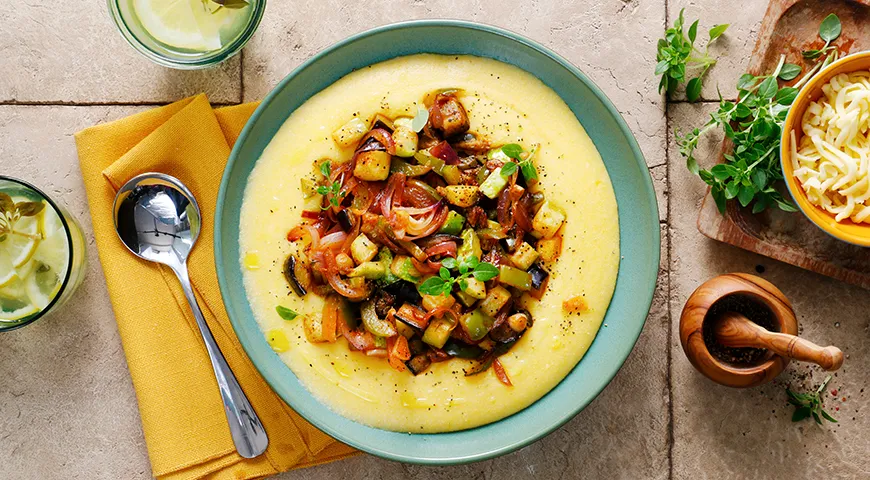
Mamaliga, the rustic Romanian polenta, transforms simple cornmeal into a creamy, buttery masterpiece. In this recipe, we pair it with a vibrant medley of fried eggplant, zucchini, bell pepper, and red onion, all blistered to perfection. The finishing touch? A generous handful of melted mozzarella stirred into the warm polenta, creating a luscious base for the caramelized vegetables. This dish embodies comfort food at its finest— humble, hearty, and deeply satisfying. Perfect as a main course or a show-stopping side, it’s the kind of meal that warms you from the inside out. For those who love exploring global cuisines, this is a must-try.
About Mamaliga: A Rustic Romanian Delight
Mamaliga holds a cherished place in Romanian and Moldovan kitchens, often served as a substitute for bread or alongside stews. Traditionally made with coarse cornmeal, it’s cooked slowly until thick, then shaped or served soft. Our version takes a creamy approach, enriched with butter and mozzarella for an extra layer of indulgence. The fried vegetables add a smoky, sweet contrast that elevates the whole dish. If you’re new to mamaliga, think of it as polenta’s more robust cousin— it’s the perfect canvas for bold flavors. For more inspiration on mastering classic dishes, check out our guide to the best refrigerant leak detector for kitchen appliances, though today we focus on stovetop magic.

Ingredients
- 1 medium eggplant (300 g)
- 1 small zucchini (200 g)
- 1 green bell pepper (100 g)
- 1 small red onion (70 g)
- 4 garlic cloves (20 g)
- 100 g grated mozzarella
- 100 g unsalted butter
- 40 g vegetable oil
- Salt, to taste
- Freshly ground black pepper, to taste
- For the mamaliga: 150 g coarse cornmeal, 500 ml water, 1 tsp salt
Note: Use good-quality cornmeal for the best texture. An oil sprayer can help control the vegetable oil evenly when frying.
Step-by-Step Instructions
Step 1: Cook the Mamaliga
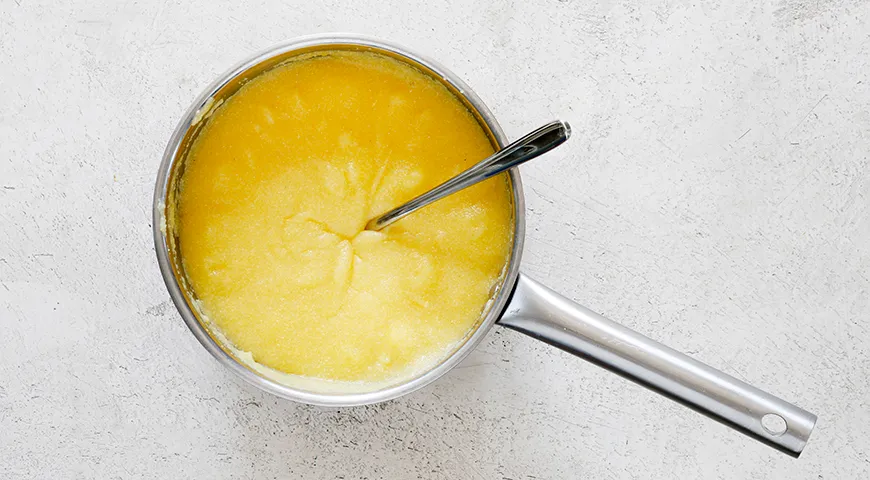
Bring 500 ml of water to a boil in a heavy saucepan. Add 1 tsp salt. Slowly pour in the cornmeal in a thin, steady stream, whisking constantly to prevent lumps. Bring to a boil over high heat, then reduce to medium-low. Cook, stirring frequently with a wooden spoon, until the mamaliga is very thick and begins to pull away from the sides of the pan— about 30 minutes. The mixture should be smooth and dense.
Step 2: Prepare the Vegetables
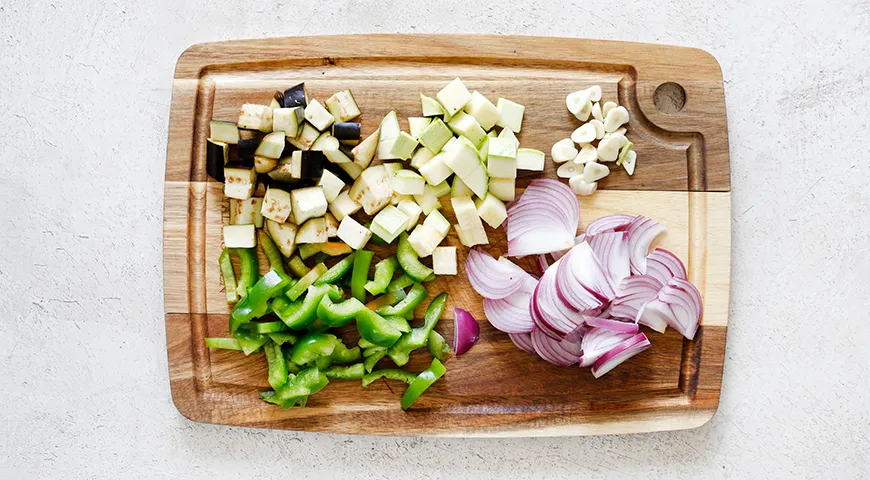
While the mamaliga cooks, prep the vegetables. Seed the bell pepper and slice into thin strips. Peel and thinly slice the garlic into rounds. Cut the red onion into thin feathers (halve and slice lengthwise). Dice the eggplant and zucchini into 1.5 cm cubes. This uniform size ensures even cooking. A glass food processor can speed up chopping if you prefer, but hand-cutting gives you control over texture.
Step 3: Fry the Vegetables
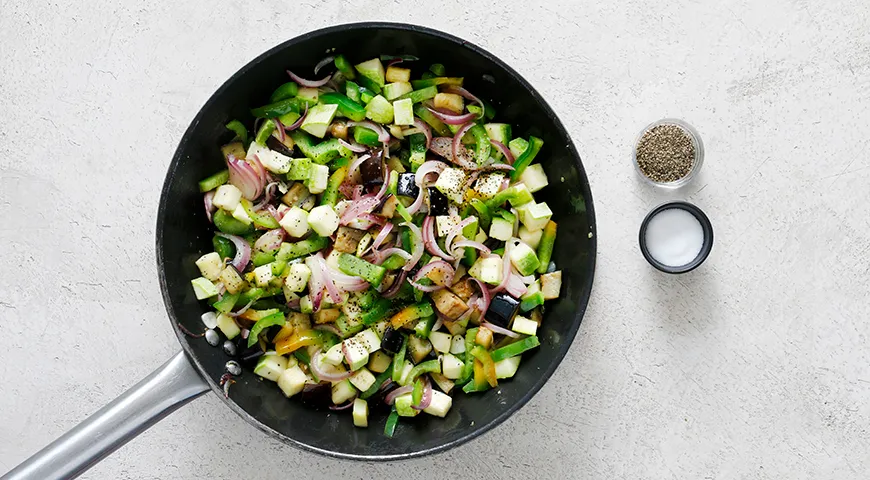
Heat 40 g vegetable oil in a large skillet over high heat. Add all the prepared vegetables and a generous pinch of salt. Cook, stirring occasionally, for about 10 minutes, or until the vegetables are browned in spots and softened. The high heat creates a nice char without making them mushy. Season with freshly ground black pepper. For an even crispier result, you can use an air fryer at 200°C for 8–10 minutes, shaking halfway.
Step 4: Combine and Serve
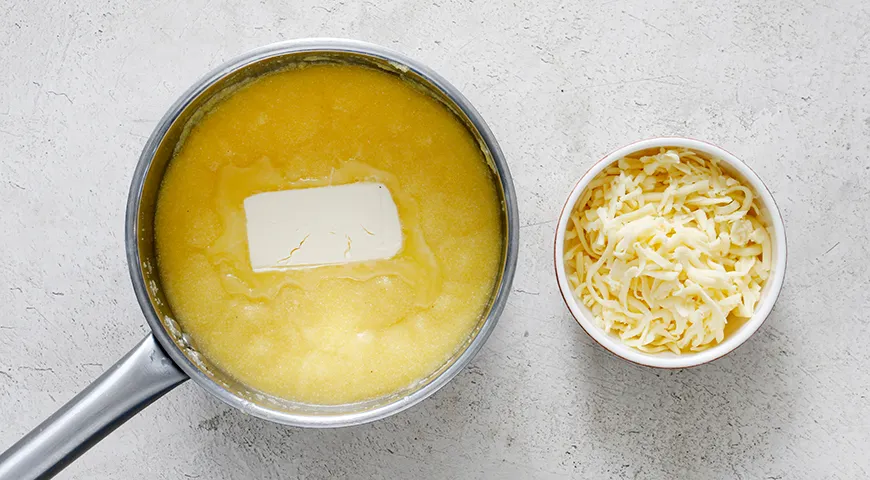
Remove the cooked mamaliga from the heat. Immediately add the butter and grated mozzarella, stirring vigorously until fully melted and incorporated. The cheese will make it extra creamy. Divide the mamaliga among deep serving bowls. Using the back of a spoon, create a well in the center of each portion. Spoon the fried vegetables into the well. Finish with a few more cracks of black pepper. Serve piping hot. A planetary mixer can help if you’re making a double batch, but hand-stirring works wonderfully.
Tips for Perfect Mamaliga
- Stir constantly during the first few minutes to avoid lumps. A non-toxic immersion blender can smooth out any lumps afterward, but traditionalists prefer a whisk.
- Use a heavy-bottomed pot to prevent scorching. The mamaliga should bubble gently, not burn.
- Adjust consistency: If too thick, add a splash of hot water; if too thin, cook a few minutes longer.
- Let it rest for 2–3 minutes before serving to allow the texture to set slightly.
Variations
This recipe is wonderfully adaptable. Try swapping mozzarella with feta or smoked cheddar for a different flavor profile. Add roasted mushrooms or sun-dried tomatoes to the vegetable mix. For a spicier kick, toss in a chopped chili with the garlic. You can also serve the mamaliga sliced and pan-fried the next day— it’s delicious with a fried egg. Pair this dish with a crisp white wine like a Sauvignon Blanc, or explore sweet high-alcohol wines for contrast.
FAQ
Can I make mamaliga in advance?
Yes. Cook the mamaliga, spread it in a greased pan, let it cool completely, then refrigerate. Reheat slices in a hot skillet with butter. The vegetables are best fresh, but can be reheated in a commercial countertop convection oven to restore crispness.
What type of cornmeal works best?
Coarse or medium-grind cornmeal is traditional. Avoid instant or fine polenta, as they yield a pasty texture. For gluten-free options, always check labels.
Can I use other vegetables?
Absolutely. Zucchini, eggplant, bell peppers, and onions are classic, but you can add cherry tomatoes, mushrooms, or artichoke hearts. Just adjust cooking times accordingly.
How do I prevent the mamaliga from being lumpy?
Pour the cornmeal in a very thin stream while whisking vigorously. If lumps form, use an immersion blender after cooking to smooth them out. A food processor can also blitz it briefly, but be careful not to over-process.
What should I serve with mamaliga?
This dish is a complete meal. For a hearty dinner, pair it with a simple green salad dressed with lemon vinaigrette. For a traditional Romanian touch, serve alongside grilled sausages or a dollop of sour cream. Finish with a strong coffee— try our George Howell coffee selection for an authentic pairing.
For more kitchen tools to elevate your cooking, explore our reviews on espresso machines and coffee makers for Airbnb. And if you’re hosting, consider our guide to built-in refrigerators for storing leftovers. For dessert, chocolate-covered raisins make a sweet ending. Cheers!







