The extractor hood is a key element in any kitchen, as it eliminates the smoke and odors generated during cooking. It also helps maintain good air quality and prevents grease buildup on nearby cabinets and appliances. But how do you know which is the best extractor hood for your kitchen? In this article, we present a selection of the best extractor hoods on the market, with different features and prices, so you can choose the one that best suits your needs and budget.
The best extractor hoods
Below, we'll tell you about our 5 favorite range hoods and the attributes that earned each one a spot in our ranking.

CIARRA Extractor Hood 60cm
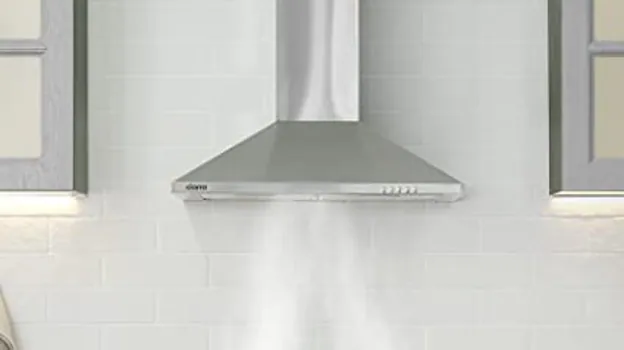
The first extractor hood we'd like to recommend is, in fact, Amazon's best-selling in its category . It's available in stainless steel and black finishes, so you can choose the one that best matches the rest of your kitchen and appliances. It's 60 cm wide and very competitively priced , hence its popularity with buyers.
Its certified energy efficiency class is A, and its noise level is low. Other features you should consider include its touch control and three speeds, as well as the fact that it uses carbon filters. Its suction power is very good, at 370 m³/h.
Balay Extractor Hood, Telescopic 60cm
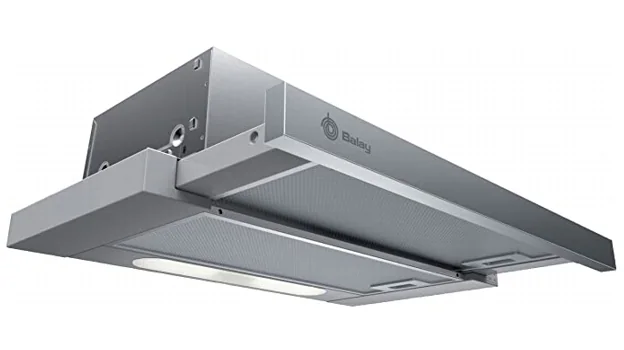
Another such model is the Balay telescopic extractor hood. Although it's extra-flat and could save space in the kitchen, it's less energy-efficient (D). It's available in white, black, and stainless steel finishes, and for a more affordable price , the same model comes with slightly lower suction power. The hood we recommend has a capacity of 368 m3/h.
Teka Extractor Hood 70 cm
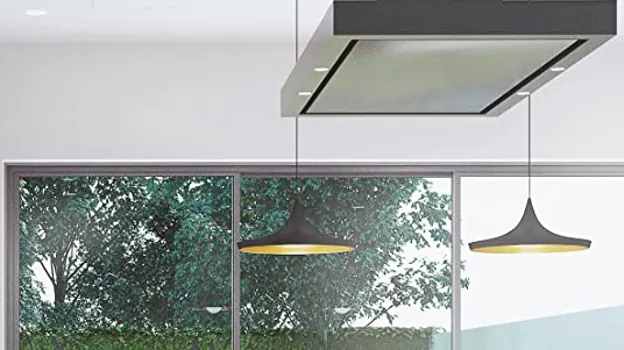
This Teka option is slightly larger, measuring 70 cm . The 10-centimeter difference may not seem like much for ceiling-mounted hoods, for example, but in kitchens where it will be wedged between two cabinets, fitting it into the available space is crucial for a clean aesthetic.
It has three speeds, plus intensive mode , and its suction capacity is 701 m³/h , a great figure, although it comes with a little more noise during operation (70db).
Candy Extractor Hood 90 CM
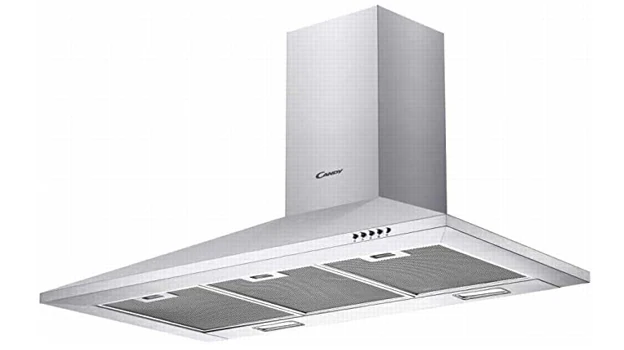
90-centimeter extractor hoods are very common on the market, as the width of these appliances is determined by the width of the stove and oven over which they are installed. This one is from the Candy brand and is available in 90, 70, and 60 centimeters .
It uses carbon filters to filter the air and absorb smoke and fumes, achieving a capacity of 305 m3/h. This chimney-style hood is a very aesthetic choice that will complement the rest of your kitchen.
Balay Decorative Wall Hood, 90cm
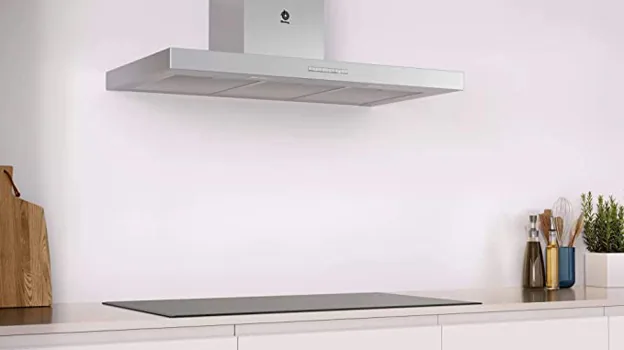
Finally, the last extractor hood we're going to recommend is again from Balay. Its suction capacity is 756 m3/h , its energy efficiency is B, and although it's a wall-mounted design, it has an ideal decorative design. This hood is 90 cm wide, although the model is also available in 60 cm. Controls are electronic, tactical, or mechanical ; you can choose between these options upon purchase.
How to choose an extractor hood?
When choosing a range hood, there are several factors to consider. One of the most important is the size and layout of your kitchen, as this will affect the type of hood you need. You should also consider the noise level and suction power. Additionally, it's important to consider the design to ensure it fits in with the overall aesthetic of your kitchen. It's important to consider your specific needs when choosing the right one for your kitchen.
Size
The size of the hood should be proportional to the kitchen . A hood that's too small won't be effective at removing smoke and odors, while one that's too large can be unnecessarily expensive and difficult to install. You'll also need to consider the height of the ceiling, of course.
Smoke outlet
The flue vent should be located close to the cooking source to effectively capture fumes and odors. It is recommended that the diameter of the flue vent be equal to or larger than the diameter of the hood to avoid obstructions and ensure proper airflow.
Extraction capacity
This factor is key when choosing an extractor hood, as it determines the amount of air the hood can filter per hour . It is recommended that the extraction capacity be at least three times the kitchen volume to ensure effective smoke and odor removal.
Ease of cleaning
Some hoods have dishwasher-safe filters, making them easy to clean, while others require more thorough manual cleaning.
Noise level
Quiet models have a noise level of 50db or less , while the noisiest can reach over 70db.
Design
An extractor hood should not only be functional but also complement the kitchen. They come in a variety of materials and designs, from minimalist models to more elaborate designs with built-in lighting and curved shapes. It's important to choose a design that fits the overall aesthetic of the kitchen while also being easy to maintain and clean.
What is an extractor hood used for?
An extractor hood is an appliance installed above the stove to extract and remove smoke, vapors, and odors generated during cooking. This helps keep the air clean and free of impurities, which is not only beneficial for your health but also helps keep the kitchen and the home in general cleaner and more pleasant.
Types of extractor hoods
Among the types of extractor hoods, we find wall-mounted hoods, island hoods, built-in hoods, ceiling hoods, and more decorative hoods. Each type of hood has specific features and benefits .
How to clean an extractor hood?
It's important to clean your range hood regularly to maintain its effectiveness and prevent grease and dirt buildup. Most hoods have filters that need to be cleaned or replaced periodically, and the outer casing should also be cleaned regularly to prevent grease and odor buildup.