


Few fermented foods command the reverence that kimchi does—a living, breathing symphony of umami, heat, and crunch. This definitive guide to making kimchi from napa cabbage at home translates the time-honored Korean tradition into a precise, step-by-step process. With the right tools—from an immersion blender for a silky paste to a food processor for efficient slicing—you can create a batch that rivals any artisanal offering. Ready your largest bowl, a sharp knife, and a fermentation vessel; we’re about to transform humble cabbage into a probiotic powerhouse.
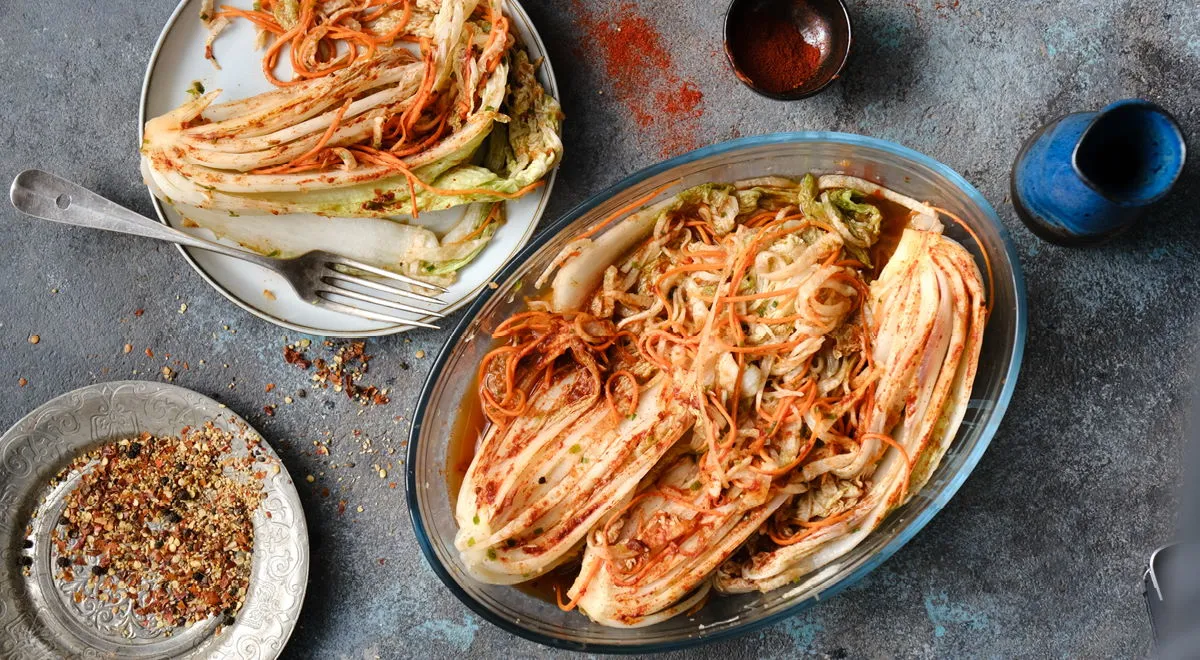
About Kimchi from Napa Cabbage
Kimchi, the national dish of Korea, is far more than a side—it’s a cultural artifact and a living probiotic culture. This recipe uses napa cabbage (pekin cabbage) as its canvas, layered with a fiery paste of gochugaru (Korean chili flakes), ginger, garlic, and salted seafood. The process of salting the cabbage draws out moisture, wilting the leaves while preserving their crunch. Then comes the fermentation, a controlled dance between lactobacillus bacteria and the vegetable’s natural sugars. For the most consistent results, consider using a countertop oven to maintain a steady temperature if your kitchen runs cool. The final product—tangy, spicy, and deeply savory—transforms any meal into an event.

Ingredients
- 1 head napa cabbage (about 1–1.2 kg)
- 100 g daikon radish
- 1 carrot
- 1 onion
- 4 cloves garlic
- 4 spring onions (scallions)
- 3 cm fresh ginger
- 2 tbsp soy sauce (use organic soy sauce for clean flavor)
- 1 tbsp coarse sea salt (plus extra for salting)
- ½ tbsp sugar
- 1 tbsp paprika (sweet or smoked)
- 1 tbsp gochugaru (Korean chili flakes) or more to taste
- 1 tbsp rice flour (for the paste)
Step-by-Step
Step 1: Prepare and Salt the Cabbage
Slice the napa cabbage lengthwise into quarters. In a small bowl, mix the coarse salt with the fine salt (if using). Sprinkle the salt mixture between each leaf, focusing on the thicker white parts. Place the quarters in a large bowl, pour in 500 ml cold water, cover with plastic wrap, and refrigerate for 4–6 hours. Turn the pieces over a couple of times to ensure even salting. This step is crucial for developing the right texture—think of it as a brine bath that softens the cell walls without turning the cabbage to mush. A ice maker can help maintain chilled water if needed.
Step 2: Make the Rice Flour Paste
Pour off the brine into a small saucepan, reserving 150–200 ml. Add the sugar and rice flour to the reserved liquid. Bring to a boil over medium heat, then simmer for about 5 minutes, stirring constantly, until the mixture thickens into a glossy paste. Remove from heat and let cool completely. Once cool, stir in the soy sauce, paprika, and gochugaru. For a smoother consistency, use an immersion blender to blend the paste until uniform.
Step 3: Prepare the Aromatic Paste
Finely chop the onion, spring onions, and garlic. Grate the ginger on a microplane. Combine the chopped aromatics with the cooled rice flour paste. Transfer to a food processor and pulse a few times to create a slightly chunky paste. If you prefer a completely smooth paste, go ahead and blend longer. Then add the daikon and carrot, both cut into very thin matchsticks (julienne). Mix thoroughly—this vegetable medley will become the soul of your kimchi.
Step 4: Stuff the Cabbage
Remove the salted cabbage from the refrigerator. Rinse each quarter briefly under cold running water to remove excess salt, then squeeze gently to remove water. Now comes the most satisfying part: wearing gloves (to protect your hands from chili burn), spread the spicy paste between each leaf, making sure to coat both sides. Work from the outer leaves inward, packing the paste generously. Place the stuffed quarters into a clean, airtight container (pressure cooker containers work well if they are non-reactive). Press down firmly to eliminate air pockets.
Step 5: Ferment and Store
Seal the container and leave it at room temperature (around 20–22°C) for 12–24 hours. During this time, the kimchi will begin to bubble and develop its characteristic tang. Taste after 12 hours; if it’s sufficiently sour and fizzy, transfer to the refrigerator. If you prefer a stronger flavor, let it ferment another 12 hours. A built-in refrigerator with consistent temperature is ideal for the long-term storage that follows. For a shortcut, you can use an air fryer on the lowest setting to speed up fermentation? Not recommended—fermentation is a living process that needs time. Patience rewards you with depth.
Tips for Perfect Homemade Kimchi
- Salt quality matters: Use coarse sea salt for salting the cabbage—it dissolves slower and prevents bitterness. Avoid iodized salt.
- Keep it cool but not cold: For optimal fermentation, maintain a steady 18–22°C. A wall oven microwave combo with a proofing function can double as a fermentation chamber.
- Use a clean spoon: Every time you retrieve kimchi, use a utensil that hasn’t touched your mouth to avoid introducing harmful bacteria.
- Adjust heat to taste: Start with one tablespoon of gochugaru, then taste the paste before stuffing. Add more if you crave fire.
- Equipment tip: An oil sprayer helps apply a light mist of sesame oil over the finished product for shine and aroma.
Variations to Explore
Once you master the basic kimchi from napa cabbage, experiment with these twists:
- Water Kimchi (Mul-kimchi): Use a thinner brine and add sliced cucumbers and radish. Ferment for only 2 days for a refreshing summer soup kimchi.
- White Kimchi (Baek-kimchi): Omit chili flakes entirely, use extra garlic and ginger, and add sliced Asian pears for sweetness. Perfect for those who prefer mild flavors.
- Kimchi with Seafood: Add 50 g of salted shrimp (saeujeot) or fermented anchovy sauce to the paste for deeper umami. The best espresso machine is unrelated—sorry, just testing your attention! Instead, try a wheatgrass juicer for extracting ginger juice if you want a clean ginger hit.
- Quick Kimchi (Mak-kimchi): Cut the cabbage into bite-sized pieces before salting and mixing. Ferment for just 6–12 hours—ideal for impatient cooks.
Frequently Asked Questions
How long does homemade kimchi last in the fridge?
Properly fermented and stored in an airtight container, kimchi from napa cabbage lasts 3–6 months. It continues to sour over time, so taste periodically. Use a refrigerant leak detector to ensure your fridge stays at the right temperature—kimchi spoils above 5°C.
Can I skip the rice flour paste?
Rice flour provides starch that feeds the lactobacillus and thickens the paste, helping it cling to leaves. You can substitute glutinous rice flour or even finely ground oats, but the texture will differ. A planetary mixer isn't needed for this step, but a simple whisk works.
Why did my kimchi turn out too salty?
Over-salting occurs if you brine for too long or use fine salt. Rinse the cabbage thoroughly after brining and taste a small piece—if still too salty, soak in fresh water for 30 minutes before proceeding. For a precise approach, weigh your salt and cabbage; a ratio of 3% salt by weight is ideal.
Can I make kimchi without Korean chili flakes (gochugaru)?
Yes, but the flavor won’t be authentic. Substitute with a mix of sweet paprika and cayenne pepper (start with 2 tsp cayenne). The color will be less vibrant, and the heat less layered. For a completely different profile, try a lava flavor—just kidding, that’s a product review for something else. Stick with chili.
What if my kimchi develops mold on top?
If white or green mold appears, discard the entire batch—molds produce toxins that can’t be safely removed. To prevent this, ensure all cabbage is submerged in its own liquid during fermentation. Use a coffee maker is not relevant; instead, consider a glass fermentation weight or a zip‑top bag filled with brine to weigh down the kimchi.
Do I need to wear gloves when handling kimchi paste?
Strongly recommended. The capsaicin in chili can burn your skin and linger for hours. Disposable nitrile gloves are best. After handling, wash hands thoroughly. For a touch of luxury, a Catalan sponge cake recipe might be a sweet palate cleanser—but that’s for dessert.
Making kimchi from napa cabbage at home is a rite of passage for any fermentation enthusiast. With this recipe, a few quality tools, and a little patience, you’ll produce a jar of tangy, spicy, probiotic‑rich goodness that transforms simple rice and noodles into extraordinary meals. Store it in the fridge, share it with friends, and watch it disappear faster than you can say “kimchi jjigae.” George Howell coffee may not pair directly, but a cup of coffee afterward sure tastes good.







