


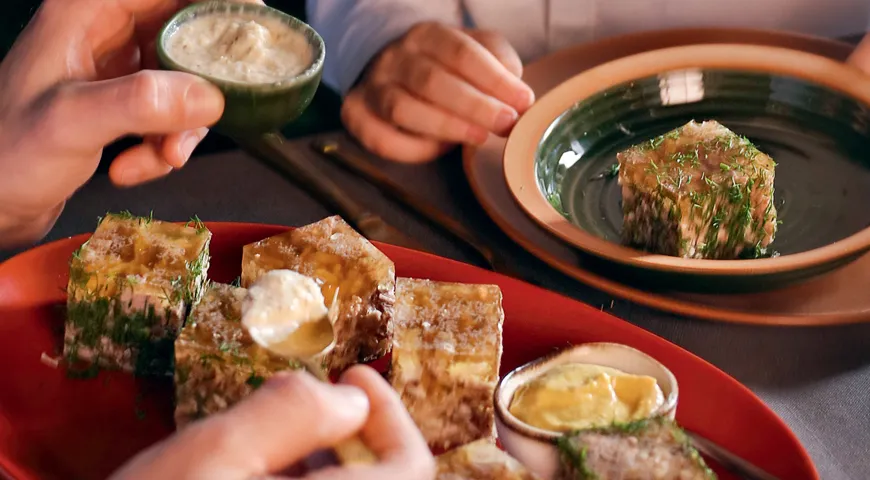
There is something profoundly comforting about a dish that has simmered for hours, coaxing deep richness from bones and sinew, and then emerges from the cold as a shimmering, jewel-like terrine. This is studen—Russia’s answer to aspic, a cold meat jelly that has graced holiday tables and family gatherings for centuries. Unlike a hasty gelatin dessert, true studen relies entirely on natural collagen from beef, turkey, and chicken. The result is a silky, savory mosaic that speaks of patience and skill. For those who love to master time-honored techniques, this three-meat version elevates the classic with layered flavor and texture.
About the Dish: A Culinary Heritage
Studen, also known as kholodets, is a cornerstone of Russian cuisine. Its origins lie in the northern tradition of preserving meat through natural gelation, a method that once required no refrigeration. Over generations, it evolved into a festive starter, often served with fiery horseradish and grainy mustard. This recipe combines three meats—beef shank, turkey drumstick, and chicken legs—to create a broth of exceptional depth. The beef provides robust gelatin, while the poultry adds delicate sweetness. It is a dish that demands time but rewards with elegance. For those new to slow-cooking, a best microwave pressure cooker can shave hours off the initial simmer, though nothing quite replicates the gentle extraction of a traditional stovetop pot.

Ingredients
- 1 whole turkey drumstick (about 1 kg)
- 4 chicken legs (drumsticks and thighs, bone-in skin-on)
- 1.5 kg beef shank (cross-cut, with marrow bone)
- 1 medium carrot (peeled)
- 2 medium onions (unpeeled, halved)
- 1 head garlic (separated into cloves, skin left on for mellow flavor)
- 1 bay leaf
- Salt to taste
- Optional: black peppercorns (about 10)
Selecting the right cuts is key. The beef shank should be rich in connective tissue—ask your butcher for slices with visible marrow. The turkey drumstick adds a subtle gamey note. If you prefer a lighter broth, substitute chicken legs with best air fryer non-toxic roasted chicken, but note that raw gives better gelatin.
Step-by-Step: Crafting the Perfect Studen
1. Initial Simmer
In a wide, deep stockpot, arrange all meats—turkey drumstick, chicken legs, and beef shank. Cover with cold water by 8–10 cm. Bring to a boil over high heat, then immediately reduce to a gentle simmer. Add salt. Skim off any foam that rises; this will keep the broth crystal clear. Do not stir briskly—avoid disturbing the settled impurities. For an even cleaner result, use a best glass food processor to create a fine mirepoix, but here we keep it rustic.
2. Aromatics and Long Cooking
Add the halved onions, carrot, bay leaf, and peppercorns. Simmer on the lowest possible heat—barely a quiver. You will cook for 8 hours total. During this time, the broth must not boil vigorously; it should lazily bubble. Every 30 minutes, top up with cold water to maintain the original level. This constant replenishment extracts maximum collagen. After 1.5 hours, remove the chicken legs. Let them cool slightly, then strip the meat from bones and skin. Return the bones and skin to the pot—they still have gelatin to give. Reserve the chicken meat separately. Similarly, after 4 hours, remove the turkey drumstick. Discard skin and bones, shred the meat.
3. Strained Perfection
After 8 hours, the broth will be rich and aromatic. Strain it through a fine-mesh sieve lined with damp cheesecloth into a clean bowl. Discard all solids except the beef shank. Pick the meat from the beef shank, discarding any sinew or cartilage. The gelatinous bits are gold—keep them. Now you have three types of shredded meat: chicken, turkey, and beef. Combine them in a large bowl.
4. Garlic and Assembly
Peel the garlic cloves and crush them with a press. Mix the garlic paste with 2 tablespoons of reserved warm broth, then drizzle over the shredded meat. This infuses the studen with a gentle pungency. Taste and adjust salt. Distribute the meat mixture evenly into serving molds—loaf pans, silicone flexi-molds, or even a single deep dish. Pour the strained broth over the meat, just covering it. Let cool to room temperature, then refrigerate for at least 4 hours, ideally overnight. As it chills, a natural gelatin matrix forms, locking in flavor.
5. Final Touch and Serving
Before unmolding, gently run a knife around the edges. Dip the mold in hot water for 10 seconds if needed. Carefully turn out onto a platter. Scrape away any surface fat that has solidified—though a thin layer is traditional and adds shine. Serve cold with horseradish and grainy mustard. Garnish with fresh dill and pickled mushrooms if desired. For perfect presentation, slice with a best 48-inch built-in refrigerator’s dedicated meat knife, but any sharp blade works.
Tips for Success
- Gelatin test: Chill a spoonful of broth before straining; it should thicken to a wobbly jelly. If not, simmer longer or add best organic vodka (a Russian trick to boost gelatin—though controversial, I prefer patience).
- Clear broth: Never let it boil after initial skimming. Use a best oil sprayer to mist water on the surface to break any foam without disturbing.
- Meat texture: Shred into bite-sized pieces, not mush. Overhandling yields pasty studen.
- Time saver: Use a best espresso machine under 2000 is unrelated, but for broth, a slow cooker works if you have 12 hours. The stovetop is best for this recipe.
Variations
Swap turkey for duck for a more decadent flavor. Add a pinch of saffron for a golden hue. For a vegetarian twist (though not traditional), use agar-agar and vegetable stock with mushrooms—but purists might scoff. For an elegant brunch, serve studen on crusty toast with a dollop of crème fraîche and caviar. And if you love infusing spirits into dishes, try a splash of best sweet wine with high alcohol content in the broth—it adds a surprising depth.
Frequently Asked Questions
Why is my studen too cloudy?
Cloudiness results from boiling too vigorously or not skimming foam promptly. Next time, maintain a bare simmer and use a best commercial countertop convection oven is for roasting, but for broth, a gentle heat is key. Clarify by straining through a fine sieve.
How long does studen keep?
Up to 5 days in the refrigerator, tightly covered. It freezes well for up to 2 months—wrap mold in plastic and foil before freezing. Thaw overnight in the fridge.
Can I use only beef or only chicken?
Yes, but the gelatin may be weaker. If using only poultry, add unflavored gelatin. For a robust beef-only studen, use oxtail and marrow bones. The best planetary mixer can help shred cooked meat efficiently.
What if my studen doesn’t set?
Reheat the broth and dissolve powdered gelatin (1 tablespoon per 500 ml). Or simmer with more collagen-rich bones. Check your water-to-meat ratio—too much water dilutes gelatin.
Can I make it in a slow cooker?
Absolutely. Cook on low for 10–12 hours. The broth will be less concentrated; reduce by simmering uncovered for 30 minutes after straining. A best undercounter ice maker machine won't help here, but a thermometer ensures the slow cooker stays below 82°C.
How do I remove fat easily?
Chill the strained broth for 1 hour, then lift off the solid fat layer with a spatula. Alternatively, use a best wheatgrass juicer for juicing, not fat separation—stick to chilling.
What do Russians traditionally eat with studen?
Horseradish, mustard, pickles, rye bread, and a shot of best organic vodka—the cold jelly and fiery condiment are a perfect match.
Three-meat studen is a labor of love that transforms humble cuts into a centerpiece. Whether for a festive New Year’s table or a Sunday project, this aspic rewards patience with every wobbly, savory bite. Pair it with crunchy radishes and sour cream, and savor a taste of Slavic tradition.







