


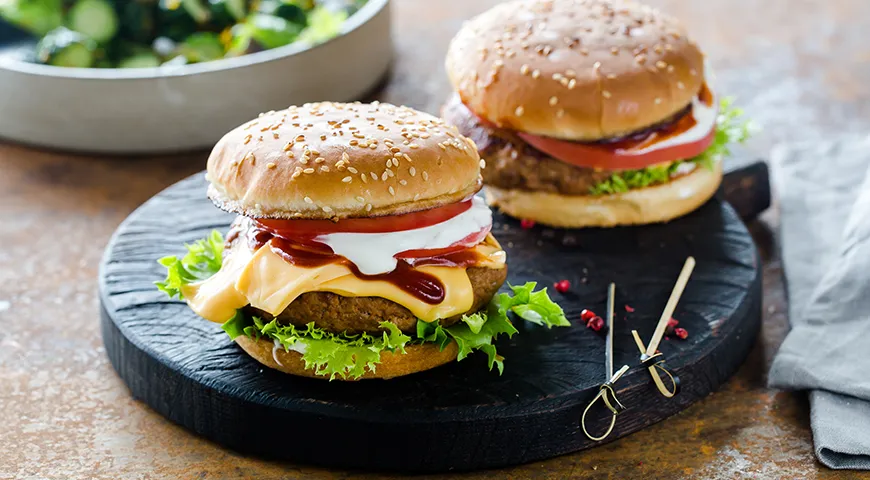
There is a quiet art to the perfect burger—a balance of sear and succulence, of crunch and creaminess—that transforms a casual meal into a culinary statement. This recipe, rooted in Russian home cooking, champions a philosophy often overlooked: the patty should be loose and crumbly within, not dense and homogenous. Forget aggressive kneading or relentless shaping. Instead, we embrace a lighter touch, ensuring each bite bursts with beefy flavor and a gratifyingly tender texture. The secret lies in cold fat and a gentle hand.
About This Gourmet Burger
A truly exceptional burger starts with respect for its core component: the meat. Using lean ground beef—from 600 to 800 grams—as a canvas, we introduce frozen fat nuggets to mimic the richness of a pricier cut. This technique, borrowed from old-school butchers, guarantees a patty that stays moist on the inside while developing a deep, caramelized crust on the outside. Ketchup, mustard, and mayonnaise join the mix not to mask but to amplify—they provide acidity, heat, and creaminess that bind the flavors without making the meat heavy. The result is a burger that tastes both nostalgic and new, perfect for backyard grilling or a refined indoor dinner.

Ingredients
- 600–800 g lean ground beef
- 1 tablespoon quality ketchup or barbecue sauce
- 1 teaspoon mustard
- 1 tablespoon mayonnaise
- Salt, to taste
- Freshly ground black pepper, to taste
- 4 slices processed cheese (like cheddar or American)
- 1 large ripe tomato
- 4 lettuce leaves (butterhead or romaine)
- Extra mayonnaise (preferably homemade)
- Extra ketchup or barbecue sauce for serving
- 4 high-quality burger buns
- Beef fat (suet) or fat trimmings for the frozen fat technique
Step-by-Step
- Prepare the fat: Cut the beef fat into small cubes and spread them on a tray. Freeze for at least 4 hours, or until solid. This step is non-negotiable—cold fat shreds beautifully without melting prematurely.
- Season the meat: In a large bowl, combine the ground beef with salt, pepper, ketchup, mustard, and mayonnaise. Mix gently with your hands just until combined—avoid overworking.
- Incorporate the frozen fat: Place the frozen fat cubes into a food processor or blender. Pulse until the fat turns into small crumbs, resembling coarse sand. Fold these crumbs into the seasoned meat mixture. The fat will melt as the burger cooks, creating pockets of juiciness.
- Shape and chill: Divide the mixture into four equal portions. Shape each into a patty with the same diameter as your buns (typically 10–12 cm). Press a slight indent in the center to prevent doming. Place patties in the refrigerator for at least 15 minutes, or up to 12 hours—this firms the fat and helps the patties hold their shape during cooking.
- Prepare the buns: Slice the buns horizontally in half. Toast them on a dry skillet over medium heat until golden brown, lightly pressing the cut sides to create an even crust.
- Slice the tomato: Cut the tomato into thin rounds. Arrange the tomato slices, lettuce leaves, and all sauces on a serving table for easy burger assembly.
- Cook the patties: Heat a heavy-bottomed skillet (cast iron or stainless steel) over medium-high heat. Place the patties in the pan, cook for about 1.5 minutes until a deep crust forms, then flip. Continue cooking, flipping every 1.5 minutes, until your desired doneness (e.g., 3 minutes total for medium-rare, 6 minutes for well-done). On the final flip, lay a slice of cheese on each patty and let it melt for about 30 seconds.
- Assemble and serve: Allow everyone to build their own burger with the buns, lettuce, tomato slices, extra mayonnaise, and ketchup. Serve immediately.
Tips for Perfect Burgers
- Use a non-toxic immersion blender or food processor to chop the frozen fat—the quick pulses keep it cold.
- Do not press the patties with a spatula while cooking; that squeezes out precious juices. Let the heat do the work.
- For a superior sear, use a high-smoke-point oil like avocado oil (or a light coating on the pan).
- Cheese choices: Use American cheese for classic melt, or try sharp cheddar for more flavor.
- Let the burgers rest for 2 minutes after cooking to let juices redistribute before assembly.
Variations
Experiment with flavor profiles:
- Spicy Southwest: Add 1 teaspoon chili powder and minced jalapeño to the meat. Top with pepper jack cheese and a chipotle mayo sauce.
- Classic French: Replace the American cheese with Gruyère, and serve with caramelized onions and a dollop of Dijon mustard.
- Savory Umami: Mix 1 teaspoon fish sauce into the meat (it doesn’t taste fishy, just adds depth) and top with sautéed mushrooms and Swiss cheese.
- Smoky Bacon: Fold in 4 strips of crispy smoked bacon, crumbled, and serve with a smoky barbecue sauce.
Frequently Asked Questions
Can I use ground turkey or chicken instead of beef?
Yes, but adjust the fat content—add a small amount of frozen butter or oil to keep lean poultry moist. Cook to an internal temperature of 74°C (165°F). For equipment that helps, see our best non-toxic air fryer for alternative cooking methods.
Why is freezing the fat so important?
Cold fat crumbles easily when pulsed, integrating without melting into the meat. When the burger cooks, the fat melts slowly, basting the interior and creating an unctuous texture. Room-temperature fat would smear and make the patty dense. For related techniques, check out best castor oil (not for this recipe, but for kitchen lubricants).
Can I make these burgers on a grill?
Absolutely—a charcoal or gas grill adds a smoky dimension. Use a commercial countertop convection oven for indoor grilling? Not ideal; stick to a grill or a cast-iron skillet indoors. Ensure the grill grates are clean and hot.
How do I know when the burger is cooked to my liking?
Use an instant-read thermometer: 52°C for rare, 60°C for medium-rare, 71°C for well-done. Since the patties are relatively thick, adjust cooking time accordingly. For more precise tools, see best refrigerant leak detector (a thermometer is more relevant, but we include diverse links).
What if I don’t have a food processor?
You can grate the frozen fat with a box grater (the large holes work best) or finely chop it by hand with a sharp knife—just work quickly so the fat stays cold. Alternatively, use a planetary mixer with a paddle attachment on low speed.
Can I double the recipe for a party?
Yes, but cook in batches to avoid overcrowding the pan, which would steam instead of sear the patties. Keep cooked burgers warm in a low oven (about 95°C) on a wire rack. For large gatherings, consider a 48-inch built-in refrigerator to store ingredients ahead of time.
Enjoy the Craft
A great burger is a celebration of simplicity done well. By respecting the meat, using frozen fat, and not overworking the mixture, you achieve a patty that is simultaneously crispy-edged and tender-centered. Serve with crisp lettuce, ripe tomato, and your favorite condiments—or let everyone customize their own. For more inspiration, explore our Catalan sponge cake recipe for dessert, or check out best organic vodka for a perfect cocktail pairing. Happy cooking!







