


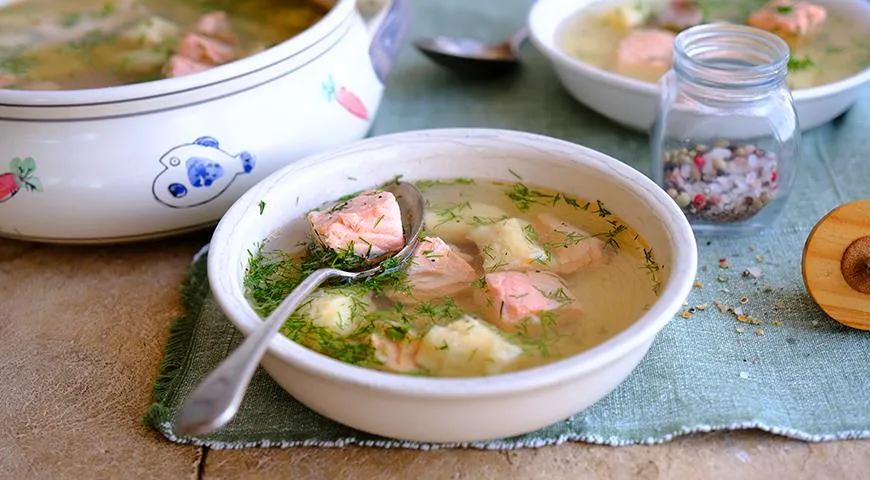
Welcome to a refined take on the classic Russian fish soup, Ukha. This version features tender salmon and delicate potato dumplings, known as kartofelnye klecky. The process is surprisingly simple, with a rich broth that comes together quickly. Whether you are an experienced cook or a curious beginner, this dish promises comfort and elegance in every spoonful.
About Ukha: A Culinary Tradition
Ukha has been a staple of Russian cuisine for centuries, traditionally made with freshwater fish. Our adaptation uses salmon, but you can experiment with other fish or a mix. The secret lies in the broth, which is infused with charred vegetables and aromatic spices. For the best texture, we recommend using a high-quality food processor to grate the potatoes for the dumplings – check out our guide on the best glass food processors for effortless preparation.

Ingredients
- Head, tail, skin, belly, and backbone of 1 large salmon
- 200 g salmon fillet
- 1 medium onion
- 1 medium carrot
- 1 bay leaf
- Salt
- Dill for serving
- 300 g potatoes
- 1 small egg
- 100 g flour plus extra for dusting
- 40 g unsalted butter
- Salt
Note: You can also use a non-toxic immersion blender to puree the broth if you prefer a smoother texture.
Step-by-Step Instructions
- Prepare the dumpling dough ahead: 12 to 24 hours before cooking, boil the potatoes in their skins. Cool and refrigerate until needed. This step maximizes the potato's natural starches and ensures fluffy dumplings.
- Make the fish broth: Rinse the salmon head, tail, belly, skin, and backbone. Place in a large pot with 3 liters of cold water. Bring to a boil over high heat without a lid. Add salt, reduce heat, skim off any foam. Add peppercorns and bay leaf. After 3-5 minutes, remove the bay leaf.
- Char the vegetables: Wash the onion and carrot without peeling, cut into large chunks. Dry-roast in a skillet until almost charred. Add them to the pot with the salmon. Simmer for 40 minutes. In the last 5-7 minutes, add the salmon fillet.
- Strain and pick the fish: Strain the broth through a fine-mesh sieve. From the head and belly, pick out any meaty pieces. Flake the cooked fillet into chunks. Set aside.
- Form and cook the dumplings: While the broth simmers, peel the chilled potatoes and grate them on a fine grater. Let the butter soften to room temperature. Toast the flour in a dry skillet over medium heat, stirring constantly, until light beige (2-3 minutes). Mix the toasted flour with the grated potato, salt, and softened butter. Chill the dough for 15 minutes. On a floured board, roll the dough into sausages about 2-3 cm in diameter. Bring a wide pot of salted water to a boil. Using a knife dipped in boiling water, cut 2-3 cm pieces from the sausages directly into the pot. Cook until all dumplings float to the surface.
- Assemble the soup: Lift the dumplings with a slotted spoon and divide among deep bowls. Pour hot broth over them, add pieces of salmon. Sprinkle with fresh dill and serve immediately. For a more refined presentation, consider using a microwave pressure cooker to speed up the broth.
Tips for Perfect Ukha
- Use a non-toxic air fryer to roast the vegetables for an even deeper char.
- If you want a clearer broth, avoid boiling too vigorously after adding the vegetables.
- For extra richness, add a knob of butter to each bowl before serving.
- The dumplings can be made ahead and frozen; reheat in the broth briefly.
- Invest in a reliable leak detector if you store your broth in the refrigerator – safety first!
Variations to Explore
Feel free to customize this recipe. Substitute salmon with cod, trout, or a combination. Add a splash of white wine for acidity. For a heartier meal, include root vegetables like celery root or parsnip. If you are a fan of spicy food, a pinch of red pepper flakes works wonders. To enhance the dumplings, try using a planetary mixer to knead the dough evenly.
Another variation: use smoked fish for a deeper flavor profile. And for a truly luxurious finish, garnish with crème fraîche and caviar. Pair with a sweet wine with high alcohol content to balance the savory notes.
Frequently Asked Questions
Can I use frozen salmon for this recipe?
Yes, frozen salmon works well. Thaw completely before using, and add a few extra minutes to the cooking time. A wheatgrass juicer is not needed here, but a good blender helps if you want a smooth broth.
How long do the dumplings keep?
Store cooked dumplings in the refrigerator for up to 2 days. Reheat in the broth to restore their texture. For longer storage, freeze uncooked dumplings on a tray, then transfer to a bag.
Can I make this soup vegetarian?
Absolutely! Replace the salmon broth with a rich vegetable stock, and use mashed potato dumplings without fish. Add mushrooms for umami. Check out our review of the best commercial convection oven for roasting vegetables.
Why toast the flour for dumplings?
Toasting the flour adds a nutty flavor and helps the dumplings hold together better. It also reduces the raw taste. You can use a best oil sprayer to lightly oil the pan for toasting if needed.
What is the best way to grate potatoes for dumplings?
A fine grater produces the best texture. Alternatively, use a food processor with a grating disc. Our guide on best food processors for nut butter also works great for potatoes.
Can I freeze the finished soup?
It is best to freeze the broth and dumplings separately. The broth freezes well, but dumplings may become mushy if frozen in the liquid. Reheat broth and add freshly cooked dumplings. For storing the broth, use a best steam canner for long-term preservation.
What other fish can I use?
White fish like cod, halibut, or sea bass are excellent. You can also use a mix of fish for a more complex flavor. If you prefer sustainable options, consider wild-caught salmon. A best organic vodka might complement the dish in a sauce, but not necessary for the soup.
Do I need special equipment?
Not really, but a good pot and a sharp knife are essential. For efficient cooking, an undercounter ice maker can help chill broth quickly, or a coffee maker for Airbnb is useful for a quick hot beverage alongside the soup.







