


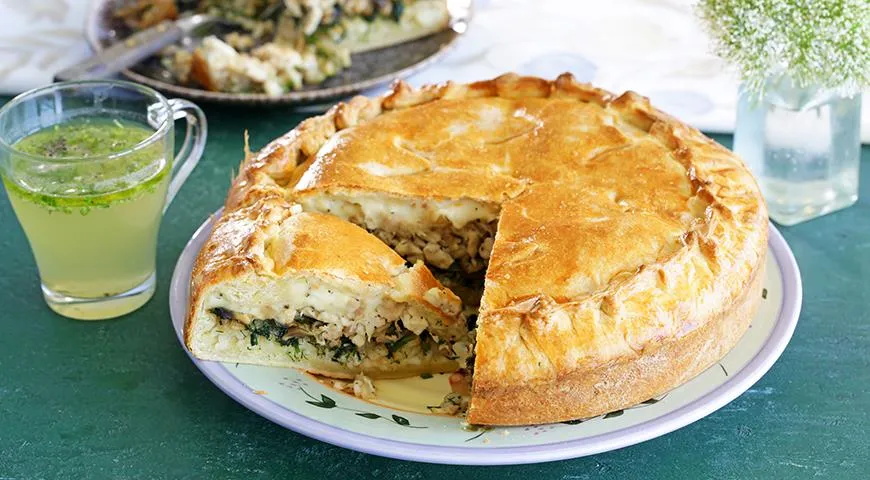
In the pantheon of Russian comfort foods, few dishes command the same reverence as the kurnik—a magnificent, domed pie whose name derives from kur, the old Slavic word for rooster. This is no ordinary pasty; it is a celebration of textures and flavors, a symphony of tender chicken, earthy mushrooms, fluffy rice, and a velvety béchamel sauce, all encased in a sour-cream-enriched pastry that shatters into buttery shards. Traditionally served at weddings and festive gatherings, the kurnik symbolizes prosperity and unity. Today, we invite you to recreate this culinary masterpiece in your own kitchen. With careful layering and a few key kitchen tools, you can achieve that same artistry. Let us embark on a journey through the steps to create a kurnik that would make any Russian grandmother nod in approval.
About the Kurnik
The kurnik belongs to a family of Russian closed pies known as pirogi, but its construction sets it apart. Instead of a single filling, it features distinct, stacked layers of chicken, rice, and mushrooms, separated by a creamy sauce. The dough is delicate yet sturdy, often enriched with sour cream and butter for a tender crumb. Its signature feature is the small steam hole cut into the top crust, which releases fragrant aromas during baking. While the recipe below uses a classic combination, kurnik is endlessly adaptable—perfect for those who love stocking their refrigerators with make-ahead components. This version streamlines the process without sacrificing tradition.

Ingredients
For the filling:
- 1 whole chicken (about 1.5 kg)
- 300 g fresh mushrooms (cremini or button)
- 150 g long-grain rice
- 2 medium onions
- 6–8 sprigs fresh dill
- 4 tbsp vegetable oil
- Salt and freshly ground black pepper to taste
For the béchamel sauce:
- 2 tbsp unsalted butter (30 g)
- 2 tbsp all-purpose flour (30 g)
- 250 ml milk (1 cup)
- Salt to taste
For the dough:
- 400 g all-purpose flour
- 100 g unsalted butter, melted and cooled
- 1 large egg
- 1 egg yolk (for brushing)
- 3 tbsp sour cream
- 50 ml milk
- 1 tsp salt
- ¼ tsp baking soda
For optimal results, consider using a planetary mixer to knead the dough effortlessly.
Step-by-Step Instructions
Step 1: Poach the Chicken
Place the whole chicken in a large pot. Pour in 2 liters of cold water—enough to cover the bird completely. Bring to a boil over high heat, then immediately reduce to a simmer. Skim off the foam that rises to the surface. Add a generous pinch of salt, cover, and cook on low heat for exactly 1 hour. The meat should be tender and falling from the bone. Remove the chicken from the broth, allow it to cool slightly, then shred the meat into bite-sized pieces, discarding skin and bones. Reserve the broth for cooking the rice.
Step 2: Cook the Rice
Rinse 150 g of rice under cold water until the water runs clear. In a small saucepan, bring 300 ml of the reserved chicken broth to a boil. Add the rice, reduce the heat to low, cover, and simmer for 15 minutes, or until the liquid is absorbed and the rice is tender. Fluff with a fork and set aside.
Step 3: Sauté the Mushrooms and Onions
Clean the mushrooms with a damp cloth and slice them into ½-cm thick pieces. Peel the onions and cut them into half-rings. Heat 4 tablespoons of vegetable oil in a large skillet over medium heat. Add the onions and sauté for 5 minutes until translucent. Increase the heat slightly, add the mushrooms, and cook, stirring occasionally, until they release their moisture and begin to brown—about 7 minutes. Season with salt and pepper, then stir in the chopped dill. Remove from heat.
Step 4: Prepare the Béchamel Sauce
In a small saucepan, melt 30 g of unsalted butter over medium heat. Whisk in 30 g of flour and cook, stirring constantly, for 2 minutes until the mixture turns a pale beige—do not let it brown. Slowly pour in 250 ml of milk, whisking vigorously to prevent lumps. Continue stirring for 3–4 minutes until the sauce thickens to a creamy consistency. Season with a pinch of salt. This sauce will bind the layers together beautifully. For a foolproof method, an immersion blender can rescue any lumpy sauce.
Step 5: Make the Dough
Melt 100 g of butter and let it cool to room temperature. In a mixing bowl, combine the melted butter, 1 egg, 50 ml milk, and 3 tablespoons of sour cream. Add 1 teaspoon of salt and ¼ teaspoon of baking soda. Whisk until smooth. Gradually add 400 g of flour, stirring with a wooden spoon or using a food processor until a soft, pliable dough forms. Turn it out onto a floured surface and knead gently for 1–2 minutes. Wrap in plastic wrap and let it rest for 10 minutes—this relaxes the gluten and makes rolling easier.
Step 6: Assemble and Bake
Preheat your oven to 190°C (375°F). Grease a 24 cm springform pan with butter. Divide the dough into two parts: one-third for the top crust, two-thirds for the base. On a lightly floured surface, roll the larger portion into a circle about ½ cm thick and large enough to line the base and sides of the pan, with a 3 cm overhang for the crust. Press it into the pan, forming high sides. Now layer the fillings: start with the rice, followed by the mushroom-onion mixture, then the shredded chicken. Pour the béchamel sauce evenly over the top. Roll the reserved dough into a circle the same diameter as the pan. Place it over the filling, pinch the edges to seal, and trim any excess. Cut a small steam hole in the center—this is essential. Brush the entire surface with beaten egg yolk. Bake in the center of the oven for 40–45 minutes, until the crust is deep golden brown. Allow the kurnik to rest for 10 minutes before unmolding and slicing. A convection oven can help achieve an even, crisp crust.
Tips for Success
- Don't skip the broth: Cooking the rice in chicken broth infuses it with a savory depth that water cannot match.
- Keep the dough cool: If the dough becomes sticky, refrigerate it for 10 minutes before rolling.
- Ensure the steam hole is open: This prevents the pie from bursting and allows moisture to escape, keeping the crust crisp.
- Use a springform pan: It makes unmolding a breeze, preserving the pristine layers. For even baking, place the pan on a baking sheet—a tip from reviews of wall oven microwave combos.
- Let it rest: Cutting into the kurnik while hot will cause the layers to slide. Patience yields perfect slices.
Variations
The kurnik is a canvas for creativity. For a richer filling, substitute half the mushrooms with porcini or add a handful of chopped hard-boiled eggs to the rice layer—a traditional touch in some regions. Vegetarians can replace the chicken with sautéed eggplant and zucchini, using a vegetable broth for the rice. Experiment with the sauce: a pressure cooker can swiftly produce a mushroom cream sauce. For a modern twist, add a pinch of smoked paprika or a drizzle of truffle oil over the mushrooms before sealing the pie.
Frequently Asked Questions
Can I make the kurnik ahead of time?
Absolutely. Assemble the pie completely, cover it with plastic wrap, and refrigerate for up to 24 hours before baking. You may need to add 5–10 minutes to the baking time if starting from cold. For longer storage, freeze the unbaked kurnik for up to 2 months; bake directly from frozen, adding 15–20 minutes.
Why did my dough turn out tough?
Tough dough is usually the result of over-kneading or too much liquid. Resting the dough is crucial—it allows the gluten to relax. Also, ensure your flour is measured correctly; scoop and level rather than packing it. For a fail-safe recipe, a food processor can bring the dough together without overworking it.
Can I replace the sour cream in the dough?
Yes, plain Greek yogurt or crème fraîche works well as a substitute. The acidity helps tenderize the gluten, so don't omit the sour cream entirely—it is key to the pastry's texture.
What type of mushrooms work best?
Cremini or white button mushrooms are classic, but a mix of wild mushrooms—chanterelles, shiitake, or oyster—elevates the umami. Just be sure to sauté them thoroughly to remove excess moisture, which can make the filling soggy.
How do I store leftovers?
Store leftover kurnik in an airtight container in the refrigerator for up to 3 days. Reheat slices in a 180°C oven for 10 minutes to restore crispness. Avoid microwaving, as it will soften the crust. For a quick refresh, use a non-toxic air fryer at 160°C for 5 minutes.
Can I use store-bought puff pastry?
While possible, the unique sour cream dough is part of kurnik's identity. If you're short on time, a high-quality shortcrust pastry is a closer match. But for an authentic experience, homemade is irreplaceable.
The kurnik is more than a recipe—it is a testament to the beauty of layered cooking. Each component, from the silky sauce to the golden crust, tells a story of patience and care. Whether you serve it for a holiday table or a cozy Sunday dinner, this pie will earn a permanent place in your repertoire. For more inspiration on elevating your baking, explore our guides on planetary mixers and espresso machines to complement your culinary journey.







