


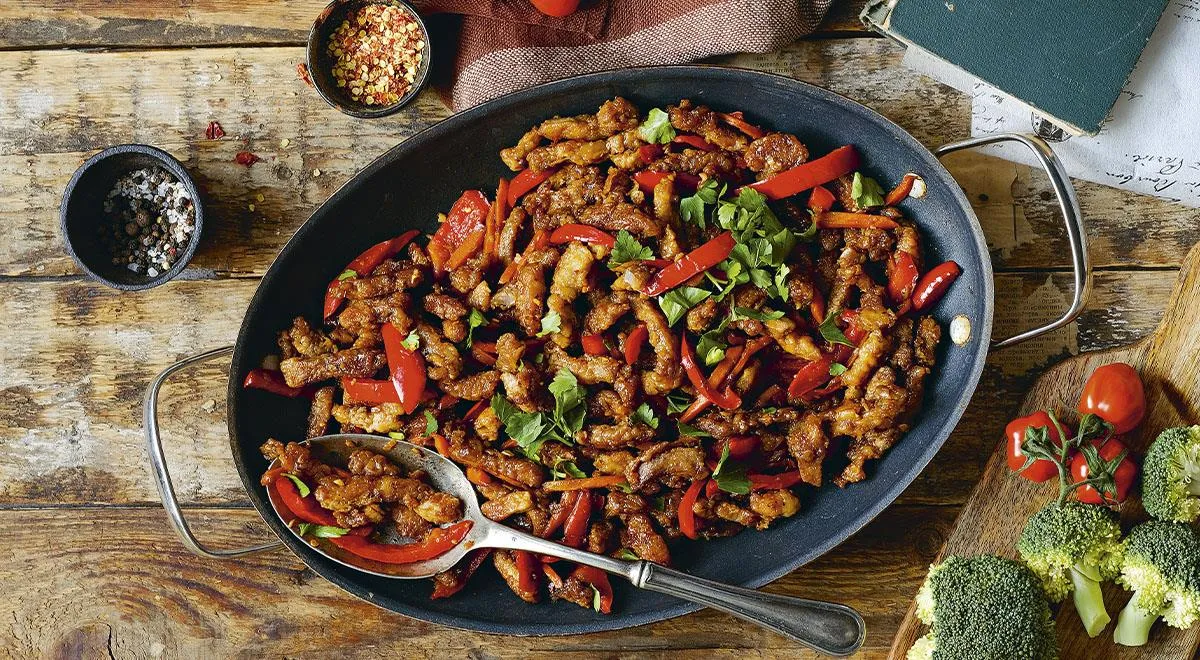
This bold and savory Korean-style meat dish brings together tender strips of pork, vibrant bell peppers, and carrots in a glossy, slightly sweet soy glaze. Perfect for a quick weeknight dinner or an impressive weekend feast, the recipe balances umami richness with a hint of citrus and a gentle heat from fresh garlic. Serve it over steamed rice or with crispy French fries for a satisfying meal.
About This Dish
Inspired by Korean barbecue techniques, this stir-fry uses a coating of cornstarch to create a delicate, crispy exterior on the pork before it's simmered in a luscious sauce. The combination of fresh vegetables and aromatic cilantro adds freshness and crunch. For the best results, use a high-quality glass food processor to quickly julienne the carrots and peppers, ensuring even cooking and a professional presentation.

Ingredients
- 1 kg pork shoulder (preferably neck portion)
- 2 red bell peppers
- 1 medium carrot
- 4 cloves garlic, minced
- 3–4 sprigs fresh cilantro
- 150 ml soy sauce
- 120 ml vegetable oil
- 100 g cornstarch
- Juice of half a lemon
- 2–3 tbsp sugar
Step-by-Step Instructions
- Prepare the meat and vegetables: Pat the pork dry with paper towels, then slice across the grain into 1 cm thick pieces. Cut each piece into long, thin strips. Halve the bell peppers lengthwise, remove seeds and membranes, then slice into thin strips. Peel and julienne the carrot into matchsticks. Mince the garlic.
- Coat the pork: Place the cornstarch in a bowl and toss the pork strips until evenly coated. This step creates a light crust when fried.
- Fry the pork: Heat the vegetable oil in a deep skillet or wok over medium heat. Working in small batches to avoid overcrowding, fry the pork strips for 5–6 minutes, stirring occasionally, until golden brown and crisp. Transfer to a plate and repeat with remaining meat.
- Sauté the vegetables: In the same skillet, add the bell pepper and carrot strips. Cook for 5 minutes, stirring constantly, until tender-crisp.
- Combine and simmer: Return the fried pork to the skillet. Add the minced garlic, sugar, soy sauce, and lemon juice. Reduce the heat to low, cover, and simmer for 8–10 minutes, allowing the flavors to meld and the sauce to thicken slightly.
- Finish and serve: Sprinkle with chopped fresh cilantro. Serve immediately with steamed rice or French fries.
Tips for Perfect Korean-Style Meat
For even cooking, ensure the pork strips are uniform in thickness. A planetary mixer can be used to toss the meat with cornstarch for a consistent coating, though a simple bowl and hands work fine. To avoid soggy results, fry in batches—overcrowding the pan drops the oil temperature. For a healthier alternative, try using an non-toxic air fryer to crisp the pork with minimal oil. If you prefer a deeper char, a commercial countertop convection oven can finish the meat beautifully. Always let the meat rest briefly before slicing to retain juices.
Variations
Substitute pork with chicken or beef for a different protein profile. Add a teaspoon of gochujang (Korean chili paste) for extra heat. For a vegetarian version, use firm tofu and mushrooms. The sauce can be thickened further by adding a slurry of cornstarch and water. Pair the dish with a chilled sweet wine with high alcohol content for a delightful contrast. For a complete Korean-inspired meal, serve with kimchi and a side of chocolate-covered raisins as a playful dessert.
Frequently Asked Questions
Can I prepare this dish in advance?
Yes, you can prep the vegetables and coat the pork up to 24 hours ahead. Store them separately in the refrigerator. For best texture, cook just before serving. Use a microwave pressure cooker to quickly reheat leftovers without drying them out.
What is the best oil for frying?
Use a neutral oil with a high smoke point, such as vegetable or canola oil. An oil sprayer helps apply a thin, even layer if you decide to use less oil for air frying or pan-searing.
Can I make this dish gluten-free?
Absolutely. Substitute soy sauce with tamari or coconut aminos. Ensure the cornstarch is gluten-free (most are). Check other ingredients for hidden gluten. A non-toxic immersion blender can be used to make a quick homemade gluten-free soy sauce alternative by blending coconut aminos with garlic and ginger.
How do I store leftovers?
Cool completely, then transfer to an airtight container. Refrigerate for up to 3 days. For longer storage, freeze in a sealed bag. A 48-inch built-in refrigerator offers ample space for meal prep storage.
What is the ideal side dish?
Steamed jasmine rice or air-fryer French fries are classic choices. For a low-carb option, serve over cauliflower rice. Add a crisp cucumber salad for freshness.
Can I use a different meat?
Yes, chicken thighs or beef sirloin work well. Adjust cooking times accordingly. For a tender result, slice against the grain and marinate briefly.
How do I get the perfect glossy sauce?
The combination of cornstarch coating and simmering creates a natural glaze. For extra shine, add a teaspoon of sesame oil or a splash of mirin. An undercounter ice maker provides ice water for quick chilling if you want to stop cooking at the perfect moment.
What drink pairs well with this dish?
A crisp lager or a dry Riesling complements the savory-sweet flavors. For a spirited option, try a cocktail made with organic vodka and fresh lime. Finish the meal with an espresso machine under $2000 to brew a rich espresso, or use George Howell coffee for a specialty roast.
This Korean-style meat recipe is versatile, quick, and packed with flavor. Whether you're a seasoned cook or a beginner, the step-by-step guidance ensures success. Experiment with the variations and enjoy a restaurant-quality dish at home.







