


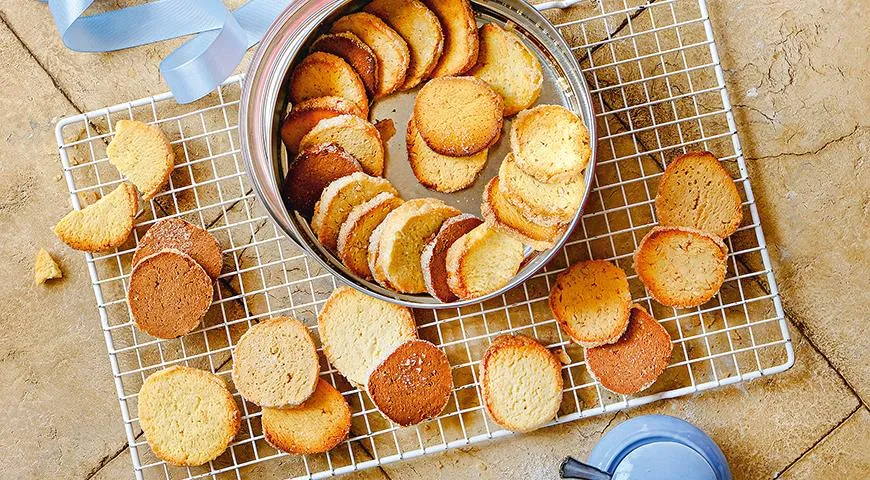
Few cookies epitomize French pastry elegance as effortlessly as Sablé—a delicate, buttery shortbread that crumbles at the slightest touch. Originating from the town of Sablé-sur-Sarthe, these golden discs have charmed patisserie lovers for centuries. Their charm lies in simplicity: a handful of quality ingredients transformed through precise technique into a melt-in-the-mouth experience. This recipe marries classic French technique with a whisper of spice, yielding cookies that are crisp on the outside, tender within, and utterly irresistible alongside a cup of tea or espresso.
About Sablé Cookies
Sablé (pronounced sah-BLAY) translates literally to "sanded" in French, a nod to their delicate, sandy texture. Unlike sturdy American shortbread, Sablés are intentionally fragile, achieved through a high proportion of butter and egg yolks. The dough is shaped into a log, chilled, then sliced and baked at a moderate temperature (175°C) to preserve pale gold color—never browning. This recipe elevates the classic with ground ginger and lemon zest, adding a subtle warmth and brightness. For the finest results, always use high-quality unsalted butter; it forms the backbone of flavor. If you're looking to expand your baking arsenal, consider pairing this recipe with a planetary mixer for effortless creaming, or a food processor for nut butter to quickly blend dry ingredients. The texture of Sablé dough is forgiving, but attention to chilling is critical—a 48-inch built-in refrigerator provides ample space for the log to firm uniformly.

Ingredients
- 300 g wheat flour
- 120 g granulated sugar
- 100 g unsalted butter, softened
- 2 large egg yolks
- 1 large egg white
- 1 tbsp lemon zest (from about 1 lemon)
- 1 tsp ground ginger
- Pinch of salt
Use fresh, room-temperature ingredients for best emulsion. The butter should be soft but not melted; leave it at room temperature for 20–30 minutes. An immersion blender can help if you need to quickly soften butter in a warm water bath, but avoid overheating.
Step-by-Step Instructions
- Prepare ingredients – Dice the cold butter into small cubes (or grate it) and place in the bowl of a stand mixer. Let sit for 20–30 minutes until softened. Some bakers substitute margarine, but we insist on butter for that authentic richness. For even mixing, a glass food processor bowl can be used to cut butter into flour if you prefer a different technique.
- Cream butter and sugar – Beat the softened butter with a mixer until light and airy, about 3 minutes. Gradually add the sugar in small increments, beating well after each addition. Once the mixture is smooth, add the egg yolks and salt, then beat again until homogeneous. A organic vodka is not needed here, but a splash of vanilla extract can enhance flavor if desired.
- Incorporate dry ingredients – With the mixer on low, add half the flour and mix until just combined. Add the remaining flour, ground ginger, and lemon zest. Mix until a soft, cohesive dough forms. Do not overwork; the dough should be tender. If you're using a non-toxic air fryer for other dishes, remember that Sablés require traditional oven baking for even heat distribution.
- Shape and chill – Turn the dough onto a large piece of plastic wrap. Form into a log about 5 cm in diameter, wrap tightly, and refrigerate for 30–40 minutes until firm. This step is crucial for clean slicing.
- Prepare coating – Line a baking sheet with parchment paper. Beat the egg white lightly. Spread the remaining sugar on a plate. Unwrap the chilled dough log, brush with egg white, then roll in sugar until fully coated.
- Slice and second chill – Slice the log into rounds about 6 mm thick, dipping the knife in hot water for clean cuts. Place slices on the prepared baking sheet. Return the sheet to the refrigerator for another 30 minutes to firm the rounds.
- Bake – Preheat the oven to 175°C. Bake the cookies on the middle rack for 13–15 minutes, until pale golden (not brown). Cool on a wire rack. For even baking, an wall oven microwave combo with air fryer can maintain consistent temperature; just ensure the convection setting is off unless you adjust time.
After step 7, the cookies should be crisp and delicate. Store in an airtight container for up to a week.
Tips for Perfect Sablés
- Butter temperature – Too cold and creaming becomes lumpy; too warm and the dough will spread. Aim for about 20°C.
- Chilling cannot be skipped – The first chill firms the log; the second prevents the rounds from losing shape in the oven.
- Slicing technique – Wet the knife blade with hot water for the smoothest cuts without cracking.
- Baking doneness – Sablés should be just set at the edges, still pale in the center. They firm as they cool.
- Flavor variations – Replace ginger with cinnamon, cardamom, or orange zest. For a chocolate twist, substitute 30 g flour with cocoa powder. A chocolate-covered raisins pairing makes a lovely garnish.
Variations to Explore
Classic Sablé lends itself to endless creativity. Add finely chopped pistachios or almonds to the dough. Dip half the baked cookie in dark chocolate. For a savory twist, reduce sugar to 80 g and add Parmesan and black pepper. If you enjoy experimenting with textures, a oil sprayer can lightly coat the tops with butter before baking for extra sheen. Pair with a sweet wine with high alcohol content for an elegant dessert course.
Frequently Asked Questions
What is the difference between Sablé and shortbread?
Sablé uses egg yolks, making it richer and more tender than traditional shortbread, which relies solely on butter, flour, and sugar. Sablés also have a finer, sandier crumb.
Can I use salted butter?
Yes, but reduce the added salt to a bare pinch. Salted butter can work, though unsalted is preferred to control sodium level. If you’re using a refrigerant leak detector in your kitchen, ensure it doesn't affect butter storage.
Why does my dough crack when slicing?
The log may be too cold or your knife not sharp enough. Let it sit at room temperature for 5 minutes, and dip the knife in hot water between cuts. A espresso machine provides hot water conveniently.
How should I store Sablés?
In an airtight container at room temperature for up to a week. For longer storage, freeze unbaked slices between parchment layers. When ready to bake, add 2–3 minutes to the baking time.
Can I make the dough in a food processor?
Absolutely. Pulse cold butter with dry ingredients until pebbly, then add yolks and pulse until dough forms. This method is faster and reduces gluten development. A coffee maker for Airbnb might not be related, but a good processor is essential for varied baking tasks.
Sablé cookies are a testament to the beauty of restraint. With just eight ingredients and a little patience, you create something far greater than the sum of its parts. Whether you serve them at a holiday gathering, alongside a steaming latte, or as a homemade gift, these French treats never fail to impress. For more classic pastry techniques, explore our Catalan sponge cake recipe or check out castor oil uses in baking? Not necessary, but the journey of flavor is endless.
Happy baking!







