


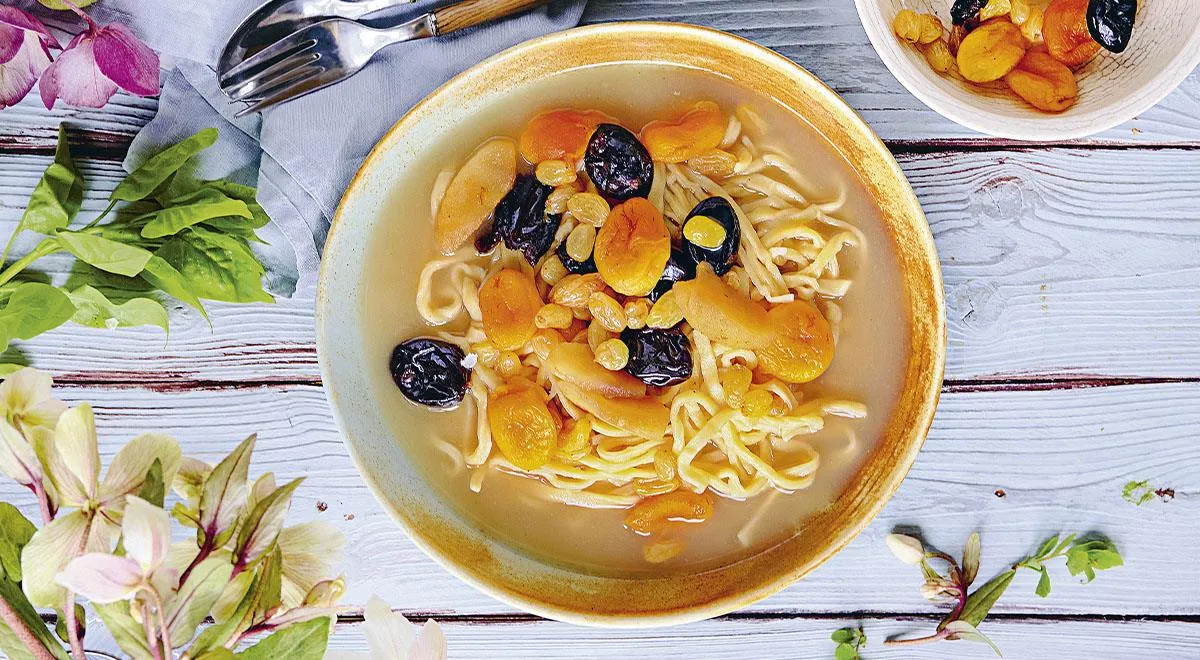
In the heart of Russian culinary tradition lies a sweet, comforting soup that bridges the gap between dessert and main course: dried fruit soup with homemade noodles. Known as sup iz sukhofruktov s domashney lapshoy, this dish transforms simple pantry staples into a fragrant, soul-warming bowl of nostalgia. The combination of tender, freshly rolled noodles swimming in a spiced compote of prunes, apricots, and raisins creates a harmony of textures and flavors—tangy, sweet, and subtly savory. Whether served hot on a frosty afternoon or chilled as a summer refreshment, this recipe captures the essence of homemade warmth. Let us guide you through crafting this elegant soup from scratch, using techniques that bring out the best in every ingredient.
About the Recipe
This traditional soup is a beloved part of Russian home cooking, often prepared during harvest season when dried fruits are abundant. The star is the homemade lapsha—a delicate egg noodle that soaks up the aromatic broth without becoming mushy. Unlike Western fruit soups that are often pureed, this version keeps the fruits whole, offering delightful bursts of flavor in every spoonful. The use of high-quality dried fruits is paramount; we recommend sourcing organic varieties for the deepest taste. For those new to noodle-making, the process is forgiving and rewarding. The dough comes together with just flour, egg, salt, and water, and rolling it thin requires only a planetary mixer (or your hands) and a little patience. The result is a soup that is both nourishing and elegant, perfect for impressing guests or comforting family.

Ingredients
- 200 g all-purpose flour (plus extra for dusting)
- 1 large egg
- ½ teaspoon salt
- 3–4 tablespoons water
- 300 g mixed dried fruits (prunes, dried apricots, raisins, dried apples)
- 1 liter water
- 4 tablespoons granulated sugar (adjust to taste)
For the best texture, use a food processor to grind a handful of almonds or walnuts as a garnish—though the classic recipe omits nuts, they add a lovely crunch.
Step-by-Step Instructions
1. Make the Noodle Dough
In a large mixing bowl, heap the 200 g of flour into a mound and create a well in the center. Crack the egg into the well, add the salt, and pour in 3–4 tablespoons of water. Using your fingertips or a fork, gradually incorporate the flour from the edges into the liquid, mixing until a shaggy dough forms. Transfer to a lightly floured surface and knead for about 8 minutes, until the dough is smooth and elastic. Wrap in plastic wrap and let rest for 20 minutes. This resting step allows the gluten to relax, making rolling easier. If you prefer a machine, a non-toxic immersion blender is not suitable here, but a stand mixer with a dough hook works beautifully.
2. Prepare the Dried Fruit Compote
Thoroughly rinse the dried fruits under cold water. In a large pot, combine the fruits with 1 liter of water and the sugar. Bring to a boil over high heat, skimming off any foam that rises. Reduce heat to medium, cover, and simmer gently for 20 minutes, until the fruits are plump and tender. Use a slotted spoon to transfer the cooked fruits to a separate bowl. Reserve the fragrant liquid—it will become the soup base. For a refined finish, you can strain the liquid through a fine sieve, though many prefer the rustic look of tiny fruit particles. If you want to speed up the process, a microwave pressure cooker can cut the simmering time in half.
3. Roll and Cut the Noodles
Lightly dust your work surface with flour. Roll out the rested dough into a thin sheet, ideally 1–2 mm thick. Sprinkle more flour generously over the surface, then fold the sheet into three or four layers. Using a sharp knife, cut the folded dough into thin strips (about 5 mm wide). Unfurl the noodles and spread them in a single layer on a floured board or baking sheet. Allow them to dry for 1 hour at room temperature; this prevents them from clumping when boiled. For even drying, you can use a commercial countertop convection oven on the lowest setting with the door ajar for 15 minutes.
4. Cook the Noodles in the Compote
Return the reserved compote liquid to a rolling boil over high heat. Add the dried noodles and cook for 2–3 minutes, stirring gently. The noodles will cook very quickly—watch carefully to avoid overcooking. Remove from heat. Ladle the soup into bowls, distributing the cooked dried fruits among portions. Serve hot or chilled, as you prefer. A final drizzle of organic vodka or a splash of sweet wine can elevate the flavor for an adult version.
Tips for Perfect Homemade Noodles
Getting the noodles right is key. First, ensure the dough is not too dry—add water a teaspoon at a time if needed. Second, when rolling, aim for even thinness; a pasta machine is helpful but not essential. Third, dust generously with flour before cutting to prevent sticking. After cutting, let the noodles dry completely; if they are even slightly damp, they will turn gummy in the soup. To store leftover noodles, freeze them in an airtight container for up to a month. For a gluten-free alternative, use a blend of rice and tapioca flour—though the texture will differ. A oil sprayer can mist a light coating of olive oil over fresh noodles to keep them from drying out too quickly.
Variations to Explore
This soup is endlessly adaptable. In summer, replace dried fruits with fresh berries and add a cinnamon stick for a cold version. For a richer broth, infuse the compote with orange zest and star anise. Looking for a savory twist? Omit the sugar and add a pinch of black pepper and fresh herbs like dill. The dried fruit base also pairs wonderfully with chocolate-covered raisins as a garnish, adding a decadent crunch. To make it a complete meal, stir in a spoonful of Greek yogurt or crème fraîche before serving. If you enjoy canning, consider preserving the compote in jars using a steam canner for year-round enjoyment.
Frequently Asked Questions
Can I use store-bought noodles instead of homemade?
Absolutely. While homemade noodles offer a delicate, eggy bite, quality dried egg noodles or even thin spaghetti can work. Cook them separately and add to the compote at the last minute to avoid sogginess.
What dried fruits are best for this recipe?
Classic choices include prunes (pitted), dried apricots, raisins, and dried apples. Avoid very hard fruits that require long soaking—figs and dates can be used but may dominate the flavor. For a more elegant presentation, choose organic, unsulfured fruits.
How do I store leftovers?
Keep the soup in an airtight container in the refrigerator for up to 3 days. The noodles will continue to absorb liquid, so when reheating, add a splash of water or apple juice. The soup is also excellent cold—perfect for hot days.
Can I make this soup vegan?
Yes. Replace the egg in the dough with a flax egg (1 tablespoon ground flaxseed mixed with 3 tablespoons water) and use a plant-based milk like oat milk in the compote if desired. However, the traditional egg noodle gives a richer taste.
Is this soup served as a dessert or a main course?
It can be either, but it is often enjoyed as a light lunch or a sweet starter. In Russian households, it sometimes appears as a festive first course during winter holidays. Pair with a robust espresso or a chilled sweet wine for a complete experience.
Why is my noodle dough too sticky?
This usually means too much water was added. Fix by dusting with more flour during kneading. Resting the dough also helps absorb excess moisture. If still sticky, roll between sheets of parchment paper with a light oil spray to prevent sticking.
Can I make the noodles in advance and freeze them?
Yes! Cut and dry the noodles completely, then freeze in a single layer on a baking sheet. Once frozen, transfer to a freezer bag. They will keep for up to 2 months. Cook directly from frozen, adding an extra minute to the boiling time.
What if my dried fruits are very hard?
Soak them in warm water for 30 minutes before cooking. Alternatively, use a immersion blender to partially puree a portion of the fruits to thicken the broth, though the traditional recipe keeps them whole.
This dried fruit noodle soup is a celebration of simplicity—a dish that transforms humble ingredients into something extraordinary. The love poured into making the noodles from scratch, the patience of simmering the fruits, and the joy of that first spoonful—all come together in a bowl that feels like a hug. Whether you're recreating a childhood memory or discovering Russian cuisine for the first time, this recipe promises a deeply satisfying experience. Pair it with a slice of crusty bread and a good book, and savor every moment.
For more kitchen inspiration, explore our guides on best glass blenders for smooth compotes, and best 48-inch built-in refrigerators for storing your ingredients in style.
Discover our expert picks for resume builder free in our detailed review. For top recommendations, explore our guide on Cecotec secador. Find the top-rated Building Block Toy with our comprehensive buying guide. For top recommendations, explore our guide on Grand Goldman Shop. For top recommendations, explore our guide on baby detergent. Looking for the best options? Check out our article on new mexico antelope hunts. For top recommendations, explore our guide on spanish free tour. For top recommendations, explore our guide on food processor for nut butter. Looking for the best options? Check out our article on homemade strawberry zephyr fruit marshmallow. Discover our expert picks for bread lame dough scoring tool in our detailed review.
For top recommendations, explore our guide on resume builder free. For top recommendations, explore our guide on Cecotec secador. Find the top-rated Building Block Toy with our comprehensive buying guide. Find the top-rated Grand Goldman Shop with our comprehensive buying guide. For top recommendations, explore our guide on baby detergent. Looking for the best options? Check out our article on new mexico antelope hunts. Find the top-rated spanish free tour with our comprehensive buying guide. Find the top-rated food processor for nut butter with our comprehensive buying guide. For top recommendations, explore our guide on homemade strawberry zephyr fruit marshmallow. Looking for the best options? Check out our article on bread lame dough scoring tool.







