


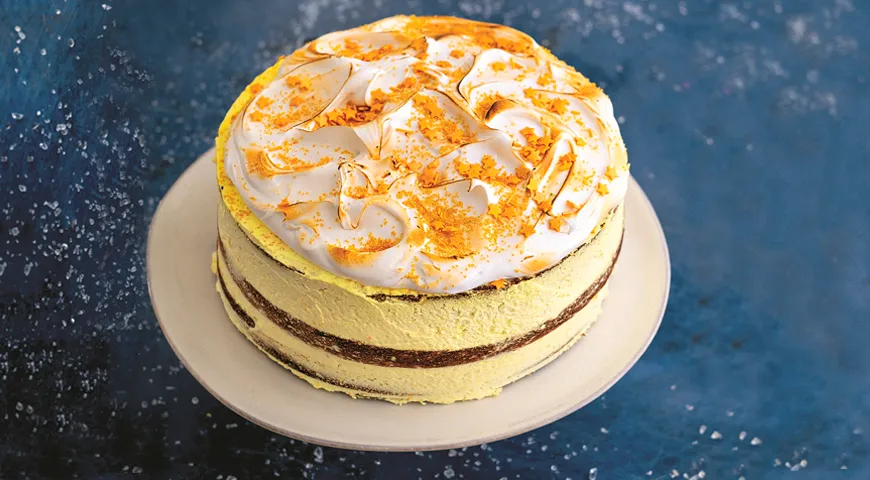
There is a quiet alchemy in a cake that combines tender sponge, silky cream, and airy meringue. This biscuit cake with meringue, a cherished Russian dessert, achieves a harmony of textures and flavors that feels both nostalgic and refined. The classic combination of a light vanilla biscuit soaked in a delicate cognac syrup, layered with a luscious cream cheese and whipped cream frosting, and crowned with a glossy, torched meringue, elevates it beyond everyday baking. It is a centerpiece for celebrations, a testament to patience and technique, yet accessible to any home baker with a trusty stand mixer and a willingness to whisk. In this article, we will deconstruct the process step by step, offering expert tips and variations so you can recreate this masterpiece with confidence.
About This Cake: A Study in Contrasts
The magic of this biscuit cake lies in its layered construction. The base is a classic European sponge (biskvit), airy and resilient, baked in a 22–24 cm round pan. Its simplicity—eggs, sugar, flour—belies the need for careful vigorous whipping to incorporate volume. The filling is a smooth cream cheese frosting, stabilized with whipped cream, offering a tangy counterpoint to the sweet meringue topping. The meringue itself, made from egg whites and powdered sugar, is quickly browned with a kitchen torch or under the broiler, creating dramatic caramelized peaks. This cake is often associated with Russian home baking, but its techniques are universal. For those exploring variations, consider pairing it with a citrus note, as our useful tip section suggests.

Ingredients
- For the biscuit: 6 eggs, 300 g sugar, 300 g all-purpose flour, 10 g butter for greasing the pan
- For the syrup soak: 150 g sugar, 100 g water, 50 g cognac
- For the cream cheese frosting: 200 g cream cheese, 100 g heavy cream (33% fat), 130 g powdered sugar
- For the meringue topping: egg whites from 2 eggs, 200 g powdered sugar, 1 tsp lemon juice, a pinch of salt
- Optional decoration: confectionery sprinkles
Quality ingredients matter here. Use fresh eggs at room temperature for maximum volume. The cream cheese should be full-fat and well-chilled. If you wish to experiment with different spirits, see our variations section below.
Step-by-Step: Crafting the Cake
1. Prepare the Biscuit
Preheat oven to 170°C (340°F). In the bowl of a stand mixer, combine eggs and sugar. Beat on high speed for 15–20 minutes until the mixture is thick, pale, and tripled in volume. This lengthy aeration is crucial—do not rush. Gently sift the flour over the mixture and fold with a silicone spatula until just combined. Grease a 22–24 cm round cake pan with butter and pour in the batter. Bake for 35–40 minutes, until a skewer inserted comes out clean. Turn the sponge out onto a wire rack, invert it, and cool completely.
2. Make the Cream Cheese Frosting
In a chilled bowl, whip the heavy cream with a mixer on low speed, gradually increasing to high, until soft peaks form. Slowly add the powdered sugar and continue beating until stiff peaks. In a separate bowl, soften the cream cheese with a spatula, then gently fold it into the whipped cream until smooth. Refrigerate until needed. For a lighter texture, you can use a non-toxic immersion blender to mix the cream cheese if you prefer a no-clump result.
3. Prepare the Cognac Soak
In a small saucepan, dissolve 150 g sugar in 100 g water. Bring to a boil, then simmer for 2 minutes. Remove from heat and stir in the cognac. Return to a gentle boil for another 2 minutes. Let cool. This syrup can be adjusted—try using sweet dessert wine for a non-alcoholic version or more complexity.
4. Assemble the Cake
Slice the cooled biscuit horizontally into three even layers. Place the bottom layer on a serving plate and brush generously with the cognac syrup. Allow 10–15 minutes for absorption. Spread a third of the cream cheese frosting evenly over the layer. Repeat with the remaining layers, finishing with frosting on top and sides. Refrigerate for at least 30 minutes to set.
5. Make the Meringue Topping
In a clean, dry bowl, whip the egg whites with a pinch of salt until soft peaks form. Gradually add the powdered sugar and lemon juice, continuing to beat until stiff, glossy peaks. The meringue should be firm enough to hold shape.
6. Torch and Decorate
Using a spatula, dollop the meringue onto the top of the cake in dramatic, rustic swirls and peaks. Use a kitchen torch to carefully brown the meringue until golden—watch for even caramelization. If you don’t have a torch, place the cake under a preheated oven broiler for 1–2 minutes. Finish with confectionery sprinkles. For a truly shiny result, ensure your meringue is free of any grease. A food-grade oil sprayer can help keep your tools clean.
Tips for Perfect Results
- Egg volume: The 15–20 minute beating time is non-negotiable. A Catalan sponge cake uses a similar technique for a reason.
- Syrup temperature: Allow the syrup to cool completely before brushing; hot syrup will ruin the cream texture.
- Meringue stability: A pinch of cream of tartar or lemon juice stabilizes egg whites. Do not skip.
- Torching caution: If using a broiler, watch constantly to avoid burning. For a deeper flavor, add a dash of natural flavor extract to the meringue.
Variations
This cake is wonderfully adaptable. For a citrus twist, fold 4–5 tablespoons of lemon curd or lime marmalade into the cream cheese frosting before assembly. The acidity brightens the richness. You can replace cognac with rum, whiskey, or even a splash of cold-brew concentrate for a coffee-kissed version. For a nutty dimension, sprinkle crushed pistachios or toasted almonds between layers. If you prefer a dairy-free option, substitute the cream cheese with a high-quality vegan alternative and use coconut cream in place of heavy cream. Explore our espresso machine reviews for pairing coffee-based desserts.
FAQ
Can I bake the biscuit a day ahead?
Yes, the sponge actually improves in texture if made a day in advance. Wrap it tightly in plastic wrap and store at room temperature. The syrup will rehydrate it beautifully.
What if my meringue weeps after torching?
Weeping usually indicates under-whipped whites. Ensure stiff peaks before applying heat. Also, avoid over-torching—the meringue should be golden, not bubbling. A reliable non-toxic air fryer can also be used to dry meringue if you prefer a firm crust.
How long does this cake keep?
Unadorned with meringue, the assembled cake keeps refrigerated for up to 3 days. Once meringue is torched, it is best eaten within 24 hours, as the meringue softens. Store in an airtight container.
Can I freeze the cake?
You can freeze the biscuit layers (un-frosted) for up to 2 months. Thaw overnight in the refrigerator before assembling. The cream cheese frosting does not freeze well.
Is there a non-alcoholic option for the syrup?
Absolutely. Omit the cognac and simply simmer the sugar-water syrup with a vanilla bean or a strip of lemon zest for flavor. The cake will still be moist and fragrant. Check our steam canner recommendations if you want to preserve excess syrup.
This biscuit cake with meringue is a celebration of textures—from the tender crumb to the crackling meringue. With careful attention to technique and a few quality tools, you can produce a showstopper that rivals any patisserie. For more baking inspiration, explore our catalogue of sponge recipes and microwave pressure cooker reviews for rapid alternatives.







