


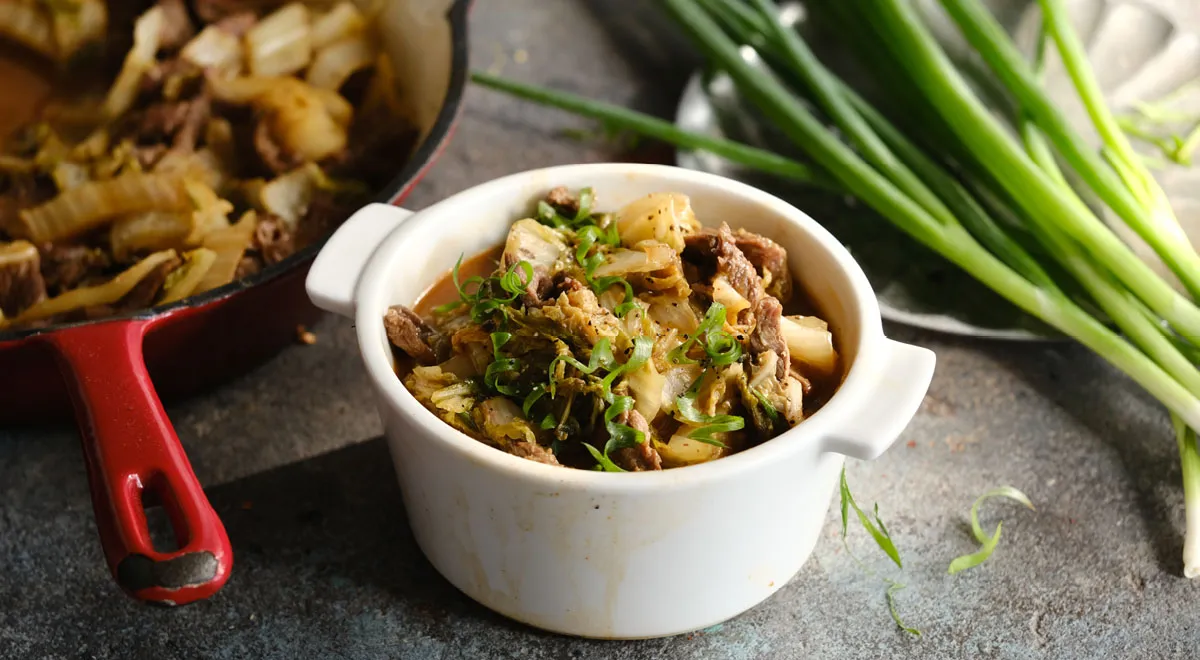
There is a quiet magic in a slow-simmered ragout—a dish that transforms humble ingredients into a symphony of deep flavors. This Beef and Napa Cabbage Ragout, inspired by rustic Russian comfort food, marries tender shredded beef with the delicate sweetness of Chinese cabbage. The key lies in patience: a long, gentle braise in chicken broth and white wine coaxes the meat to melt-in-your-mouth perfection, while napa cabbage adds a fresh, subtly sweet finish. Whether you are a seasoned cook or an adventurous home chef, this recipe invites you to savor the process as much as the finished dish.
About the Dish
This ragout is a wonderful example of how cross-cultural ingredients can create something entirely new. While traditional Russian stews often feature beef and potatoes, this version substitutes napa cabbage (also known as Peking cabbage) for a lighter, more refined result. The use of soy sauce and sugar nods to Asian influences, making the dish both savory and faintly caramelized. It is a meal that feels both familiar and exciting—perfect for a cozy dinner served with crusty bread or steamed rice. For more inspiration on crafting memorable one-pot meals, explore our guide to non-toxic immersion blenders or read about planetary mixers for advanced techniques.

Ingredients
- 400 g beef (chuck or brisket works beautifully)
- 1 head napa cabbage (about 500 g)
- 1 onion
- 3 cloves garlic
- 2 spring onions (green part for garnish)
- 300 ml chicken broth (preferably homemade or low-sodium)
- 100 ml dry white wine
- 2 tbsp vegetable oil (e.g., avocado or sunflower)
- 2 tbsp soy sauce
- 2 tbsp sugar
- ½ tsp paprika
- Salt and freshly ground black pepper to taste
Step-by-Step Instructions
Step 1: Prepare the Ingredients
Cut the beef into large chunks, about 4–5 cm pieces. Halve the napa cabbage lengthwise, then slice each half into thick strips (about 2 cm wide). Cut the onion in half lengthwise. Finely mince the garlic cloves. Warm the chicken broth in a small saucepan over low heat while you begin cooking.
Step 2: Sear the Beef
Heat the vegetable oil in a deep skillet or Dutch oven over medium-high heat. Add the beef pieces and cook, turning occasionally, until deeply golden brown on all sides—about 10 minutes. This browning builds the foundation of flavor. If your pan is small, brown the meat in batches to avoid steaming.
Step 3: Build the Braising Liquid
Add the minced garlic and onion halves to the pan. Pour in the warm chicken broth, white wine, and soy sauce. Stir to dissolve any browned bits from the bottom. Bring to a boil, then reduce the heat to low. Cover and let simmer gently for 1½ hours, until the beef is fork-tender. Discard the onion halves—they have done their job infusing flavor.
Step 4: Shred the Meat and Add Cabbage
Using two forks, shred the beef into coarse fibers directly in the pan. Add the napa cabbage strips, season with salt, pepper, paprika, and sugar. Stir everything together, re-cover, and cook for another 10 minutes over low heat. The cabbage will soften but retain a pleasant bite. For an even more even cook, consider using a glass food processor bowl for prepping.
Step 5: Serve and Garnish
Divide the ragout among warm bowls. Sprinkle with sliced spring onions for freshness and color. This dish pairs wonderfully with a crisp salad or a glass of dry white wine. For further reading on pairing wines, check our guide to sweet wines with high alcohol content.
Tips for Perfect Ragout
- Choose the right cut: Chuck or brisket contains enough collagen to become tender after braising. Lean cuts like sirloin will remain tough.
- Don't skip the sear: That caramelized crust is essential for deep meaty flavor. Use a heavy pan like a non-toxic air fryer for even heat distribution if you're adapting cooking methods.
- Adjust sweetness: The sugar balances the soy sauce and wine. If you prefer less sweet, reduce to 1 tablespoon.
- Make it ahead: This ragout tastes even better the next day. Store in an airtight container for up to three days.
Variations
Feel free to adapt this recipe to your pantry. Replace the beef with pork shoulder for a lighter flavor. Add a splash of mirin or rice vinegar for extra acidity. For a gluten-free version, use tamari instead of soy sauce and ensure your broth is gluten-free. If you own a microwave pressure cooker, you can reduce the braising time to 45 minutes on high pressure—just be sure to release naturally.
Frequently Asked Questions
Can I use other types of cabbage?
Yes, but napa cabbage is ideal because of its mild, slightly sweet flavor and quick cooking time. Savoy or green cabbage can be substituted; just slice it thinner and cook a few minutes longer.
What if I don't have white wine?
Dry sherry or even a splash of apple cider vinegar mixed with a little water can work. The wine adds acidity to balance the richness.
Can I make this in a slow cooker?
Absolutely. Sear the beef first, then transfer everything except the cabbage to a slow cooker. Cook on low for 6–8 hours. Shred the meat, add cabbage, and cook another 30 minutes on high. Our commercial countertop convection oven can also be used for a braise with proper Dutch oven placement.
How do I store leftovers?
Cool completely, then refrigerate in a sealed container for up to 3 days. Reheat gently on the stovetop or in a microwave. The flavors will meld further.
Can I freeze this ragout?
Yes, but note that the cabbage may become softer after thawing. Freeze without the cabbage and add fresh cabbage when reheating for best texture.
What side dishes go well with this?
Egg noodles, mashed potatoes, or a simple green salad dressed with vinaigrette all pair nicely. For a complete meal, try our Catalan sponge cake for dessert.
Is this recipe spicy?
Not inherently, but you can add a pinch of red pepper flakes or a drizzle of sriracha if you like heat. The paprika gives mild warmth.
Conclusion
This Beef and Napa Cabbage Ragout is a testament to the beauty of slow cooking—a dish that rewards patience with profound flavor. Whether you are hosting a dinner party or simply craving hearty comfort, this recipe delivers. For more kitchen inspiration, browse our reviews of espresso machines under $2000 or organic vodka to complement your culinary adventures. Remember, the best meals are made with intention and a little love. Happy cooking!







